

 English
  中文简体
中文简体  Español
Industry News

2026-03-13
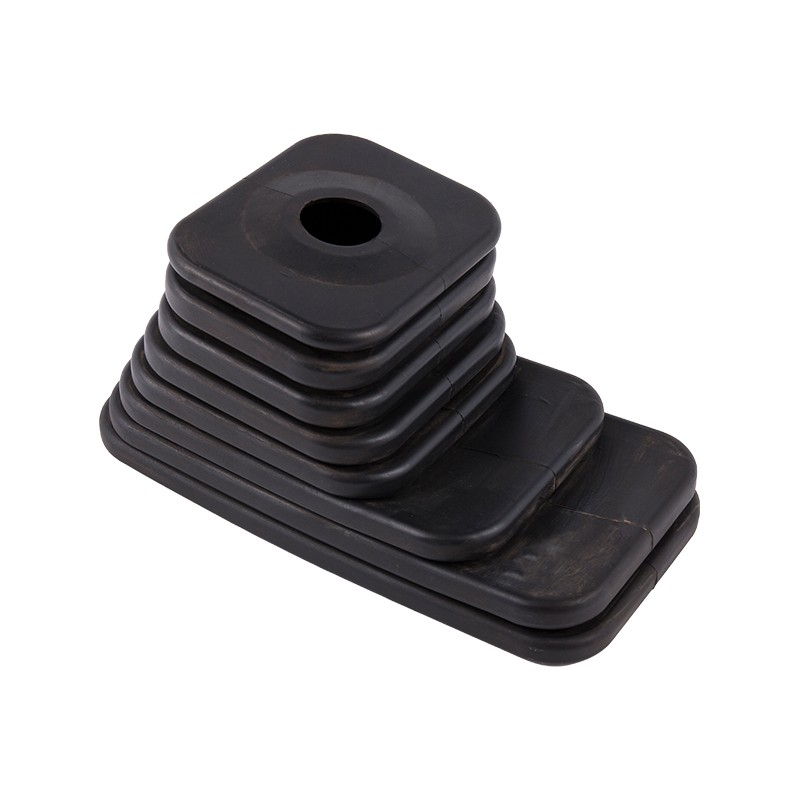
Flexible rubber bellows dust covers are the most reliable and cost-effective solution for protecting linear shafts, ball screws, tie rod ends, CV joints, and sliding mechanical assemblies from dust, debris, moisture, and contaminants. A correctly specified rubber bellow extends the service life of the protected component by a factor of 3–10× compared to an unprotected assembly operating in the same environment, by preventing abrasive particles from reaching precision surfaces, seals, and lubricated interfaces. The key decisions in selecting a rubber bellow are material compound (which determines chemical, thermal, and UV resistance), convolute geometry (which governs compression ratio and lateral flex capability), and attachment method (which must create a reliable seal at both ends under dynamic motion). This article covers all three dimensions in practical detail.
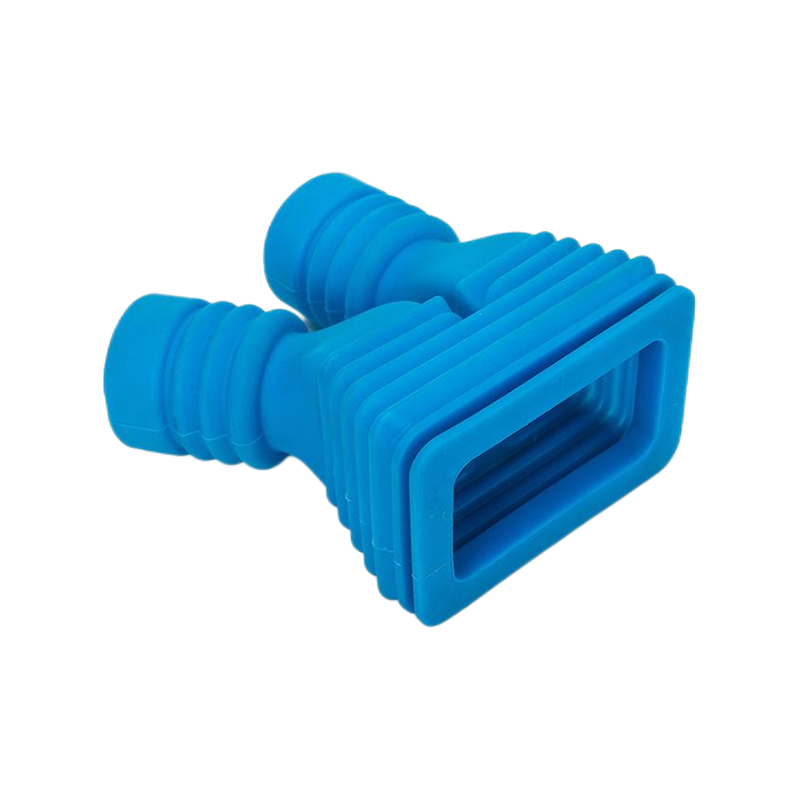
A rubber bellow — also called a rubber boot, accordion boot, or convoluted dust cover — is a flexible, accordion-folded sleeve molded from an elastomeric compound. The convoluted (pleated) profile allows the bellow to compress, extend, and flex laterally while maintaining a continuous sealed envelope around the protected component. As the shaft, rod, or sliding element moves, the convolutions open and close in sequence, accommodating the full stroke without imposing significant resistance force on the mechanism.
The primary function of a rubber bellows dust cover is exclusion: keeping contaminants out of the protected space. In automotive steering and suspension applications, for example, a failed CV joint boot allows road grit and water to enter the joint within hours of boot failure, initiating rapid wear that leads to joint replacement within weeks. The same joint, properly protected, typically lasts the service life of the vehicle — often 150,000–300,000 km. This protection differential is why OEM engineers specify rubber bellows as a standard component rather than an optional upgrade across virtually all sliding and articulating assemblies exposed to contamination.
The compression ratio of a rubber bellow is the ratio of its fully extended length to its fully compressed length. Most standard rubber bellows achieve compression ratios of 3:1 to 6:1 — meaning a bellow 300 mm long when fully extended compresses to 50–100 mm. The required compression ratio for an application is determined by the full stroke length of the protected component plus installation clearance at both ends of travel. Specifying a bellow with insufficient compression ratio leads to buckling or kinking at the compressed end, which creates fatigue cracks and early failure.
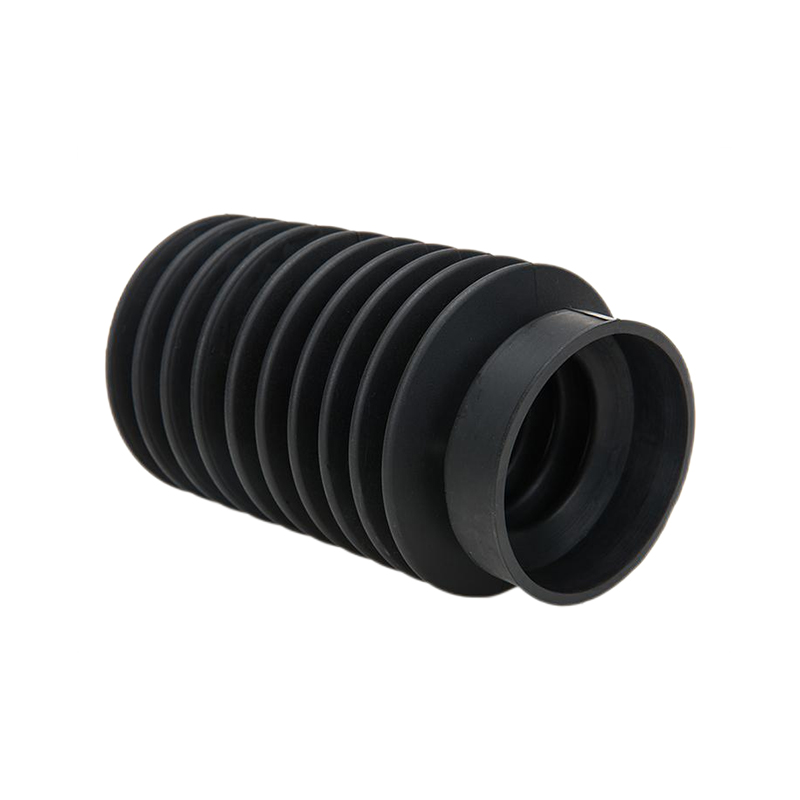
The rubber compound is the most consequential material specification for a bellows dust cover. Each elastomer type has a distinct profile of temperature resistance, chemical compatibility, UV and ozone resistance, and mechanical fatigue life. Mismatching the rubber compound to the environment is the primary cause of premature bellow failure.
| Rubber Compound | Temp. Range | Oil/Fuel Resistance | Ozone/UV Resistance | Primary Applications |
|---|---|---|---|---|
| Natural Rubber (NR) | -50°C to +80°C | Poor | Poor | Indoor machinery, low-temp flex applications |
| Neoprene (CR) | -40°C to +120°C | Moderate | Good | Automotive steering boots, general industrial |
| EPDM | -50°C to +150°C | Poor | Excellent | Outdoor covers, HVAC, water/steam environments |
| Nitrile (NBR) | -40°C to +120°C | Excellent | Poor | Hydraulic cylinders, fuel systems, oil-rich environments |
| Silicone (VMQ) | -60°C to +200°C | Poor–Moderate | Excellent | Engine bay, exhaust proximity, food/medical equipment |
| Polyurethane (PU) | -40°C to +100°C | Good | Good | Machine tools, ball screws, high-abrasion environments |
| Viton (FKM) | -20°C to +200°C | Excellent | Excellent | Chemical processing, aggressive fuels, high-temp oil systems |
Neoprene (chloroprene rubber, CR) is the most widely specified compound for automotive and general industrial rubber bellows. Its balance of moderate oil resistance, good ozone and weathering resistance, and wide temperature range makes it suitable for the majority of steering, suspension, and driveshaft boot applications. Neoprene CV joint boots are the OEM standard on most passenger vehicles globally, and aftermarket replacement boots in neoprene are available for virtually every vehicle application at low cost.
For CNC machine tool applications — where bellows protect ball screws and linear guides from metal swarf, cutting fluid, and grinding debris — polyurethane (PU) bellows outperform standard rubber significantly. PU has an abrasion resistance approximately 3–5 times higher than natural rubber and maintains its mechanical properties better when repeatedly flexed under contact with sharp metal chips. PU bellows are the preferred specification for machine tool slideway covers in high-production machining environments where frequent replacement of standard rubber covers would create unacceptable downtime.
Rubber bellows are produced in several geometric configurations, each optimized for a specific motion type and installation constraint. Selecting the correct geometry ensures the bellow accommodates the required motion without overstressing any section of the convolute profile.
The most common type — a cylindrical body with uniform convolute diameter from one end to the other. Suitable for purely axial (compression and extension) motion on linear shafts, hydraulic cylinder rods, and machine tool spindles. Straight bellows are produced in standard and custom diameters from 10 mm to 500 mm bore, and are available in cut-to-length roll form for custom stroke lengths or as pre-formed units with defined extended and compressed lengths.
Tapered bellows have a larger diameter at one end and a smaller diameter at the other, matching the geometry of components like tie rod ends, ball joints, steering rack boots, and CV joints where the housing diameter differs significantly from the shaft diameter. The tapered profile distributes flex stresses more evenly along the length of the boot and accommodates angular articulation as well as axial movement — a requirement that straight bellows cannot meet without developing high stress concentrations at the attachment points.
In some applications — particularly CV joint boots on front-wheel-drive vehicles — the bellow must accommodate both axial compression and significant angular deflection simultaneously. Offset or asymmetric bellows have convolutes of varying pitch and depth around their circumference, allowing greater angular flex on one side than the other without causing the inner convolutes to contact and abrade each other. These are precision-engineered components, typically molded from neoprene or thermoplastic elastomer (TPE), and are application-specific rather than catalog items.
For applications involving pressure differentials, high axial loads, or particularly demanding abrasion conditions, rubber bellows are reinforced with embedded fabric plies (typically nylon, polyester, or aramid). Fabric reinforcement limits radial expansion under pressure, significantly increases tear resistance, and extends fatigue life under high-cycle applications. Fabric-reinforced bellows are standard in industrial vacuum systems, pneumatic actuators, and high-pressure hydraulic applications where unreinforced rubber would balloon or rupture.
Correctly specifying a rubber bellow requires capturing all the dimensional variables that define fit, motion range, and attachment. Incomplete specifications are the most common source of mis-orders and installation problems.
| Parameter | Description | Why It Matters |
|---|---|---|
| Small End Inner Diameter (d1) | ID at the shaft or rod end | Must grip shaft snugly to seal without requiring excessive clamp force |
| Large End Inner Diameter (d2) | ID at the housing or body end | Must fit over the housing groove or boss without overstretching the rubber |
| Extended Length (L1) | Length at maximum stroke (fully extended) | Must cover full exposed shaft length at maximum extension with margin |
| Compressed Length (L2) | Length at minimum stroke (fully compressed) | Must not bottom out or buckle at minimum stroke position |
| Maximum Outer Diameter (OD) | Largest convolute OD at full extension | Must not contact adjacent components during motion or articulation |
| Number of Convolutions | Count of accordion folds | Determines flexibility, compression ratio, and fatigue life distribution |
| Wall Thickness | Rubber wall thickness at convolution root | Thicker walls increase durability but reduce flexibility and increase force required |
For standard catalog bellows, manufacturers publish dimensional tables covering the full range of stocked sizes. For custom applications, providing a dimensioned sketch with all seven parameters above — plus the required rubber compound, operating temperature range, and any chemical exposure requirements — gives a rubber molder sufficient information to produce a prototype in 4–8 weeks for most standard geometries.
A rubber bellow provides no protection if its attachment points leak. The method used to secure and seal each end of the bellow to the shaft and housing determines the overall system's contamination exclusion performance, assembly ease, and maintenance requirements.
Stainless steel or zinc-plated worm-drive or ear-type clamp bands are the most common and field-serviceable attachment method for rubber bellows. The clamp compresses the bellow's end lip into a groove or shoulder on the shaft or housing, creating a circumferential seal. Ear-type (Oetiker-style) clamps — which are swaged closed with a dedicated tool — are preferred over worm-drive clamps in automotive applications because they provide more uniform clamping force, are lower profile, and cannot loosen through vibration. Proper torque or swage specification is critical: over-clamping cuts into the rubber; under-clamping allows the bellow to unseat under pressure or articulation.
Some rubber bellows are molded with an integral bead or lip at one or both ends that snaps into a machined groove on the housing or shaft. This eliminates the need for a separate clamp, simplifying assembly and reducing the number of components. Snap-fit retention is used extensively in hydraulic cylinder dust boots and tie rod end covers where the small end fits into a precision groove with a defined interference fit of 0.5–1.5 mm to ensure retention under operating loads without requiring separate fastening.
In applications where mechanical attachment is not feasible — such as on smooth-bore housings without grooves, or where vibration would fatigue a clamp — rubber bellows ends can be bonded with cyanoacrylate, epoxy, or rubber-specific contact adhesives. Adhesive bonding is common in instrument protection covers, electronic actuator boots, and precision linear stage covers in metrology equipment. The adhesive must be compatible with both the rubber compound and the substrate material, and the bonded joint area should be maximized to distribute peel stresses.
Larger industrial bellows — particularly those protecting machine tool ball screws and linear guides — often terminate in molded flanges that are bolted directly to the machine structure. The flange provides a large, rigid attachment surface that distributes fastening loads evenly and allows the bellow to be replaced without special tools. Flange-mounted bellows are standard in CNC machining center applications where the large bore diameter (typically 80–300 mm) and high cycle count make robust, tool-accessible attachment mandatory.
Understanding why rubber bellows fail enables engineers and maintenance teams to choose more durable specifications and implement inspection intervals that catch developing failures before they allow contamination damage to the protected component.
Ozone attacks the carbon-carbon double bonds in unsaturated rubber compounds (NR, SBR, neoprene) preferentially at stressed areas — which on a convoluted bellow means the crests and roots of the convolutions. Fine transverse cracks appear first, deepening over time until the bellow splits. UV radiation accelerates surface degradation in compounds without adequate UV stabilizers. EPDM and silicone are inherently ozone and UV resistant due to their saturated polymer backbone; for any outdoor or high-ozone-exposure application, these compounds should be specified over NR or unprotected neoprene.
Rubber compounds undergo compression set — a permanent deformation after being held in a compressed state — particularly when aged at elevated temperatures. A bellow that has taken compression set at one end of its stroke loses its ability to maintain contact pressure at the attachment points, creating seal gaps. Thermal hardening of the rubber compound (oxidative crosslinking) simultaneously reduces flexibility, causing the bellow to crack rather than flex smoothly. Operating temperature should be confirmed against the compound's rated range, with a safety margin of at least 20°C below the compound's maximum continuous temperature rating for applications requiring 5+ year service life.
If a bellow contacts a rotating shaft, nearby structural member, or another surface during operation, repeated abrasion rapidly wears through the rubber wall. This is a design and installation issue as much as a material issue — the bellow's maximum outer diameter during articulation must be verified against all surrounding components, including under worst-case angular deflection and simultaneous maximum compression. Polyurethane bellows, with their significantly higher abrasion resistance, are the preferred solution when contact cannot be fully eliminated through design changes.
Exposure to incompatible fluids causes rubber swelling, softening, and eventual disintegration. The most common example is a neoprene or EPDM boot used in an environment with petroleum oil or hydraulic fluid — both EPDM and neoprene swell and lose tensile strength rapidly in hydrocarbon oil contact. NBR must be specified wherever the bellow will contact petroleum oils, fuels, or hydraulic fluids; FKM (Viton) for aggressive synthetic fluids or chemical processing environments. Always cross-check the specific fluid against the rubber compound's chemical resistance chart before specifying.
Rubber bellows dust covers serve across a wide range of industries, each with distinct performance priorities that drive material and geometry specification choices.
A systematic approach to rubber bellow selection eliminates the most common specification errors and ensures the chosen product meets both the mechanical and environmental demands of the application throughout its required service life.
Contact Us
Copyright ©
Jiaxing Tosun Rubber&Plastic Co., Ltd.
All Rights Reserved.
Custom Rubber And Plastics Products Factory