

 English
  中文简体
中文简体  Español
Industry News

2026-03-16
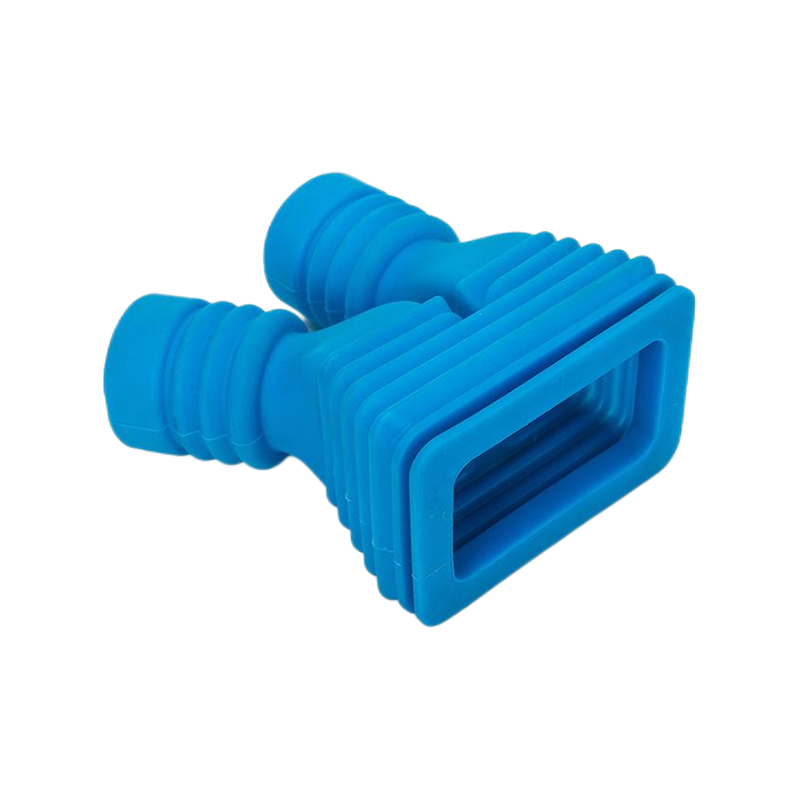
Rubber bellows, rubber boots, and corrugated sleeves are all flexible protective enclosures designed to seal, protect, and accommodate movement at joints, shafts, and mechanical interfaces — and while the three terms are often used interchangeably in industrial and automotive contexts, each describes a specific geometry and application emphasis. The short answer: rubber bellows are accordion-shaped flexible seals that handle axial compression and extension; rubber boots (also called dust boots or CV boots) are conical or tapered protective covers for ball joints and drive shafts; and corrugated sleeves are cylindrical flexible tubes with circumferential convolutions used for cable and hose protection. All three protect critical components from contamination, retain lubrication, and accommodate relative movement — but selecting the right type, material, and specification for your application requires understanding the engineering distinctions between them.
Rubber bellows take their name from the traditional blacksmith's bellows — a folded structure that compresses and extends along its axis. In engineering applications, a rubber bellows is a flexible, accordion-pleated tubular component that serves simultaneously as a dynamic seal, a flexible joint cover, and sometimes a spring element. The defining geometric feature is the series of convolutions (folds or corrugations) that allow the bellows to compress, extend, flex angularly, and absorb lateral offset while maintaining an enclosed, sealed interior.
The mechanical behavior of a rubber bellows is primarily determined by four geometric variables:
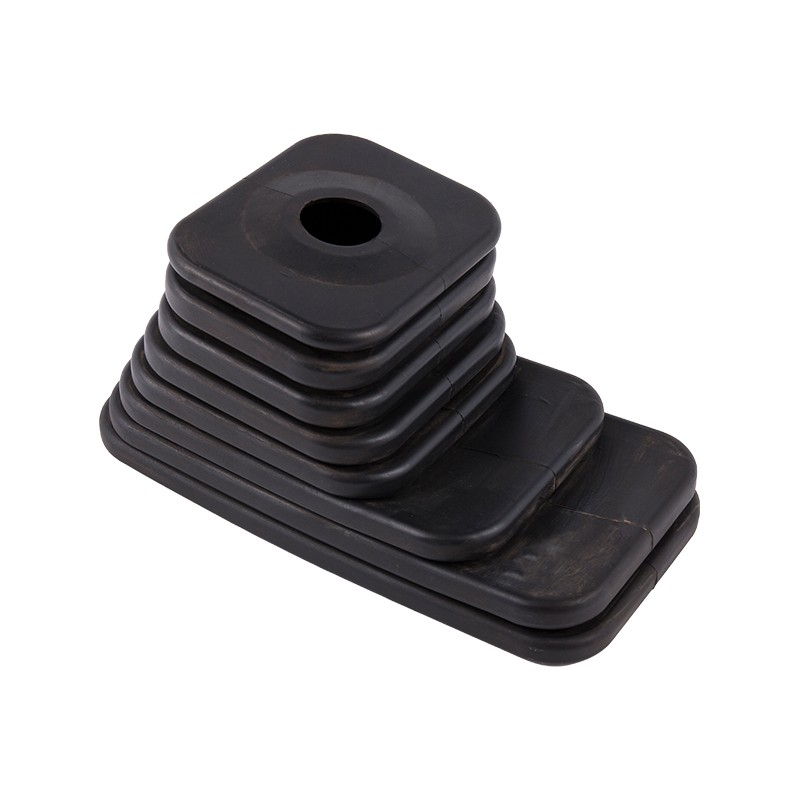
The rubber boot — also called a dust boot, gaiter, or CV boot — is a specialized flexible protective cover designed specifically for ball joints, tie rod ends, CV (constant velocity) joints, and rack-and-pinion steering gear. Unlike a symmetric bellows, a rubber boot typically has a tapered or conical profile — larger at one end to accommodate the joint housing and smaller at the other end to clamp around the shaft or rod. This geometry reflects the mechanical reality of the joint it protects: one end is stationary relative to the joint body while the other end moves through a large angular range with every steering input or suspension articulation.
A CV joint boot on a front-wheel-drive vehicle must survive one of the harshest conditions imposed on any rubber component in automotive engineering. It must:
A failed CV boot is not merely a sealing failure — it is a joint failure in progress. Once the boot cracks or tears, the grease that lubricates the CV joint escapes within weeks, and abrasive contamination enters. A CV joint without grease typically fails within 5,000 to 20,000 km of driving — a component that otherwise lasts the vehicle's lifetime. This makes boot material selection and quality critical for total drivetrain durability.
Suspension ball joint boots and steering tie rod end boots protect grease-filled spherical joints from contamination. These boots operate at lower angular velocities than CV joint boots but must tolerate more aggressive external contamination — direct stone impact, high-pressure cleaning, and continuous water immersion. They are typically made from thermoplastic elastomer (TPE) or EPDM rubber, with a metal clamp or snap-fit retainer at the large end and a tight press-fit groove at the small end around the ball stud.
A corrugated sleeve is a flexible tube with circumferential corrugations — annular or helical — that give it flexibility, crush resistance, and the ability to route around bends without kinking. Unlike bellows (which function as seals) or boots (which protect joints), corrugated sleeves primarily protect cables, wires, hoses, and tubing from mechanical damage, abrasion, heat, and environmental exposure while accommodating routing flexibility and length variation.
Material selection is the most critical engineering decision in specifying any rubber flexible protective component. The operating environment — temperature range, chemical exposure, dynamic stress level, and UV/ozone exposure — must be matched precisely to the rubber compound's properties.
| Material | Temp Range | Key Strengths | Limitations | Typical Application |
|---|---|---|---|---|
| EPDM | -50°C to +150°C | Excellent ozone, UV, weathering resistance; water/steam resistance | Poor oil and fuel resistance | Automotive door seals, suspension boots, outdoor bellows |
| Neoprene (CR) | -40°C to +120°C | Good oil resistance, flame retardancy, ozone resistance | Moderate dynamic fatigue life vs EPDM | CV boots, machine tool bellows, industrial flexible covers |
| Silicone (VMQ) | -60°C to +230°C | Extreme temperature range, low compression set, FDA compliant grades | Low tear strength, high cost, poor abrasion resistance | High-temp bellows, medical corrugated sleeves, turbo hoses |
| NBR (Nitrile) | -40°C to +120°C | Excellent oil, fuel, and grease resistance | Poor ozone and UV resistance; not for outdoor use without protection | Hydraulic cylinder boots, oil-environment bellows |
| FKM (Viton) | -20°C to +200°C | Superior chemical and fuel resistance; high temp stability | High cost; poor low-temperature flexibility | Chemical plant bellows, aggressive fuel system boots |
| TPE / TPU | Verify regulatory requirements: Medical and food contact applications require FDA 21 CFR-compliant materials. Automotive OEM applications may require IATF 16949 supplier certification and PPAP documentation. Hazardous area installations may require flame-retardant materials meeting UL 94 V-0 or equivalent. |
Contact Us
Copyright ©
Jiaxing Tosun Rubber&Plastic Co., Ltd.
All Rights Reserved.
Custom Rubber And Plastics Products Factory