

 English
  中文简体
中文简体  Español
Industry News

2026-08-24
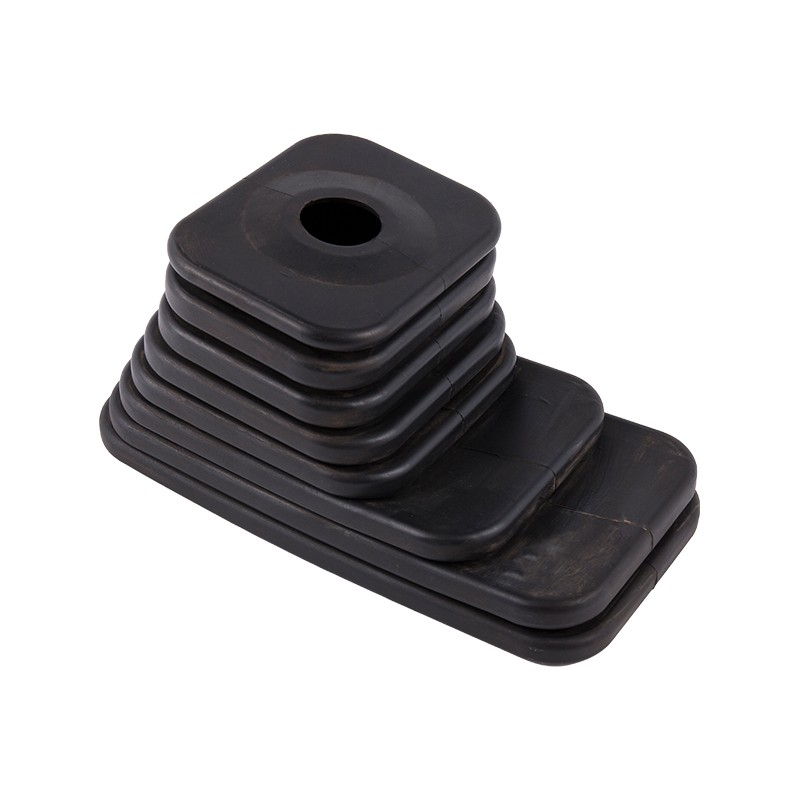
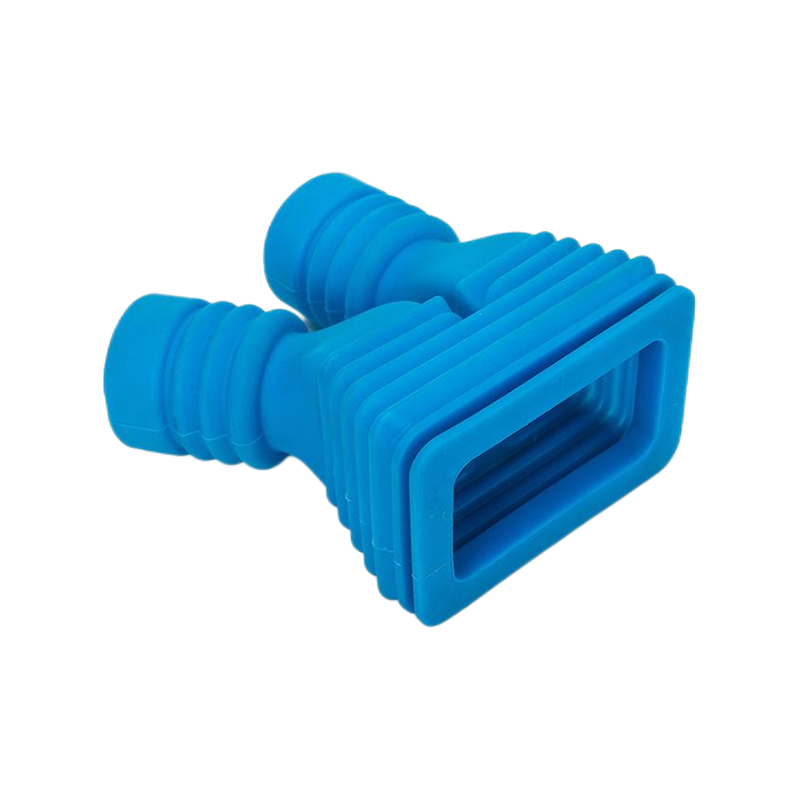
Rubber bellows are flexible, accordion-shaped covers made from elastomeric materials that expand, compress, and bend to protect moving components from dust, moisture, chemicals, and mechanical damage. Their signature folded or convoluted profile — a series of ridges and grooves running around a tube-like body — is what gives them the elasticity to stretch and contract without cracking or losing their seal.
In practical terms, a rubber bellows functions as a flexible protective cover that bridges two points on a machine, one of which is usually moving relative to the other. Because the convolutions absorb axial, lateral, and angular movement simultaneously, the same part can shield a piston rod, a rotating shaft, or a sliding rail without restricting its motion.
Rubber bellows are produced in a wide range of elastomers — natural rubber (NR), nitrile (NBR), neoprene (CR), EPDM, silicone, and fluoroelastomers (FKM) — each selected for a specific balance of flexibility, temperature resistance, and chemical compatibility. This material versatility is part of why the term "flexible rubber bellows" covers such a broad family of parts, from small instrument boots to large industrial machine covers several meters long.
A rubber bellows works by converting linear or angular displacement into elastic deformation of its convoluted wall, rather than transmitting that movement as stress on a rigid barrier. When one end of the bellows moves toward or away from the other, the folds simply open or close like a paper fan, so the material at any single point experiences bending rather than stretching beyond its elastic limit.
This folding action is what allows a bellows to accommodate three types of movement at once:
At the same time, the bellows wall forms a continuous, sealed barrier. Because the material has no seams at the points of movement, it keeps out dust, grit, splashed liquids, and airborne contaminants while keeping in grease or lubricant on components such as ball screws and linear guides. The number, depth, and pitch of the convolutions are engineered around the expected stroke length and cycle rate — deeper, closely spaced folds generally allow greater compression ratios but reduce the bellows' resistance to internal pressure, so most manufacturers calculate convolution geometry against the specific application rather than using a single universal profile.
Material choice has the biggest influence on how a rubber bellows performs in service. The table below summarizes common elastomers and where they tend to be specified.
| Material | Typical Temperature Range | Strengths | Common Use Case |
|---|---|---|---|
| Natural Rubber (NR) | -40°C to 80°C | High flexibility, good fatigue life | General mechanical covers |
| Nitrile (NBR) | -30°C to 100°C | Oil and fuel resistance | Hydraulic and pneumatic cylinders |
| Neoprene (CR) | -35°C to 100°C | Weather and ozone resistance | Outdoor and mobile equipment |
| EPDM | -50°C to 130°C | Steam, UV, and weather resistance | Outdoor machinery, water treatment |
| Silicone | -60°C to 200°C+ | Extreme temperature stability | High-heat industrial equipment |
Wall thickness and reinforcement also matter. Thin-wall bellows flex more easily and suit high-cycle applications, while fabric-reinforced or thicker-wall constructions trade some flexibility for greater resistance to abrasion, puncture, and internal pressure — a common requirement in hydraulic and heavy-machinery settings.
Rubber bellows applications span nearly every sector that uses moving mechanical parts. Because the part's core function — sealing a moving joint while allowing flexibility — is universal, the same basic design principle scales from small precision instruments to heavy construction equipment.
Across these applications, the underlying value proposition stays the same: a rubber bellows extends component life by shielding critical parts from the contamination and impact damage that would otherwise accelerate wear.
On industrial machinery, rubber bellows are most often found protecting linear motion components — ball screws, lead screws, guide rails, and telescoping shafts — that are exposed to metal chips, coolant, and abrasive dust during operation. Machine tools, CNC equipment, and automated assembly lines rely on these covers to keep swarf and cutting fluid out of precision-machined surfaces that would otherwise wear or seize.
In this setting, bellows are typically specified with reinforced folds or a supporting internal frame to prevent the convolutions from collapsing under the weight of accumulated debris, especially on horizontally mounted axes. Selection criteria for machinery bellows usually include stroke length, mounting diameter, operating speed, and resistance to the specific coolants or cutting oils used on the line, since incompatible chemicals can cause premature swelling or cracking of the elastomer.
Hydraulic cylinder bellows protect one of the most failure-sensitive parts of a hydraulic system: the polished piston rod surface that the rod seal rides against. Even microscopic scoring from a piece of grit or sand can create a leak path past the seal, so a torn or missing bellows is a common root cause of premature rod seal failure on mobile and heavy equipment.
Because hydraulic cylinders often operate outdoors and under load — on excavator arms, dump truck lifts, and agricultural implements — bellows in this application are generally made from oil-resistant compounds like nitrile or neoprene and built with a heavier wall section to withstand abrasion from mud, sand, and vegetation. Correct sizing matters here more than in most other applications: the bellows must fully cover the rod's stroke length in both the extended and retracted positions, with enough slack in the folds to avoid stretching the material to its limit at full extension.
Dust protection is one of the most common reasons a rubber bellows gets specified in the first place. Fine particulate — whether it is metal filings in a workshop, sand on a job site, or ambient dust in an outdoor installation — is abrasive enough to score bearing surfaces, contaminate lubricant, and jam small mechanisms if it reaches them.
A well-fitted dust bellows creates a continuous seal at both ends of the covered component, typically secured with clamps, adhesive, or a molded lip that grips the mounting surface. In environments with heavy particulate load, designers often favor bellows with a smoother, less deeply folded profile, since shallow convolutions are less prone to trapping and holding dust compared to deep, tightly spaced folds — a small design trade-off against maximum compression ratio in exchange for easier self-cleaning during motion.
Choosing a suitable bellows generally comes down to matching five factors to the application: stroke length and compression ratio, mounting diameter, operating temperature range, chemical exposure, and cycle frequency. A bellows undersized for its stroke will be overstretched and prone to splitting at the fold roots, while one oversized for its mounting space may buckle or interfere with adjacent components.
For standard round profiles, off-the-shelf bellows are usually available in stock sizes. For irregular geometries or performance requirements outside common ranges, custom-molded rubber bellows allow the convolution pitch, wall thickness, and material to be engineered specifically around the application's stroke, load, and environmental conditions.
Contact Us
Copyright ©
Jiaxing Tosun Rubber&Plastic Co., Ltd.
All Rights Reserved.
Custom Rubber And Plastics Products Factory