

 English
  中文简体
中文简体  Español
Industry News

2026-08-17
Rubber bellows are generally classified two ways: by their cross-sectional shape and by how they are constructed. Shape determines how a bellows fits into a given assembly, while construction method determines how it holds up under load, heat, and repeated flexing.
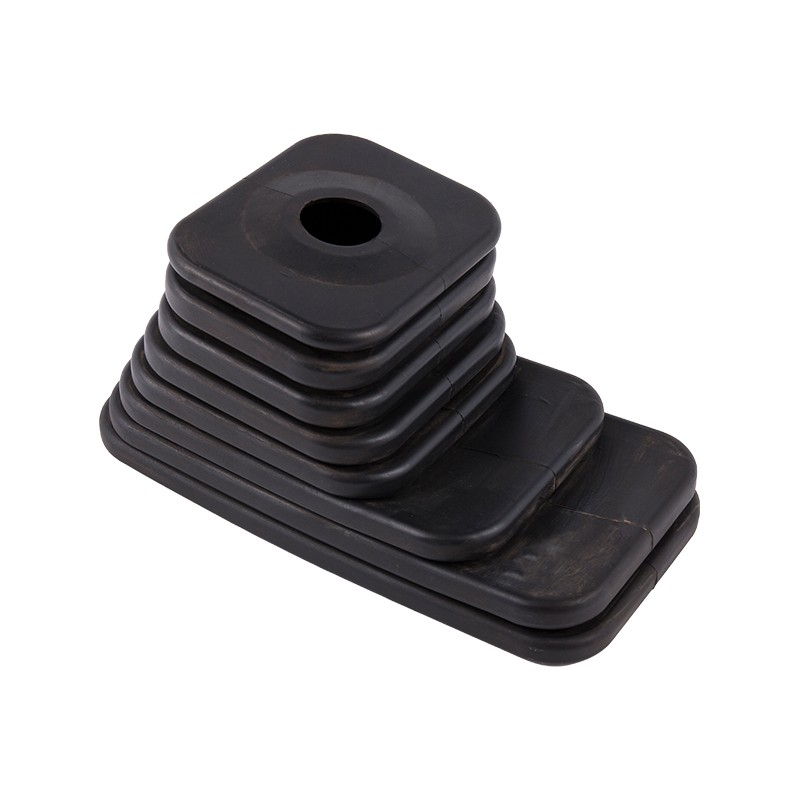
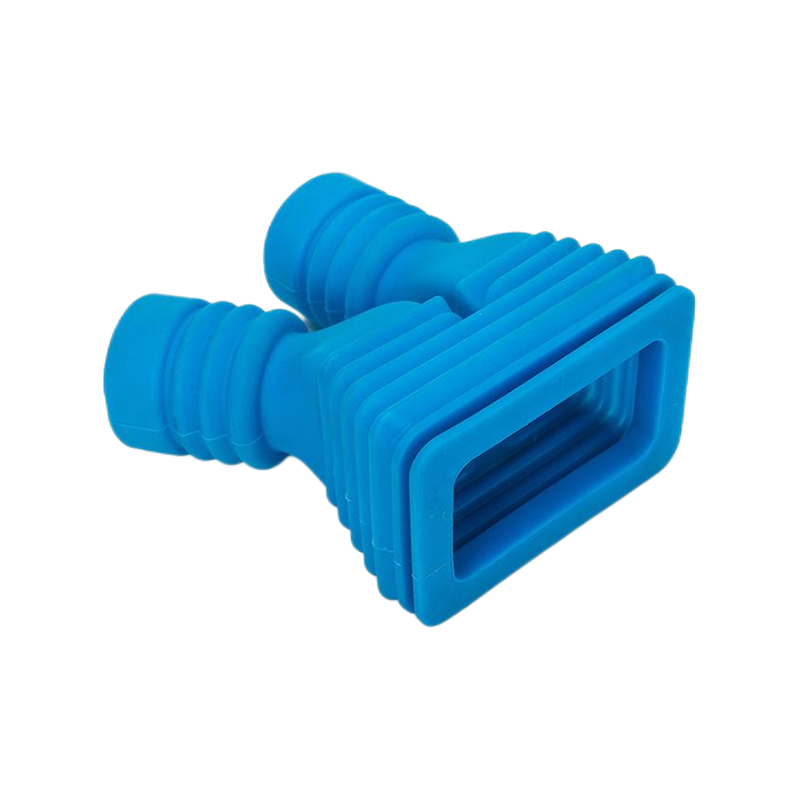
By shape, the most common types include:
By construction, bellows fall into two broad categories. Molded bellows are produced in a single piece from a rubber compound, giving a smooth, uniform wall that suits moderate-pressure, moderate-cycle applications. Fabric-reinforced bellows embed a woven textile layer within the rubber wall, adding tear resistance and dimensional stability for larger parts, higher internal pressures, or applications where the bellows must resist punctures from sharp debris.
Material selection is the single biggest factor in how long a rubber bellows lasts in service, because temperature extremes, chemical exposure, and UV/ozone exposure each degrade elastomers differently. Below is a comparison of the elastomers most commonly used across industrial rubber bellows.
| Material | Heat Resistance | Chemical Resistance | Weakness |
|---|---|---|---|
| Natural Rubber (NR) | Moderate | Poor with oils/fuels | Degrades in sunlight and ozone |
| Nitrile (NBR) | Moderate | Strong with oils/fuels | Poor weather/ozone resistance |
| Neoprene (CR) | Moderate-high | Good general resistance | Limited with strong acids |
| EPDM | High | Strong with water, steam, acids | Poor with mineral oils |
| Silicone | Very high | Moderate | Lower tear strength |
EPDM rubber bellows are valued for their resistance to water, steam, UV exposure, and a wide range of polar chemicals including many acids and alkalis. This makes EPDM a common choice for outdoor equipment, water treatment machinery, and applications with regular washdown or exposure to weather. EPDM also holds up well across a broad temperature range, typically performing reliably from around -50°C up to 130°C without significant hardening or cracking.
The main limitation of EPDM is poor compatibility with petroleum-based oils, fuels, and greases, which cause the material to swell and soften. For this reason, EPDM bellows are generally specified where the surrounding environment involves water, steam, or general weathering rather than oil-heavy machinery — hydraulic and lubricated mechanical applications typically call for nitrile or neoprene instead.
Silicone rubber bellows are the standard choice when a bellows has to remain flexible across an unusually wide or extreme temperature range. Silicone maintains its elasticity from roughly -60°C up to 200°C or higher depending on the formulation, and it resists ozone, UV, and long-term heat aging far better than general-purpose elastomers.
Because of this, silicone bellows are common in high-temperature industrial equipment, ovens, exhaust-adjacent components, and electronics or medical devices where thermal stability and material purity both matter. The trade-off is mechanical: silicone has lower tear and abrasion resistance than nitrile or neoprene, so it is less suited to environments with sharp debris, heavy abrasion, or high mechanical loading.
Neoprene rubber bellows offer a balanced combination of weather resistance, moderate oil resistance, and good flex fatigue life, which is why neoprene remains one of the most widely specified materials for general-purpose and outdoor equipment covers. It resists sunlight, ozone, and general aging better than natural rubber while holding up to occasional contact with oils and greases better than EPDM.
Neoprene performs reliably across a moderate temperature range, generally from about -35°C to 100°C, making it a practical default for mobile equipment, agricultural machinery, and outdoor mechanical covers that see a mix of weather exposure and light chemical contact without requiring the higher heat resistance of EPDM or silicone.
High-temperature environments call for materials that resist not just momentary heat exposure but long-term thermal aging, which gradually hardens and cracks unsuitable elastomers. Silicone and certain EPDM compounds are the two most common choices, with silicone generally preferred above roughly 150°C and EPDM offering a more cost-effective option in the 100–130°C range.
In these applications, wall thickness and convolution depth also need to account for thermal expansion of the mounted components, since a bellows sized precisely at room temperature can become overstretched once the equipment reaches operating temperature. Manufacturers typically build in a margin for this expansion when the operating temperature range is specified up front.
Chemical resistance requirements vary widely depending on whether the bellows will contact acids, alkalis, solvents, or petroleum products, and no single elastomer performs best across all of them. EPDM generally offers the strongest resistance to water-based chemicals, steam, and many acids and alkalis, while nitrile and neoprene are better suited to oil, fuel, and hydrocarbon exposure. Fluoroelastomers (FKM) are typically reserved for the most aggressive chemical environments, including strong solvents and high-temperature fuel exposure, though at a higher material cost.
Because chemical compatibility charts vary by manufacturer and by the exact concentration and temperature of the chemical involved, it's good practice to confirm resistance data for the specific compound and exposure conditions rather than relying on general material class alone.
The terms "rubber bellows" and "rubber boots" are often used interchangeably, and in many cases they refer to the same type of part. Where a distinction is drawn, it's usually based on shape and application rather than function. A rubber boot typically refers to a shorter, often conical or asymmetric cover — the classic example being a CV joint boot or a gear shift boot — designed to seal a single, relatively compact joint.
A rubber bellows, by contrast, more often describes a longer, uniformly convoluted cylindrical or rectangular cover designed to accommodate extended travel along an axis, such as on a hydraulic cylinder rod or a linear guide rail. In practice, both terms describe flexible, folded elastomeric covers that protect moving joints from contamination, and the choice of terminology often comes down to industry convention as much as any strict technical definition.
Selecting the right rubber bellows starts with the operating environment rather than the part itself. The questions below help narrow down both material and construction:
Working through these factors before specifying a material or profile helps avoid the two most common failure modes in service: premature cracking from an incompatible elastomer, and overstretching or buckling from a bellows sized incorrectly for its stroke and mounting dimensions.
Contact Us
Copyright ©
Jiaxing Tosun Rubber&Plastic Co., Ltd.
All Rights Reserved.
Custom Rubber And Plastics Products Factory