

 English
  中文简体
中文简体  Español
Industry News

2026-03-24
Rubber bumpers, rubber mountings, and shock absorbers are three of the most widely specified components in mechanical and structural engineering. Each addresses a distinct aspect of vibration, impact, and noise management -- yet all three rely on the same fundamental material property: the ability of vulcanized rubber to absorb and dissipate mechanical energy without permanent deformation.
Selecting the correct component type for a given application is not simply a matter of choosing the largest or stiffest part available. Load direction, frequency of excitation, deflection limits, temperature range, and chemical exposure all influence which solution delivers reliable long-term performance. This guide covers how each component works, where it is used, and how to evaluate the key specifications that determine suitability.
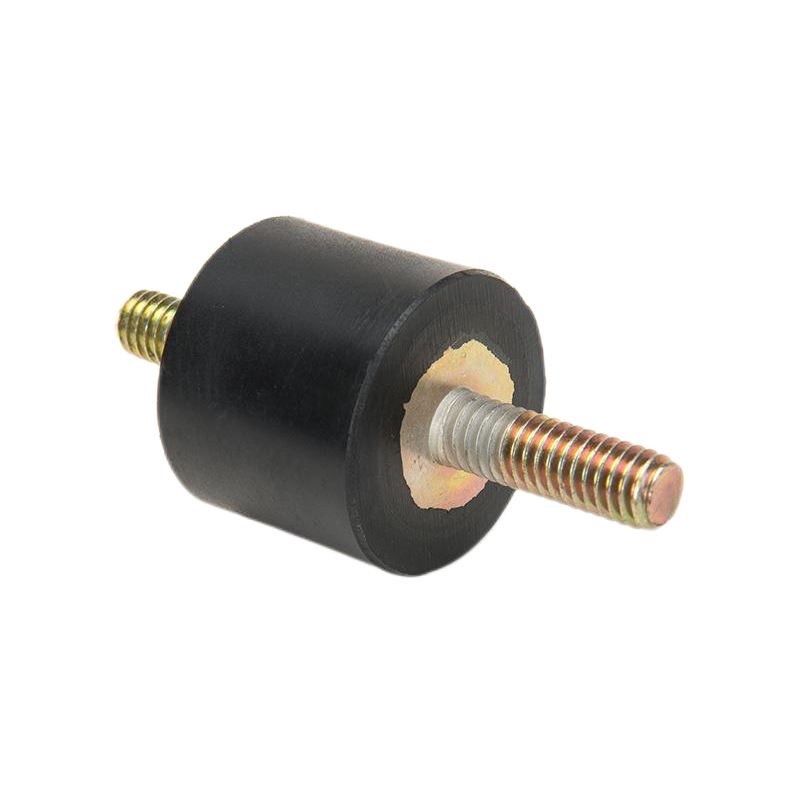
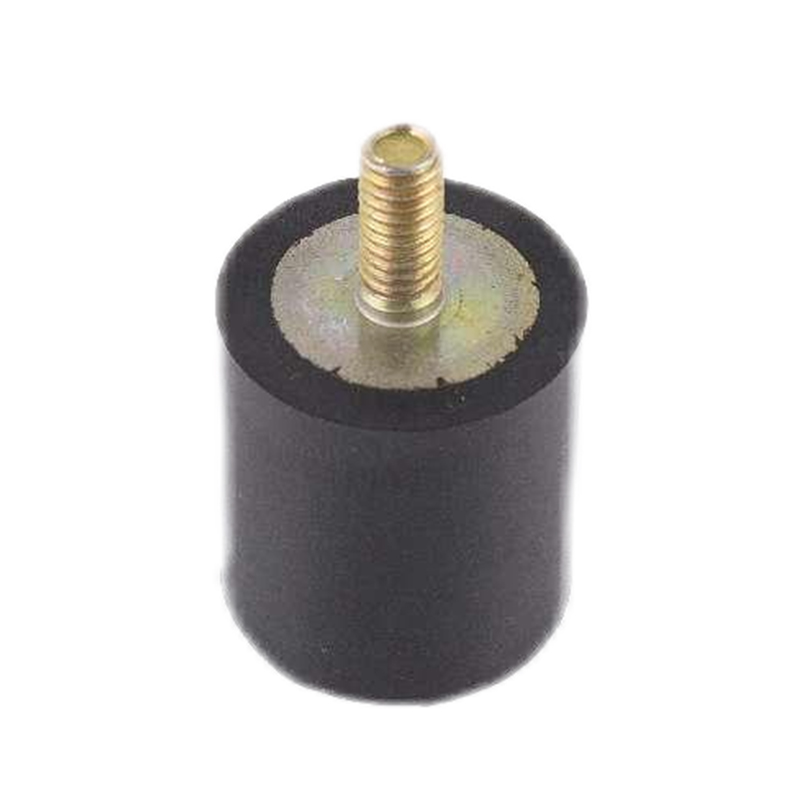
A rubber bumper is a molded or extruded rubber component designed to absorb impact energy at the end of a travel range, cushion contact between moving and stationary parts, and prevent metal-to-metal collision. Unlike vibration isolators, which operate under continuous dynamic loading, rubber bumpers are typically loaded intermittently -- absorbing a defined impact event and then returning to their unloaded shape.
The energy absorption capacity of a rubber bumper is determined by the volume of rubber, the hardness (durometer), and the geometry of the molded profile. Cylindrical, conical, dome, and buffer-style profiles each produce a different load-deflection curve. A conical bumper, for example, provides a progressive stiffness response -- relatively soft at initial contact and increasing resistance as deflection increases -- which is preferred in applications where impact velocity varies.
Natural rubber (NR) offers excellent resilience and low heat buildup under repeated impact, making it the default choice for general industrial and automotive applications. Nitrile rubber (NBR) is specified where oil and fuel resistance is required. Neoprene (CR) provides good weather and ozone resistance for outdoor applications. Polyurethane bumpers offer higher load capacity and superior abrasion resistance in heavy-duty impact applications, at the cost of lower resilience and higher unit cost compared to rubber.
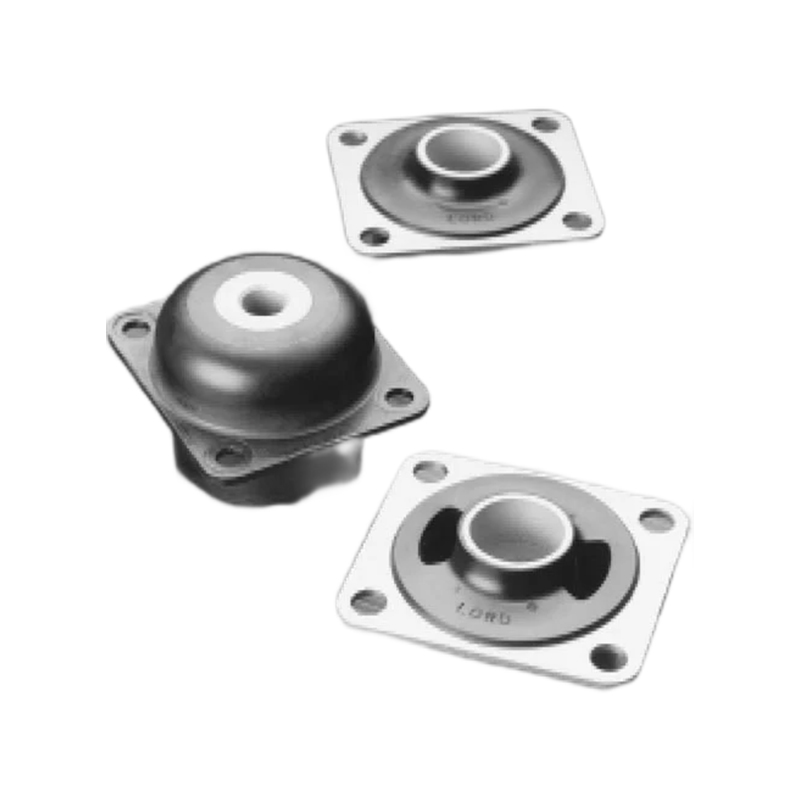
Rubber mounting -- also referred to as anti-vibration mounting or rubber-metal bonded mounting -- is a component that interposes a layer of elastomer between a vibrating machine and its supporting structure. By acting as a compliant spring element in the load path, the rubber mount attenuates the transmission of vibration energy from the machine into the structure, and conversely protects sensitive equipment from structure-borne vibration coming from the environment.
The fundamental design principle is that vibration isolation efficiency increases as the ratio of excitation frequency to the mount natural frequency increases. For effective isolation, the mount natural frequency (determined by its stiffness and the supported mass) should be at least 2.5 to 3 times lower than the lowest excitation frequency generated by the machine. This means mount stiffness must be carefully matched to the supported load.
When selecting a rubber mounting, the following parameters must be defined: static load per mount (total equipment weight divided by number of mounts), static deflection under load (which determines natural frequency), dynamic stiffness at the operating excitation frequency, and temperature range. For outdoor or washdown environments, ozone resistance and water resistance of the elastomer and metal bonding are additional considerations.
A shock absorber converts kinetic energy into heat through a controlled resistance force, decelerating a moving mass in a smooth and predictable manner. In industrial and automotive applications, shock absorbers serve a fundamentally different function from rubber bumpers or vibration mounts: rather than storing and returning energy elastically, a shock absorber permanently dissipates that energy, preventing rebound and controlling the deceleration profile.
Industrial hydraulic shock absorbers work by forcing oil through a series of orifices as the piston rod is compressed. The resistance force generated is velocity-dependent -- higher impact velocity produces greater resistive force -- which creates a controlled, near-constant deceleration curve regardless of impact speed within the rated range. This is the critical advantage over rubber bumpers in applications involving precise stopping position, high cycle rates, or loads sensitive to peak deceleration forces.
In automotive suspension, shock absorbers (dampers) work in combination with coil or leaf springs. The spring supports the vehicle weight and stores energy during wheel travel, while the shock absorber controls the rate of spring compression and extension, preventing oscillation after a bump. The rubber mounting at each end of the shock absorber isolates high-frequency road noise from the vehicle body -- demonstrating how rubber bumpers, rubber mountings, and shock absorbers can work together in a single assembly.
In industrial automation, self-compensating hydraulic shock absorbers are specified for stopping moving masses on linear slides, rotary tables, and transfer systems. Key parameters include energy absorption capacity per cycle (in joules), maximum cycle rate (cycles per minute), and effective weight range. Exceeding the energy rating of an industrial shock absorber leads to oil overheating, seal degradation, and premature failure.
| Parameter | Rubber Bumper | Rubber Mounting | Shock Absorber |
|---|---|---|---|
| Primary function | Absorb and return impact energy | Isolate continuous vibration | Dissipate kinetic energy as heat |
| Loading type | Intermittent impact | Continuous dynamic load | Intermittent high-energy impact |
| Energy handling | Elastic (stored and returned) | Attenuated (reduced transmission) | Dissipated (converted to heat) |
| Rebound | Present (elastic recovery) | Controlled by damping factor | Minimal to none |
| Typical material | NR, NBR, CR, polyurethane | NR, NR-SBR blend, neoprene | Hydraulic oil, steel, seals |
| Typical applications | End stops, dock buffers, bump stops | Motors, pumps, HVAC, engines | Automation stops, vehicle suspension |
Rubber hardness, measured in Shore A durometer, is one of the most important variables across all three component categories. Softer compounds (30 to 45 Shore A) provide lower natural frequency and higher deflection -- suitable for isolating low-frequency vibration sources or absorbing light impacts. Harder compounds (60 to 80 Shore A) carry higher loads with less deflection and are used where stiffness and precise positional control are priorities. Most standard rubber bumpers and mounts are supplied in the 40 to 70 Shore A range, with the optimum hardness determined by load and deflection requirements.
Temperature is the second most critical material parameter. Standard natural rubber compounds perform reliably from approximately minus 40 degrees Celsius to plus 70 degrees Celsius. Above this range, heat-induced hardening and oxidation degrade elasticity and load capacity. Silicone rubber extends the upper service temperature to plus 150 degrees Celsius and beyond, while EPDM (ethylene propylene diene monomer) offers excellent ozone, weather, and steam resistance for outdoor and high-humidity environments.
Chemical compatibility must also be verified in industrial environments. Nitrile rubber (NBR) is the standard choice for oil and fuel contact. Fluoroelastomer (FKM/Viton) provides resistance to aggressive chemicals, fuels, and high temperatures in demanding process industry applications, at significantly higher material cost than general-purpose compounds.
Before specifying any rubber vibration or impact control component, work through these questions to ensure the correct product type and specification:
In many practical installations, all three component types work together: a rubber mounting isolates the steady-state vibration of a machine, a rubber bumper limits travel at the extreme end of any dynamic movement, and a hydraulic shock absorber controls the deceleration of transported loads or moving assemblies within the same system. Understanding the distinct role of each component ensures the correct specification from the outset and avoids costly under-performance or premature failure in service.
Contact Us
Copyright ©
Jiaxing Tosun Rubber&Plastic Co., Ltd.
All Rights Reserved.
Custom Rubber And Plastics Products Factory