

 English
  中文简体
中文简体  Español
Industry News
Home / News / Industry News / Rubber Components Guide: PU vs Rubber Wheels, EPDM Gaskets, O-Ring Selection

2026-06-15
Wheel material selection directly determines load capacity, floor protection, rolling resistance, noise level, and service life. Polyurethane (PU) and rubber are the two dominant elastomer choices for industrial casters, material handling equipment, and light-duty vehicles, but they differ substantially in hardness range, chemical resistance, and wear behavior.
Polyurethane wheels are cast or injection-molded from isocyanate-polyol formulations and can be produced across a Shore A hardness range of 40A to 95A without changing the base chemistry. Rubber wheels are vulcanized from natural rubber (NR), styrene-butadiene rubber (SBR), nitrile (NBR), or neoprene (CR) compounds, each offering a distinct performance profile. The two materials often occupy the same application space but are rarely interchangeable without trade-offs.
| Property | Polyurethane Wheels | Rubber Wheels |
|---|---|---|
| Hardness range | 40A – 95A (tunable) | 30A – 80A (compound-dependent) |
| Load capacity | High — 2–4× more than comparable rubber at same diameter | Moderate — limited by compound tensile strength |
| Abrasion resistance | Excellent — DIN 53516 abrasion loss typically 30–80 mm³ | Good — NR/SBR blends 80–200 mm³ typical |
| Floor protection | Good (harder grades may mark soft floors) | Excellent — softer contact patch spreads load |
| Oil / chemical resistance | Good (ester-based PU) to moderate (ether-based PU) | Depends on compound: NBR excellent, NR poor |
| Temperature range | −20°C to +80°C (continuous) | −40°C to +100°C (compound-dependent) |
| Rolling noise | Low to moderate | Very low — natural rubber excels at noise damping |
| Cost | Higher upfront; longer service life | Lower upfront; may need more frequent replacement |
The decision typically comes down to floor type and load. Polyurethane wheels outperform rubber on hard, smooth concrete floors under heavy loads, offering significantly lower rolling resistance and longer tread life. Rubber wheels are preferred on rough or uneven surfaces, in cold storage environments where PU becomes brittle, and wherever floor marking must be completely avoided—certain rubber compounds leave no residue even under heavy loads that would cause a PU wheel to transfer material.
In wet environments, ether-based polyurethane is preferred over ester-based PU because ester linkages hydrolyze in prolonged contact with water, leading to delamination and cracking. Natural rubber and SBR wheels absorb limited water and maintain grip but can swell slightly in sustained immersion.
Ethylene propylene diene monomer (EPDM) rubber is the material of choice for gaskets and seals in outdoor, high-temperature, and chemical-exposure environments where natural rubber, nitrile, or neoprene would degrade prematurely. Its saturated polymer backbone—the diene component accounts for only 3–8% of the chain and is used solely as a crosslinking site—gives EPDM exceptional resistance to ozone, UV radiation, and oxidation that cause rapid cracking in unsaturated rubbers.
Key performance characteristics of EPDM gaskets:
EPDM gaskets are available in sheet, strip, molded, and extruded profiles. Sponge (expanded) EPDM is used where conformability to irregular surfaces matters more than high compressive strength—typical in enclosure door seals and panel joints where bolt load is limited. Solid EPDM is specified for flange face gaskets and pipe couplings where seating stress must be maintained over extended service cycles.
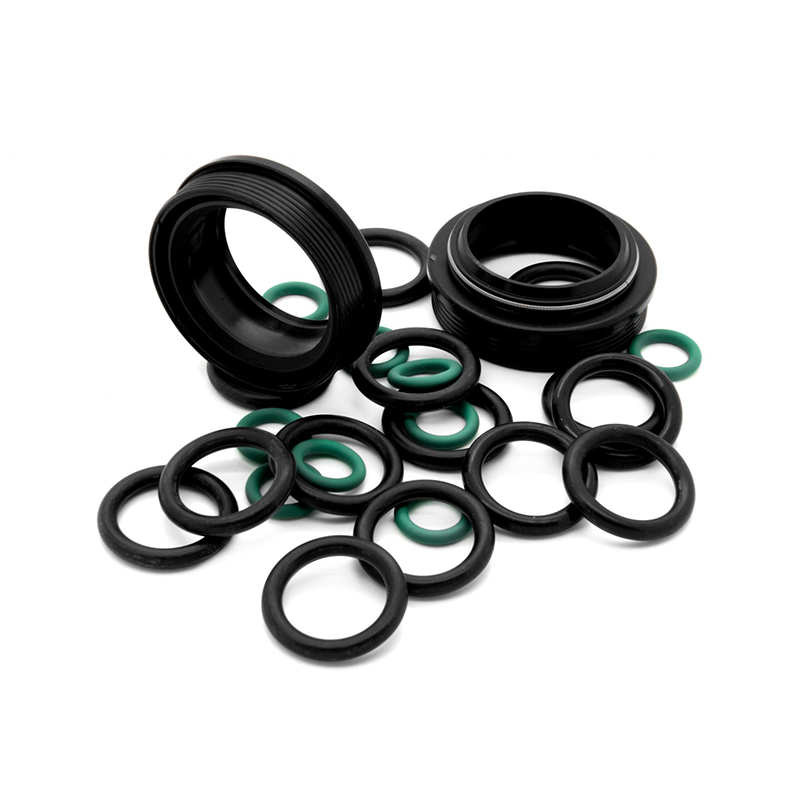
O-ring material selection is one of the most consequential decisions in fluid sealing design. The wrong elastomer in a dynamic or high-temperature application results in swelling, compression set failure, chemical attack, or extrusion—each leading to leakage or system failure. Silicone and rubber o-rings appear similar in shape and function but differ fundamentally in their polymer structure, mechanical properties, and chemical compatibility.
Silicone o-rings (VMQ — vinyl methyl silicone) use a Si–O backbone rather than a carbon backbone. The Si–O bond is inherently more thermally stable than C–C bonds, giving silicone its characteristic temperature resistance of −60°C to +230°C continuous (and up to +260°C for fluorosilicone grades). Silicone is also physiologically inert, making it the standard for food processing, pharmaceutical, and medical device seals requiring FDA 21 CFR 177.2600 or USP Class VI compliance.
However, silicone has two significant weaknesses in dynamic sealing applications: low tensile strength (5–10 MPa vs. 15–25 MPa for NBR) and poor tear resistance. Under reciprocating or rotating motion, silicone o-rings wear faster than NBR, EPDM, or FKM alternatives. In static face seal or low-cycle applications these limitations are rarely encountered.
Rubber o-rings covers a broad family: NBR (nitrile) is the most widely used, with excellent resistance to petroleum oils, fuels, and mineral hydraulic fluids across −40°C to +120°C; EPDM excels in water, steam, and ozone service; neoprene (CR) provides moderate oil and weather resistance; and FKM (Viton) handles the most aggressive chemical and temperature environments (up to +200°C continuous). The correct choice depends entirely on the fluid media, pressure, temperature, and whether the application is static or dynamic.
Silicone should never be used in contact with petroleum-based fluids, steam above 120°C (which hydrolyzes the Si–O backbone), or concentrated acids. In these environments, rubber compounds specifically formulated for the service media will consistently outperform silicone despite lower thermal ceilings.
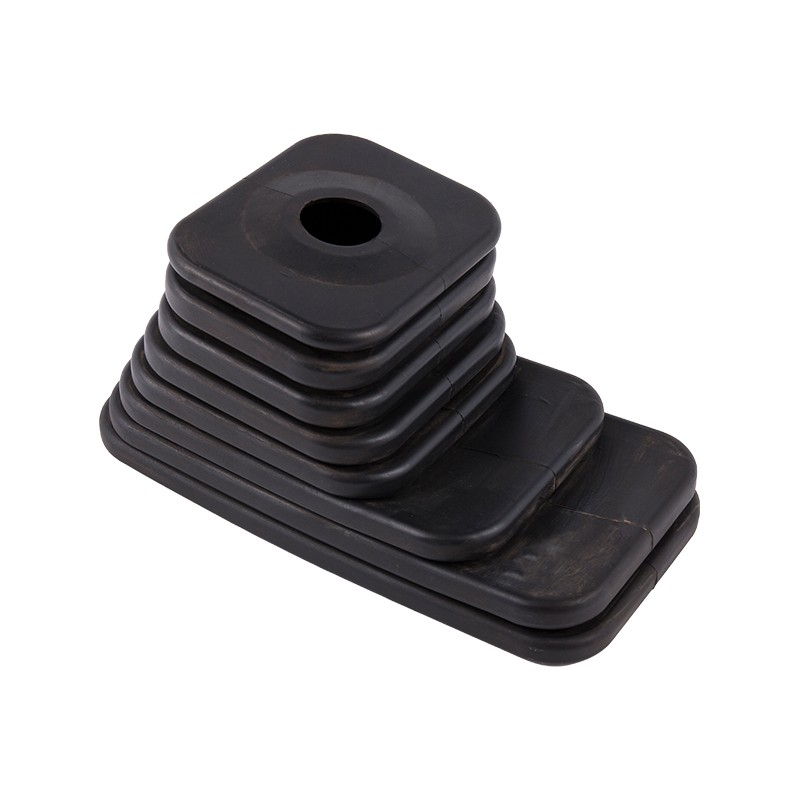
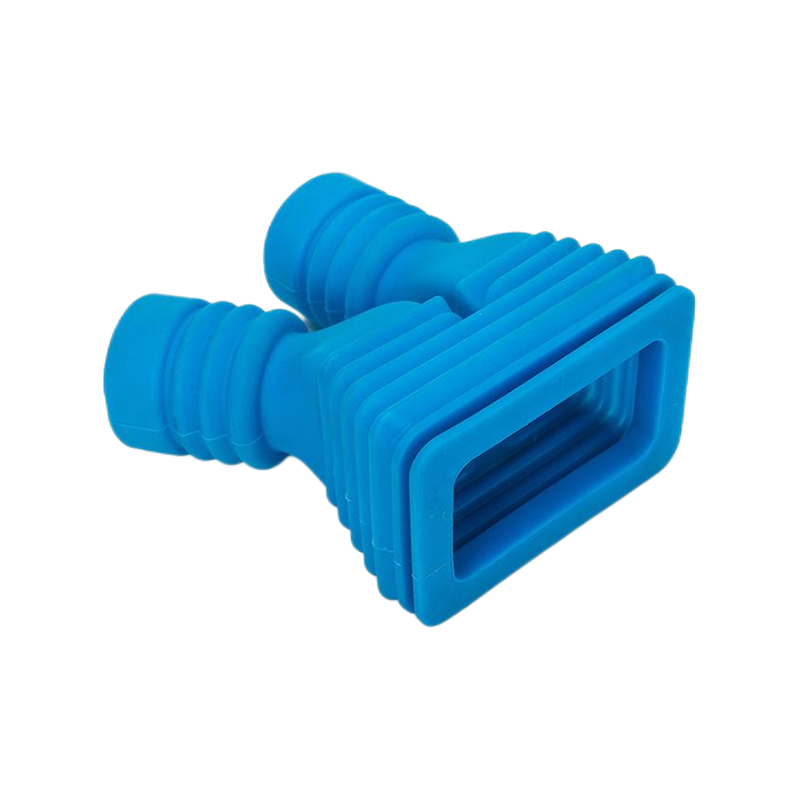
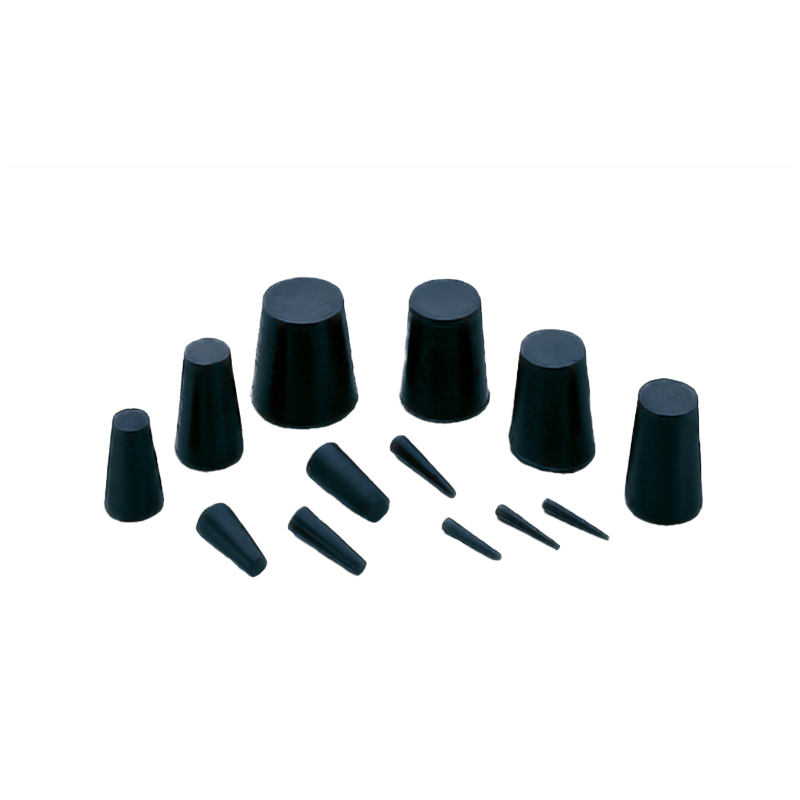
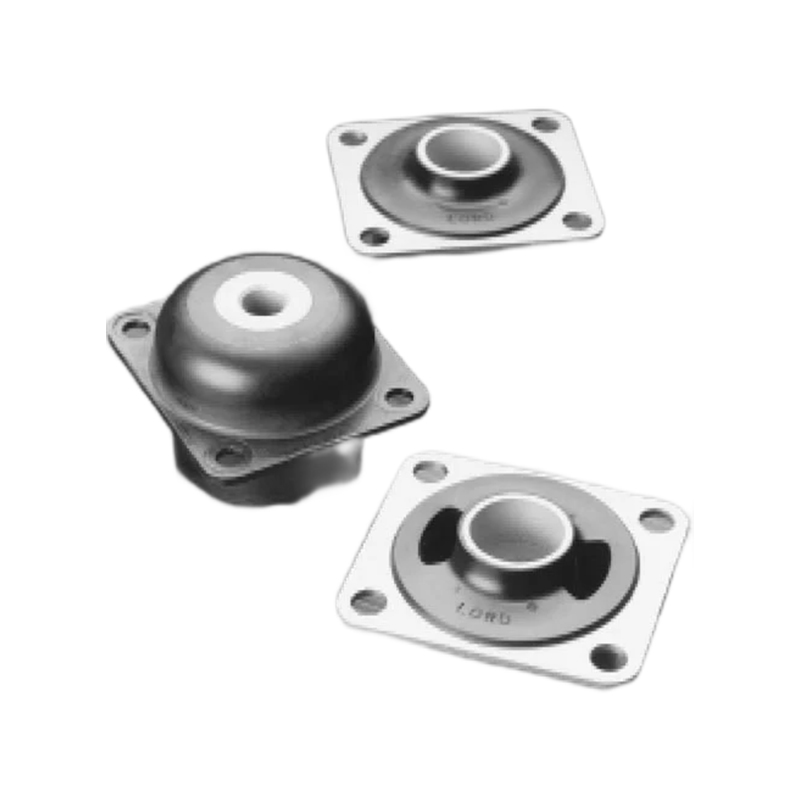
Molded rubber components—including seals, grommets, vibration isolators, bump stops, dust boots, diaphragms, and custom profiles—are produced through three primary molding methods, each suited to different geometries, volumes, and material types.
Critical design guidelines for molded rubber parts include:
Harder polyurethane formulations (above 90 Shore A) can leave marks on epoxy-coated or polished concrete floors, particularly when pivoting under load. Softer PU grades (70–85A) generally do not mark floors under normal rolling conditions. Non-marking formulations are available from most manufacturers, compounded without carbon black or other pigments that transfer to floor surfaces. If floor marking is an absolute requirement, natural rubber or thermoplastic rubber (TPR) wheels rated non-marking are the safest specification.
EPDM is compatible with several refrigerants including R-134a and ammonia (R-717), but performs poorly with R-22, R-410A, and most HFC blends in high-pressure applications where the refrigerant can permeate the gasket and cause explosive decompression on depressurization. HNBR (hydrogenated nitrile) or FKM are more appropriate for HFC refrigerant sealing applications. Always verify compatibility against the refrigerant manufacturer's elastomer compatibility data at the operating pressure and temperature.
Silicone has poor resistance to petroleum-based hydraulic fluids. The nonpolar oil molecules diffuse into the polar silicone network, causing volumetric swell of 20–50% or more depending on oil type and temperature. This swelling increases the o-ring cross-section, may cause groove extrusion, and after repeated wet-dry cycles leads to permanent dimensional change and loss of sealing force. Replace silicone o-rings in hydraulic oil service with NBR (for mineral oil) or FKM (for synthetic hydraulic fluids and high-temperature service).
Natural rubber (NR) has the highest resilience and fatigue life of any elastomer and remains the best choice for vibration isolators in terms of dynamic performance. However, NR degrades in ozone and UV exposure without antiozonant additives. For outdoor applications, NR blended with EPDM or chloroprene (CR), or EPDM alone, provides the necessary weather resistance while retaining adequate dynamic properties. If oil contamination is possible in the outdoor environment, neoprene (CR) is a better choice than either pure NR or EPDM.
Lead time for custom molded rubber components breaks into two phases: tooling and production. Compression mold tooling for a simple part typically takes 3–5 weeks; transfer or injection molds with tighter tolerances or multiple cavities require 6–10 weeks. Production lead time after tool approval is generally 2–4 weeks for standard compounds. Total first-article lead time of 8–14 weeks is typical for new custom molded parts. Expedited tooling services can compress this to 4–6 weeks at higher tooling cost, and many manufacturers maintain standard-geometry molds (o-rings, flat gaskets, grommets) for much faster delivery.
Contact Us
Copyright ©
Jiaxing Tosun Rubber&Plastic Co., Ltd.
All Rights Reserved.
Custom Rubber And Plastics Products Factory