

 English
  中文简体
中文简体  Español
Industry News

2026-06-08
A gasket is a mechanical seal placed between two mating surfaces — typically flanges, covers, or housings — to prevent leakage of fluids, gases, or contaminants across the joint when the surfaces are bolted or clamped together. The gasket fills the microscopic irregularities, scratches, and waviness that exist on even machined metal surfaces, creating a continuous barrier that a rigid metal-to-metal contact alone cannot achieve.
The function of a gasket is fundamentally compressive: when the joint fasteners are tightened, the gasket material is compressed between the two faces. This compression forces the gasket to conform to the surface topography on both sides, sealing off any potential leak path around the joint perimeter. The gasket must maintain this seal under the operating conditions of the joint — including internal pressure, temperature cycling, vibration, and chemical exposure — for the service life of the assembly.
Gaskets are distinct from O-rings and mechanical seals in geometry and application, though all three are sealing devices. A gasket is a flat or contoured sheet component that seals a static (non-moving) joint — pipe flanges, cylinder head covers, valve bodies, heat exchanger covers, and inspection plates. O-rings seal in a groove under radial or axial compression. Mechanical seals are dynamic devices that seal rotating shafts. In everyday industrial and mechanical use, however, "rubber seal" and "rubber gasket" are often used interchangeably when referring to flat elastomeric sealing components.
A rubber gasket is a sealing component cut, molded, or extruded from an elastomeric material — natural rubber or one of a wide range of synthetic rubber compounds — to fit between two joint faces. The elastomeric nature of rubber is precisely what makes it well suited to gasketing: rubber deforms under compression without fracturing, recovers when load is partially released, and accommodates minor misalignment and surface irregularities that rigid gasket materials cannot bridge without leaking.
Rubber gaskets are manufactured in flat sheet form (cut or die-stamped from sheet rubber), molded form (compression or injection molded to a specific profile), or as extruded profiles (for continuous seals in doors, hatches, enclosures, and windows). Sheet rubber gaskets — the most common type for flanged pipe and equipment joints — are available in thicknesses from 0.5 mm to 25 mm and in a range of hardness grades (Shore A 40–80 is typical for gasketing applications) depending on the compression load and sealing requirement.
The purpose of a rubber gasket over metallic or non-metallic alternatives (PTFE, compressed fiber, graphite spiral wound) is primarily cost, availability, and performance on lower-pressure, lower-temperature joints. Rubber gaskets are the right choice for water supply, HVAC, food processing, pneumatic, and general chemical service up to moderate pressures and temperatures. For high-temperature steam, extreme pressure, or strongly oxidizing chemical service, non-rubber gasket materials are specified.
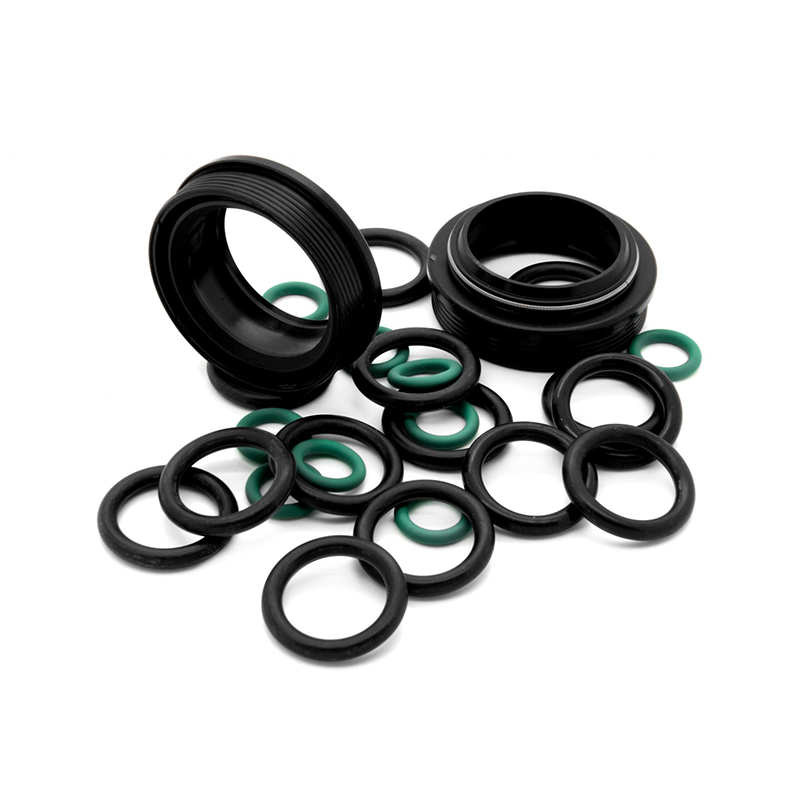
Different rubber compounds offer different combinations of temperature resistance, chemical compatibility, compression set resistance, and mechanical strength. Selecting the correct rubber type for the operating environment is the most critical decision in gasket specification — a chemically incompatible rubber will swell, harden, crack, or dissolve in service, causing joint failure regardless of correct installation.
Natural rubber has excellent tensile strength, high elasticity, and good abrasion resistance. It performs well in water service and dilute acid environments but is attacked by petroleum-based oils, fuels, and ozone. Temperature range is approximately −50°C to +80°C. Natural rubber gaskets are used in water mains, food-grade applications, and general pneumatic service where hydrocarbon contact is absent.
Nitrile (acrylonitrile-butadiene) rubber is the standard choice for oil and fuel service. Its acrylonitrile content (ranging from 18% to 50% depending on grade) determines its resistance to hydrocarbon swelling — higher nitrile content means better oil resistance but lower flexibility at low temperatures. NBR gaskets are widely used in hydraulic systems, automotive engines, fuel handling equipment, and industrial machinery wherever petroleum fluids are present. Temperature range is typically −40°C to +120°C.
EPDM has outstanding weathering, ozone, and UV resistance — the best of any common elastomer — combined with excellent performance in hot water and steam service up to approximately 150°C. It is the standard gasket material for HVAC ductwork, water treatment systems, roofing membranes, and outdoor electrical enclosures. EPDM is not compatible with petroleum oils or fuels, which cause rapid swelling. It is also the preferred gasket material for potable water systems, as it meets NSF/ANSI 61 requirements for drinking water contact.
Neoprene offers a balanced profile: moderate oil resistance, good weathering and ozone resistance, flame resistance, and a useful temperature range of −40°C to +120°C. It is widely used in refrigeration systems (compatible with many refrigerants), marine applications, and outdoor enclosure seals where both weathering and moderate chemical resistance are needed. Neoprene is often the default where neither NBR's oil focus nor EPDM's water/weather focus precisely fits the application.
Silicone rubber has the widest useful temperature range of any elastomeric gasket material: −60°C to +200°C, with some specialty grades rated to +250°C. It has excellent compression set resistance (maintains its sealing force over time without permanent deformation) and is FDA-compliant for food contact in most grades. Silicone is not resistant to petroleum oils or steam above 120°C, and its tear strength is lower than other rubber types, making it unsuitable for high-stress mechanical applications. It is standard in food processing equipment, pharmaceutical manufacturing, medical devices, and high-temperature oven and appliance seals.
Fluoroelastomer (Viton is the DuPont trade name; FKM is the ISO designation) offers the broadest chemical resistance of any rubber gasket material — resistant to petroleum fuels, oils, hydraulic fluids, many acids, and aromatic hydrocarbons — combined with a temperature range of −20°C to +200°C. FKM is specified for demanding chemical processing, aerospace fuel systems, and high-temperature engine applications where other rubbers would fail. Its cost is significantly higher than NBR or EPDM, so it is reserved for applications where chemical compatibility or temperature requirements cannot be met otherwise.
| Rubber Type | Temp Range | Oil/Fuel Resistance | Water/Weather | Typical Applications |
|---|---|---|---|---|
| Natural Rubber (NR) | −50 to +80°C | Poor | Good | Water mains, pneumatics, food |
| Nitrile (NBR) | −40 to +120°C | Excellent | Moderate | Hydraulics, fuel systems, engines |
| EPDM | −50 to +150°C | Poor | Excellent | HVAC, water treatment, potable water |
| Neoprene (CR) | −40 to +120°C | Moderate | Good | Refrigeration, marine, enclosures |
| Silicone (VMQ) | −60 to +200°C | Poor | Good | Food, pharma, medical, appliances |
| Viton (FKM) | −20 to +200°C | Excellent | Good | Chemical processing, aerospace, high-temp |
Gaskets are present in virtually every mechanical system that contains pressurized fluid or gas. Their applications span industries from residential plumbing to aerospace, wherever a static joint must be sealed reliably over time.
Rubber gaskets are found inside tap fittings, hose connectors, flange joints in water mains, water heater fittings, and toilet fill valves. EPDM and natural rubber dominate this segment due to their compatibility with water and their compliance with potable water contact standards. The flat rubber washer inside a garden hose fitting is one of the most widespread gasket applications in everyday use.
Engine valve cover gaskets, oil pan gaskets, thermostat housing gaskets, and transmission pan gaskets are all rubber or rubber-composite seals that prevent oil and coolant leaks at static joints on the engine block and ancillary components. NBR is standard for oil-contact gaskets; silicone and EPDM are used for coolant-circuit joints and high-temperature locations near the exhaust. Gasket failure — particularly the cylinder head gasket, which is a high-performance composite rather than plain rubber — is among the most expensive mechanical failures in automotive maintenance, underlining the critical function these components perform.
Flanged pipe joints in chemical plants, refineries, water treatment facilities, and process industries rely on gaskets to seal the interface between pipe sections, valves, pumps, and vessels. Rubber sheet gaskets — typically full-face or raised-face ring type — are the standard for lower-pressure water, steam, and chemical service piping. For higher pressure, elevated temperature, or aggressive chemical service, spiral wound metallic gaskets or ring-type joint (RTJ) metallic gaskets replace rubber.
Gaskets in food and pharmaceutical processing must meet FDA, NSF, or EC 1935/2004 compliance for food contact materials, in addition to performing their sealing function. Silicone and EPDM are the preferred materials — both are available in FDA-compliant grades, withstand CIP (clean-in-place) chemical cleaning cycles, and do not impart taste or odor to products. Tri-clamp sanitary gaskets — the flat ring seals used in stainless steel sanitary pipe fittings — are a standardized form factor used throughout food, beverage, dairy, and pharmaceutical production lines.
Rubber gaskets seal the door and cover joints of electrical enclosures, junction boxes, and outdoor equipment housings to achieve IP (Ingress Protection) ratings against water and dust. A correctly installed EPDM or neoprene foam gasket on an IP66-rated enclosure door maintains the sealed environment that protects electronics from water ingress, condensation, and contamination. Gasket compression, continuity around corners, and material compatibility with cleaning agents are all factors in maintaining the rated IP performance over the enclosure's service life.
In waterproof technical clothing — ski pants, drysuits, sailing trousers, and outdoor shell garments — "gaskets" refers to the latex or neoprene seals at the wrist, ankle, and neck openings that prevent water entry at the body-to-garment interface. The term is most commonly used in drysuit diving and whitewater paddling, where the suit must remain fully sealed to keep the wearer dry when submerged or in rough water.
Drysuit wrist and neck gaskets are typically molded from thin latex rubber, which forms a watertight seal against the skin through elastic compression. Latex gaskets are effective but fragile — they are the most frequent point of drysuit maintenance, requiring periodic lubrication with talc or silicone spray and replacement every 2–5 years depending on UV exposure and use frequency. Neoprene gaskets are more durable and warmer but provide a less complete water seal than latex, making them preferred for milder conditions. In ski and outdoor shell pants, a simpler internal ankle gaiter made from stretch fabric or neoprene serves a similar purpose — keeping snow and water from entering at the boot interface — and is colloquially referred to as a gasket in some product descriptions.
Contact Us
Copyright ©
Jiaxing Tosun Rubber&Plastic Co., Ltd.
All Rights Reserved.
Custom Rubber And Plastics Products Factory