

 English
  中文简体
中文简体  Español
Industry News

2026-07-28
From pressure testing pipelines to protecting electrical enclosures, rubber plugs are engineered differently depending on what they need to seal against. This guide covers the main types of rubber plugs used across industrial applications and what separates a reliable plug from one that fails under pressure.
A rubber expansion plug uses a mechanical mechanism — typically a wing nut or bolt that compresses a rubber body between two metal plates — to expand the rubber outward and create a tight seal against the inside diameter of a pipe or opening. This mechanical expansion allows the plug to create a much stronger, more controllable seal than a simple push-in tapered plug, particularly useful where the seal needs to hold against internal pressure or vibration.
Rubber test plugs are used specifically to seal pipe ends during pressure or leak testing before a plumbing or piping system is put into service. Because test plugs need to hold pressure reliably without leaking or blowing out, they're typically built with a mechanical expansion mechanism similar to an expansion plug, rated for a specific test pressure. Manufacturers like Jiaxing Tosun Rubber & Plastic Co., Ltd. produce test plugs across a range of sizes and pressure ratings, since undersized or under-rated test plugs are a common cause of failed or unreliable pressure tests.
| Type | Primary Function | Typical Use |
|---|---|---|
| Rubber pipe plug | Seals a pipe end temporarily or during processing | Testing, transport, painting, plating |
| Rubber blanking plug | Permanently or semi-permanently blocks an unused port or line | Decommissioned lines, unused equipment ports |
Comparison of rubber pipe plugs and blanking plugs by function.
While the two terms are sometimes used interchangeably, a blanking plug more often implies a longer-term or permanent seal, while a pipe plug is more commonly associated with temporary use during manufacturing, testing, or shipping.
General term for a plug designed primarily to create a watertight or airtight seal against an opening.
A ring or bushing-shaped plug that seals around a cable, wire, or fitting passing through a panel opening.
Grommet plugs specifically address a common challenge: sealing around something that passes through a hole, rather than sealing the hole itself. This makes them a common choice for cable and wire pass-throughs in enclosures, panels, and equipment housings where a solid plug wouldn't work.
Rubber plugs for metal holes are commonly used to cap unused mounting or knockout holes in sheet metal enclosures, panels, and equipment housings, protecting against dust, moisture, and sharp edge exposure. Rubber plugs for electrical enclosures serve a similar purpose but often carry additional requirements — such as flame retardance or specific ingress protection (IP) ratings — since these plugs are part of the enclosure's overall protection against moisture and contamination reaching live electrical components.
When sourcing plugs for electrical enclosures specifically, it's worth confirming the plug's IP rating and material flame rating match your equipment's overall certification requirements, since a plug that doesn't meet the enclosure's rated protection level can undermine the certification of the entire assembly.
Material range: a manufacturer offering multiple rubber compounds (EPDM, nitrile, silicone, neoprene) can match plugs to a wider range of environments.
Size and tolerance control: consistent dimensional tolerances matter most for expansion and test plugs that need to seal reliably under pressure.
Certification support: confirm the manufacturer can provide material certifications relevant to your industry, such as food-grade or flame-retardant ratings.
Custom molding capability: non-standard shapes or sizes may require a manufacturer with in-house tooling and mold design capability.
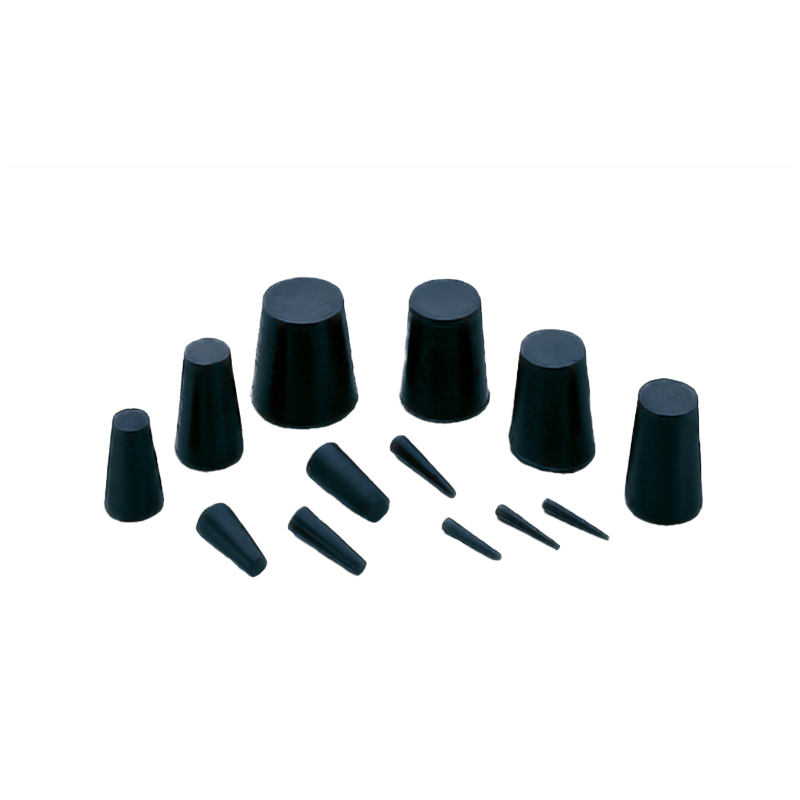
Jiaxing Tosun Rubber & Plastic Co., Ltd. supplies rubber plugs and stoppers across these categories, from standard tapered hole plugs to expansion and test plugs built for specific pressure ratings, supporting both standard and custom sizing for industrial sealing applications.
Contact Us
Copyright ©
Jiaxing Tosun Rubber&Plastic Co., Ltd.
All Rights Reserved.
Custom Rubber And Plastics Products Factory