

 English
  中文简体
中文简体  Español
Industry News

2026-07-20
A rubber plug looks like a simple part, but getting the wrong size, shape, or material is one of the most common causes of leaks and failed seals. This guide covers the difference between plugs and stoppers, how to size them correctly, and how rubber compares to silicone for different applications.
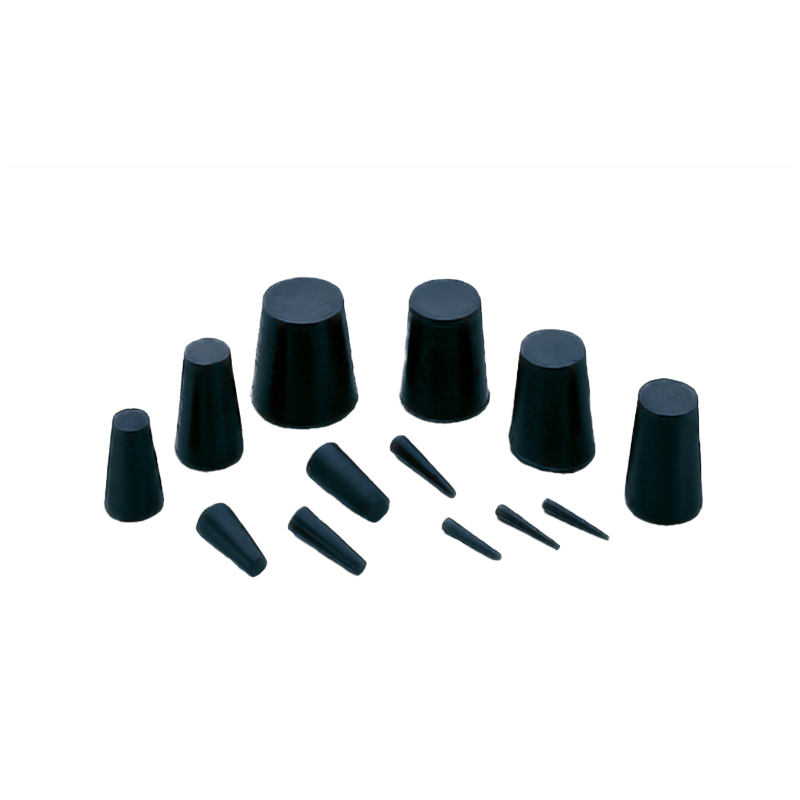
The terms are often used interchangeably, but there's a practical distinction: a rubber plug is typically tapered or cylindrical and designed to seal a hole, port, or opening from one side, often used to block unused ports or protect threads during processing. A rubber stopper usually refers to a tapered plug designed to seal the neck or opening of a bottle, tube, or vessel, forming a compression seal as it's pressed or twisted into place.
In practice, the two overlap significantly in design — most tapered rubber plugs can function as stoppers and vice versa — but the terminology often reflects the specific industry or application context rather than a strict technical difference.
Seal unused mounting holes, ports, or openings in equipment housings and panels.
Cap open tube ends during testing, storage, or shipping to keep contaminants out.
Seal pipe ends during pressure testing, painting, plating, or transport.
Block drains temporarily during maintenance, testing, or standing water applications.
Across these applications, the core function is the same — creating a temporary or semi-permanent seal — but the required taper angle, hardness, and size tolerance vary depending on whether the plug needs to hold back pressure, simply block debris, or seal against a threaded fitting.
Rubber plug sizes are typically specified by the diameter range they fit, since most tapered plugs are designed to seal a range of hole sizes rather than one exact diameter. A tapered plug is generally sized by its top and bottom diameter, allowing it to compress and seal against holes anywhere within that range.
| Plug Type | Sizing Reference | Typical Use |
|---|---|---|
| Tapered plug | Top and bottom diameter range | General-purpose hole and port sealing |
| Straight/cylindrical plug | Single fixed diameter | Precision-fit holes with consistent diameter |
| Threaded plug | Thread size (e.g., NPT designation) | Sealing threaded ports and fittings |
Common rubber plug sizing references by plug type.
Always check the plug manufacturer's sizing chart before ordering, since a tapered plug rated for a specific diameter range needs to compress enough to seal but not so much that it can't be removed later if the application requires reuse.
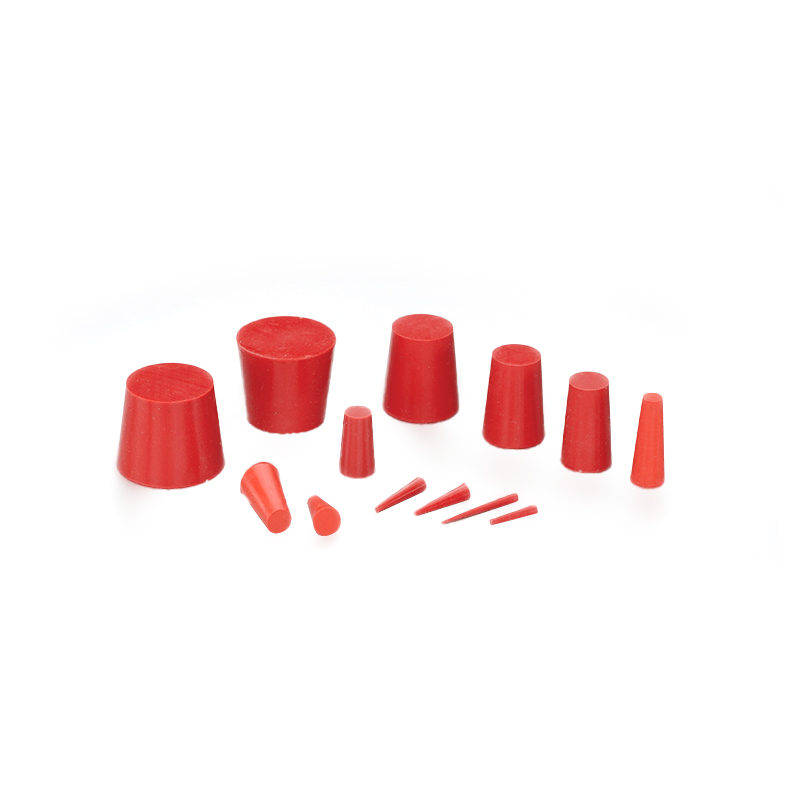
Rubber plug material affects chemical resistance, temperature tolerance, and flexibility, and choosing the wrong compound for the environment is a common cause of premature failure. Common rubber plug materials include:
| Factor | Silicone Plug | Rubber Plug |
|---|---|---|
| Temperature range | Wider range, handles higher heat well | Narrower range depending on compound |
| Chemical resistance | Good general resistance, food-grade options available | Varies significantly by rubber compound |
| Mechanical strength | Generally softer, lower tear resistance | Typically higher tensile and tear strength |
| Cost | Often higher, especially for food or medical grade | Generally more cost-effective |
Comparison of silicone and standard rubber plugs.
Silicone plugs are typically chosen for high-temperature applications, food and medical contexts requiring specific certifications, or environments needing broad chemical compatibility. Standard rubber compounds like EPDM, neoprene, or nitrile are usually the more practical choice where mechanical durability and cost matter more than extreme temperature range.
Sealing requirement: confirm whether the plug needs to hold pressure, block debris, or simply cap an opening.
Hole or port dimensions: measure carefully and check the plug's rated diameter range before ordering.
Environmental exposure: match rubber compound to expected chemical, oil, or temperature exposure.
Removability: confirm whether the plug needs to be removable, which affects taper and compression fit selection.
Certifications: food, medical, or drinking water applications may require specific material certifications.
Matching plug shape, size, and material to the specific sealing task — rather than grabbing the closest-fitting plug on hand — is what prevents leaks, premature material breakdown, and repeat replacement costs.
Contact Us
Copyright ©
Jiaxing Tosun Rubber&Plastic Co., Ltd.
All Rights Reserved.
Custom Rubber And Plastics Products Factory