

 English
  中文简体
中文简体  Español
Industry News

2026-07-14
A rubber gasket does one job — seal the gap between two surfaces — but getting that seal to actually hold under pressure, temperature, or chemical exposure depends entirely on matching the right rubber compound and profile to the application. The wrong material choice is the single most common cause of gasket failure, more than design or installation.
A rubber gasket is a mechanical seal, typically cut or molded from an elastomeric material, placed between two mating surfaces to fill irregularities and prevent the leakage of fluid or gas under compression. Rubber's elasticity is what makes it effective as a gasket material — it deforms to fill microscopic surface imperfections that rigid materials can't conform to, while still returning close to its original shape when pressure is released.
When two flanged or mating surfaces are bolted or clamped together with a rubber gasket between them, the compressive force squeezes the rubber into the microscopic gaps and surface irregularities on both faces. This creates a continuous seal barrier that resists the passage of liquid or gas through the joint. The seal depends on maintaining sufficient compression — too little clamping force and the gasket won't fully conform to the surfaces; too much can over-compress and permanently deform the rubber, reducing its ability to maintain a seal over time.
Die-cut from sheet rubber to a specific shape, the most common and cost-effective gasket type for flange and cover joints.
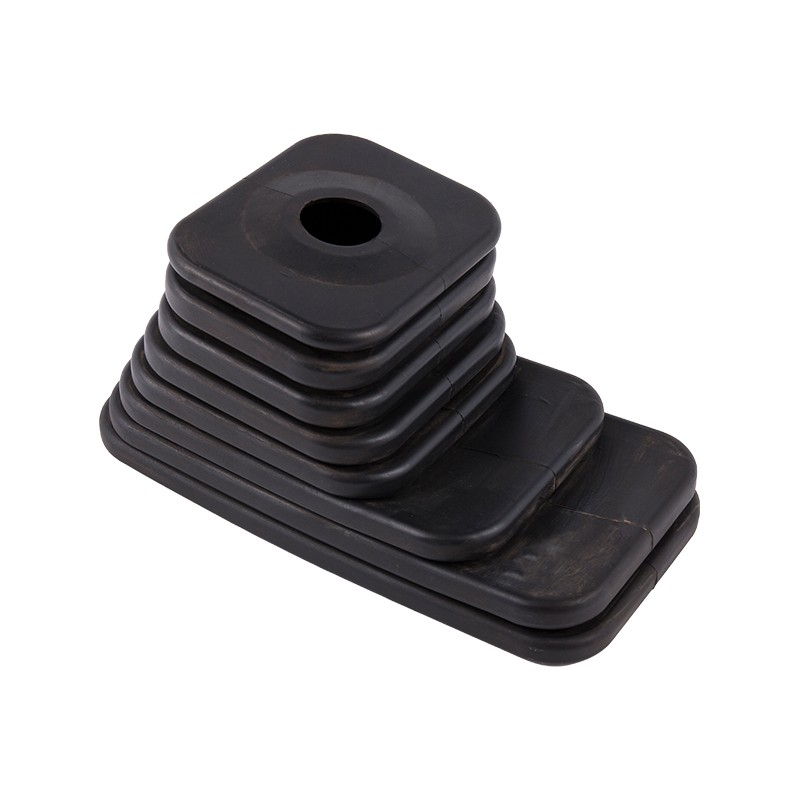
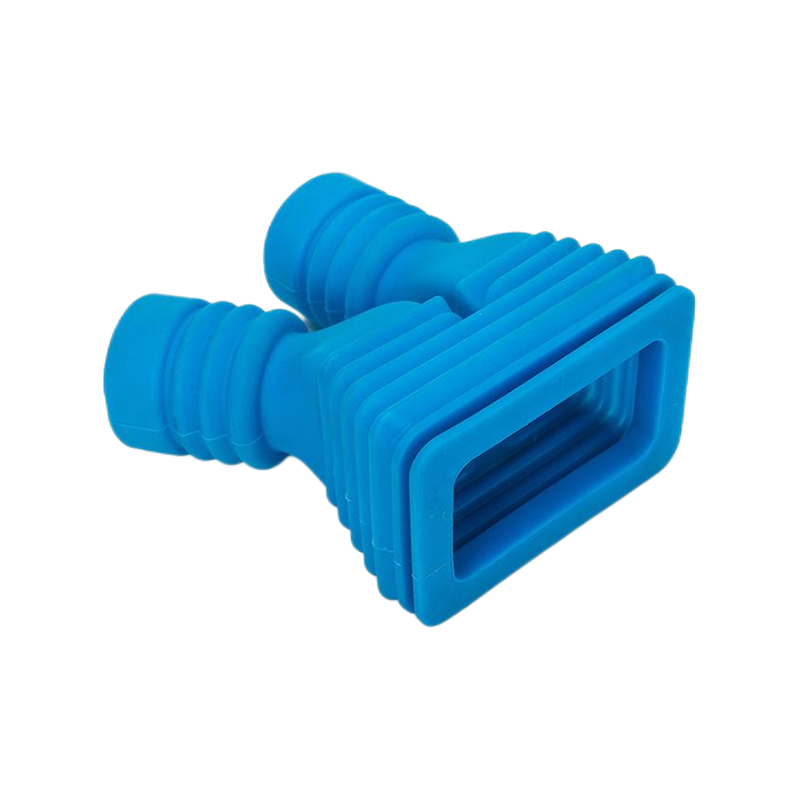
Formed in a mold to precise 3D profiles, used where complex shapes or consistent cross-sections are required beyond flat sheet stock.
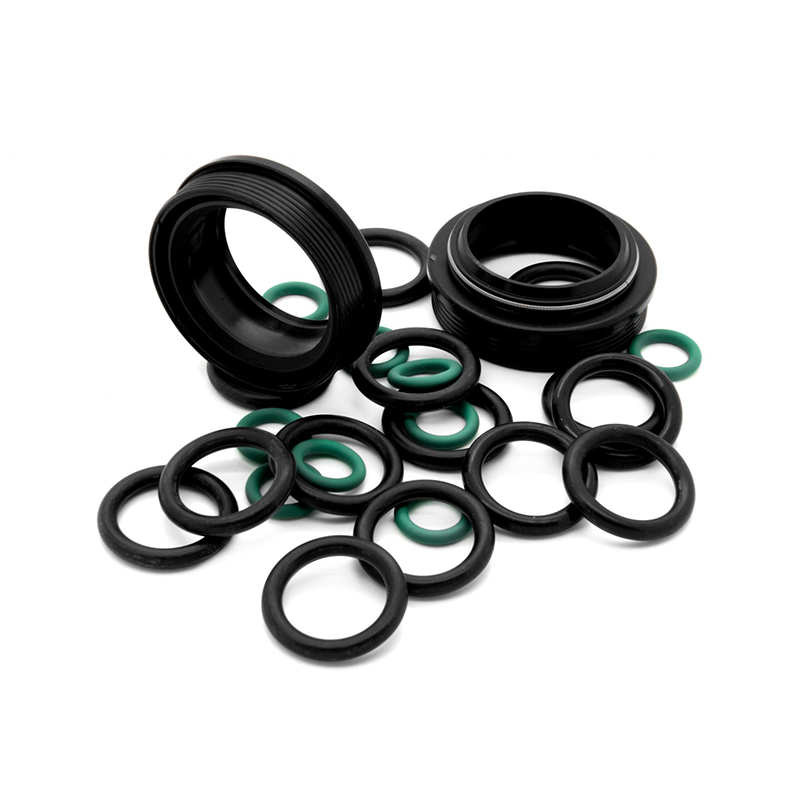
A circular cross-section molded loop, one of the most widely used sealing profiles for static and dynamic applications alike.
Combine a metal winding with a soft filler material (often including rubber or elastomeric components) for high-pressure, high-temperature industrial sealing.
Compressible, low-density rubber used for low-pressure sealing, weatherstripping, and cushioning applications.
Engineered to specific cross-sections and shapes for equipment that doesn't suit standard flat or O-ring profiles.
| Material | Key Characteristics | Typical Use |
|---|---|---|
| Nitrile (NBR) | Good oil and fuel resistance, moderate temperature range | Automotive, fuel systems, hydraulic seals |
| EPDM | Excellent weather, ozone, and water resistance | Outdoor seals, HVAC, water systems |
| Silicone | Wide temperature range, good flexibility at extremes | Food-grade, medical, high/low temperature applications |
| Viton (FKM) | Strong chemical and high-temperature resistance | Chemical processing, aerospace, harsh environments |
| Neoprene (CR) | Balanced resistance to oil, weather, and moderate chemicals | General industrial and outdoor sealing |
| Natural Rubber | High elasticity and tensile strength, limited chemical resistance | General-purpose, low-chemical-exposure sealing |
The terms are often used interchangeably, but there's a general distinction: a gasket typically refers to a static seal placed between two stationary, bolted or clamped surfaces, while seal more broadly covers both static and dynamic applications, including components that seal around moving parts, such as shaft seals. In practice, a gasket is a specific type of seal — every gasket is a seal, but not every seal is a gasket.
Standard flat sheet or O-ring gaskets cover most general applications, but equipment with irregular flange shapes, unusual thickness requirements, or tight tolerance needs typically requires a custom die-cut or molded gasket. Custom gaskets are specified by material compound, durometer (hardness), thickness, and exact profile dimensions — and for production runs, working from a physical sample or CAD drawing generally produces a more accurate first-run fit than dimensions alone.
Silicone's wide operating temperature range (commonly from roughly -60°C to 200°C+ depending on formulation) makes it a common choice where other rubber compounds would fail. Typical applications include food and beverage equipment requiring frequent hot washdown cycles, medical and pharmaceutical equipment needing sterilization resistance, electronics enclosures exposed to temperature extremes, and outdoor or automotive components cycling between hot and cold conditions. Silicone's relatively lower mechanical strength and abrasion resistance compared to compounds like nitrile or neoprene is the main tradeoff for its temperature performance.
Contact Us
Copyright ©
Jiaxing Tosun Rubber&Plastic Co., Ltd.
All Rights Reserved.
Custom Rubber And Plastics Products Factory