

 English
  中文简体
中文简体  Español
Industry News

2026-07-06
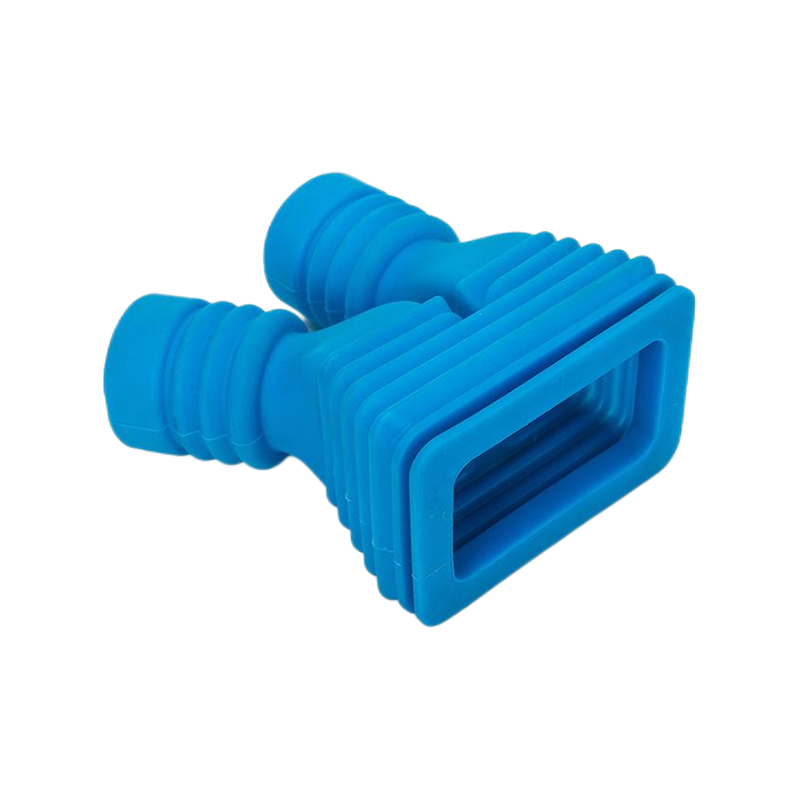
Rubber bellows are flexible, accordion-shaped components molded from elastomeric material and used to seal, protect, or absorb movement between two connected parts of a mechanical assembly. Their distinctive convoluted shape, a series of alternating ridges and grooves, allows them to expand, compress, and flex repeatedly without tearing or losing their sealing ability, which is why they show up in an enormous range of applications, from automotive steering and suspension components to industrial machinery, pumps, and expansion joints in piping systems.
The fundamental purpose of a rubber bellows is almost always one of three things: keeping contaminants like dust, dirt, and moisture out of a sensitive mechanical joint, containing lubricant or fluid inside an assembly, or absorbing axial, angular, and lateral movement between two components that aren't rigidly fixed to one another. A single bellows design often accomplishes more than one of these functions simultaneously, which is part of why they remain such a cost-effective solution across so many different industries.
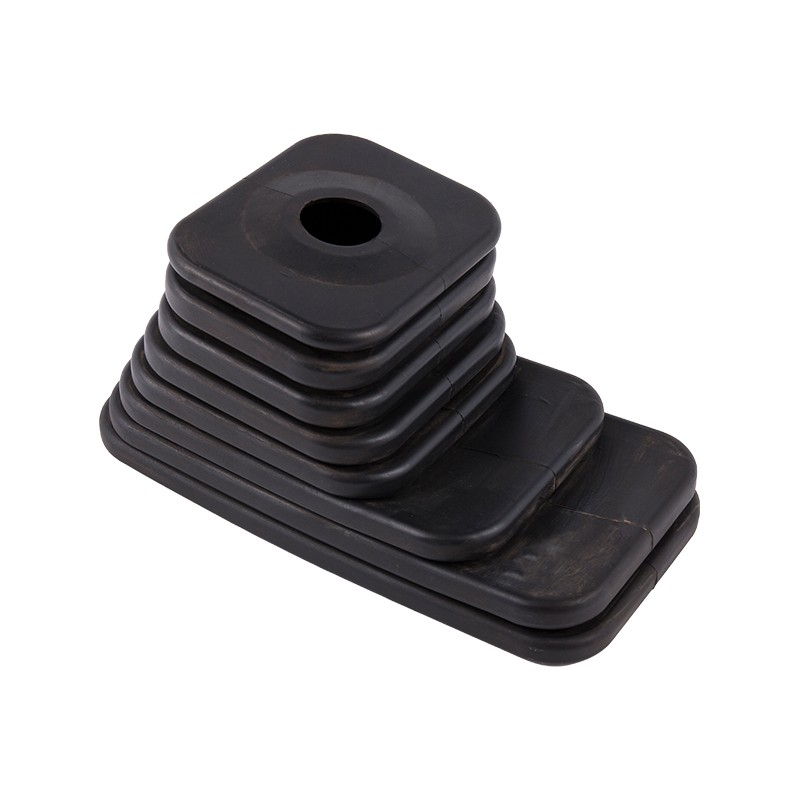
Rubber bellows are typically produced through compression molding or injection molding, where uncured rubber compound is shaped inside a precision mold that forms the characteristic convoluted profile, then cured under heat and pressure to achieve its final elastic properties. The number, depth, and spacing of the convolutions are engineered specifically around the range of motion the bellows needs to accommodate, since more convolutions generally allow greater compression and extension travel, while fewer, shallower convolutions favor a more compact design suited to tighter installation spaces with limited movement.
Wall thickness is another critical design variable, balancing flexibility against durability: thinner walls flex more easily and generate less resistance during movement, but sacrifice some resistance to abrasion, punctures, and pressure differentials, while thicker walls hold up better under harsh mechanical or environmental conditions at the cost of requiring more force to compress and extend. Reinforcement, such as embedded fabric plies or steel end rings, is sometimes added to bellows that need to withstand internal pressure or resist being pulled off their mounting points under heavy mechanical load.
End fittings and mounting features are molded or bonded directly into the bellows design based on how it will attach to the surrounding assembly, whether that's a simple friction-fit collar, a bolted flange, or a threaded connection, and getting this interface right is just as important to overall performance as the convolution profile itself, since a poorly sealed mounting point defeats the purpose of the bellows regardless of how well the body itself is engineered.
Material selection for rubber bellows depends heavily on the operating environment, since different elastomers offer very different resistance profiles to heat, chemicals, oils, and outdoor weathering. EPDM rubber is widely used for outdoor and weather-exposed applications thanks to its excellent resistance to ozone, UV exposure, and a wide temperature range, making it a common choice for automotive exterior components and outdoor industrial equipment. Nitrile rubber (NBR), by contrast, offers strong resistance to oils, fuels, and hydraulic fluids, making it the preferred choice for bellows used around engines, transmissions, and hydraulic systems where petroleum-based fluid exposure is a daily reality.
Silicone rubber bellows are specified when extreme temperature resistance is the priority, since silicone maintains its flexibility across an unusually wide temperature range compared to most general-purpose rubber compounds, making it well suited to high-heat industrial equipment or applications with significant temperature swings. Silicone does trade off some mechanical durability and chemical resistance compared to EPDM or NBR, so it's generally chosen specifically for its thermal performance rather than as a default all-purpose material.
Beyond the base polymer, buyers should also consider compound hardness, typically measured on the Shore A durometer scale, since softer compounds flex more easily and generate less resistance during movement, while harder compounds resist abrasion and mechanical damage better but require more force to compress and may fatigue faster under constant flexing. Working from the specific temperature range, chemical exposure, and expected movement cycle count of the application, rather than defaulting to a generic rubber grade, is what separates a bellows that lasts for years from one that fails prematurely.
| Compound | Key Strength | Typical Use Case |
|---|---|---|
| EPDM | Ozone, UV, weather resistance | Outdoor & automotive exterior |
| NBR (Nitrile) | Oil & fuel resistance | Engines, hydraulics, transmissions |
| Silicone | Extreme temperature range | High-heat industrial equipment |
Rubber bellows appear across a wide range of industries, most commonly as constant velocity (CV) joint boots, steering rack boots, and shock absorber dust covers in automotive applications, where they keep grease in and contaminants out of critical moving joints. In industrial machinery, bellows protect linear actuators, ball screws, and pneumatic cylinders from dust, chips, and debris in manufacturing and machine tool environments.
Cracking along the convolution ridges is typically the earliest visible sign that a rubber bellows is nearing the end of its service life, since the peaks of each convolution experience the greatest flexing stress with every movement cycle and are the first areas to show fatigue, particularly on bellows exposed to UV light, extreme temperatures, or chemical exposure beyond what the compound was rated for. Once a crack forms, it tends to propagate quickly under continued flexing, so a bellows showing early surface cracking should generally be scheduled for replacement rather than left in service until it fully splits.
Contamination ingress is often the first practical symptom noticed even before visible cracking is spotted, particularly on automotive CV joint boots and steering components, where a failed bellows allows dirt and moisture into the joint, leading to grease contamination, accelerated wear, and eventually joint failure if the torn bellows isn't caught and replaced promptly. Regular visual inspection during routine maintenance is the most effective way to catch bellows failure before it causes secondary damage to the more expensive component it's protecting.
When replacing a rubber bellows, matching the original compound, wall thickness, and convolution profile, rather than substituting a generic bellows of similar size, is important for getting the expected service life back, since a bellows undersized on wall thickness or made from a compound not suited to the application's temperature and chemical exposure will typically fail again well before the original design life would suggest. Sourcing replacement bellows from a supplier that can confirm compound specifications and provide dimensional drawings avoids the common problem of a part that fits physically but underperforms in service.
Contact Us
Copyright ©
Jiaxing Tosun Rubber&Plastic Co., Ltd.
All Rights Reserved.
Custom Rubber And Plastics Products Factory