

 English
  中文简体
中文简体  Español
Industry News

2026-05-12
Rubber is one of the most versatile engineering materials in modern industry. Its core properties — elasticity, compressibility, chemical resistance, electrical insulation, and durability under dynamic loading — make it indispensable across construction, automotive, aerospace, medical, and consumer goods manufacturing.
Global rubber consumption exceeds 27 million metric tons annually, split roughly between natural rubber (harvested from Hevea brasiliensis trees) and synthetic rubber compounds engineered for specific performance environments. The choice of rubber compound — whether EPDM, silicone, neoprene, nitrile (NBR), or natural rubber — determines how a finished product performs against heat, ozone, oils, or mechanical stress.
Rubber's uses fall into two broad categories: molded or compression-formed products (seals, gaskets, grommets) and extruded products — continuous profiles, tubes, cords, and strips produced by forcing uncured rubber through a shaped die. Extrusion accounts for a substantial share of industrial rubber output and is the primary manufacturing route for weather seals, hoses, edging trims, and structural glazing tapes.
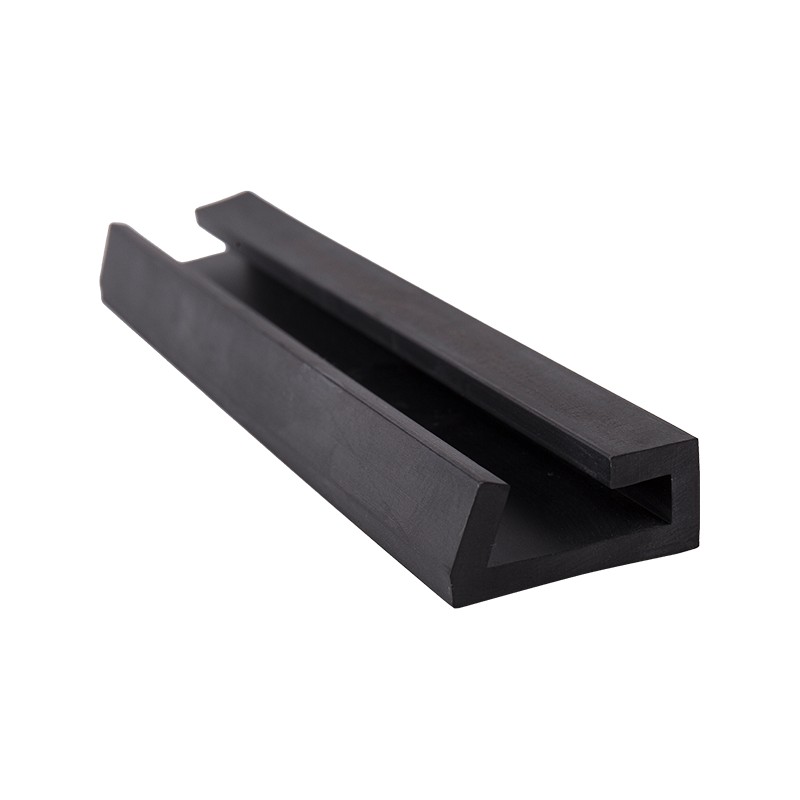
The automotive sector is the single largest consumer of rubber, accounting for roughly 60–70% of global natural rubber demand. A typical passenger car contains over 200 rubber components: tires, engine mounts, door seals, window channels, hoses, belts, bushings, and suspension bump stops. Each component requires a compound formulated for its specific environment — high-temperature under-hood conditions, ozone exposure on exterior seals, or oil immersion in engine compartments.
In construction, rubber performs sealing, vibration isolation, and waterproofing functions that no other material can replicate economically. EPDM rubber roofing membranes cover millions of square meters of commercial flat roofs globally. Rubber expansion joints accommodate thermal movement in bridges, tunnels, and large structures without cracking. Glazing seals and window profiles — almost all produced by extrusion — prevent air and water infiltration in curtain walls and façade systems.
Rubber hoses and tubing are the primary conduits for transferring fluids and gases under pressure across virtually every process industry. Nitrile rubber excels in contact with petroleum-based fluids; silicone tubing is preferred in food processing and pharmaceutical applications due to its inertness and high-temperature tolerance (stable from −60 °C to +230 °C); EPDM handles steam and hot water lines. Extruded rubber tubing can be produced in continuous lengths with tight dimensional tolerances — inner diameter deviations of ±0.1 mm are achievable on precision extrusion lines.
Rubber's high dielectric strength makes it a natural insulator for electrical cables, connectors, and switchgear seals. Silicone rubber cable jackets maintain flexibility and insulation integrity at temperatures where PVC or polyethylene would become brittle or melt. In hazardous environments — offshore platforms, mining equipment, rail traction cables — rubber-jacketed cables provide a combination of flexibility, crush resistance, and flame retardancy that thermoplastics alone cannot match.
Medical-grade silicone rubber is used in catheters, tubing sets, implant components, and pharmaceutical stoppers. Its biocompatibility, resistance to sterilization (autoclave, gamma irradiation, ethylene oxide), and absence of extractable plasticizers are critical requirements. Similarly, food-grade EPDM and silicone rubber seals are used in beverage dispensing equipment, dairy processing lines, and packaging machinery wherever direct food contact occurs.
Rubber extrusion is a continuous manufacturing process in which uncured (green) rubber compound is fed into a screw extruder, plasticized under heat and pressure, and forced through a precision-machined die. The emerging profile is then vulcanized — cured — by passing through a hot air tunnel, salt bath, microwave oven, or steam autoclave, fixing the rubber's cross-linked molecular structure permanently.
The key advantage of extrusion over molding is continuous production of consistent cross-sections at high throughput. Complex profiles — co-extruded two-material sections, sponge-and-solid combinations, profiles with embedded metal reinforcement — can be produced in long coils or cut-to-length pieces with repeatable dimensional accuracy.
The rubber compound used in an extruded product defines its service life and application range. Selecting the wrong compound is one of the most common reasons for premature seal or hose failure in industrial service.
| Rubber Type | Temperature Range | Key Strengths | Typical Extrusion Applications |
|---|---|---|---|
| EPDM | −50°C to +150°C | Outstanding ozone, UV, and weathering resistance; good steam resistance | Weather seals, roofing profiles, window gaskets |
| Silicone | −60°C to +230°C | Extreme temperature range, biocompatible, low compression set | Medical tubing, oven door seals, aerospace profiles |
| Nitrile (NBR) | −40°C to +120°C | Excellent oil and fuel resistance | Hydraulic hose, fuel line tubing, oil-resistant strips |
| Neoprene (CR) | −40°C to +120°C | Good balance of oil, weather, and flame resistance | Marine seals, structural glazing gaskets, cable jackets |
| Natural Rubber (NR) | −50°C to +80°C | High tensile strength, excellent dynamic fatigue resistance | Bridge bearings, anti-vibration strips, conveyor profiles |
Procuring extruded rubber profiles requires clear technical specifications to ensure the finished product meets performance requirements. Engineers and buyers should define:
Tooling (die) costs for standard profiles are typically $300–$2,000 USD depending on complexity, and dies are generally amortized into the per-meter unit price over an agreed minimum order quantity. Complex co-extrusion dies with multiple materials or internal cavities carry higher tooling costs but enable product integration that reduces assembly steps downstream.
Consistent dimensional quality in extruded rubber products depends on tight process control throughout the extrusion and vulcanization stages. Reputable manufacturers monitor and control:
For critical applications — automotive seals, aerospace profiles, medical tubing — buyers typically require material traceability to raw compound batch level, PPAP documentation, and regular IATF 16949 or ISO 13485 audit evidence from their suppliers.
Contact Us
Copyright ©
Jiaxing Tosun Rubber&Plastic Co., Ltd.
All Rights Reserved.
Custom Rubber And Plastics Products Factory