

 English
  中文简体
中文简体  Español
Industry News
Home / News / Industry News / Why Are Flange Mounts Essential for Dampening Industrial and Mobile Vibrations?

2025-11-25
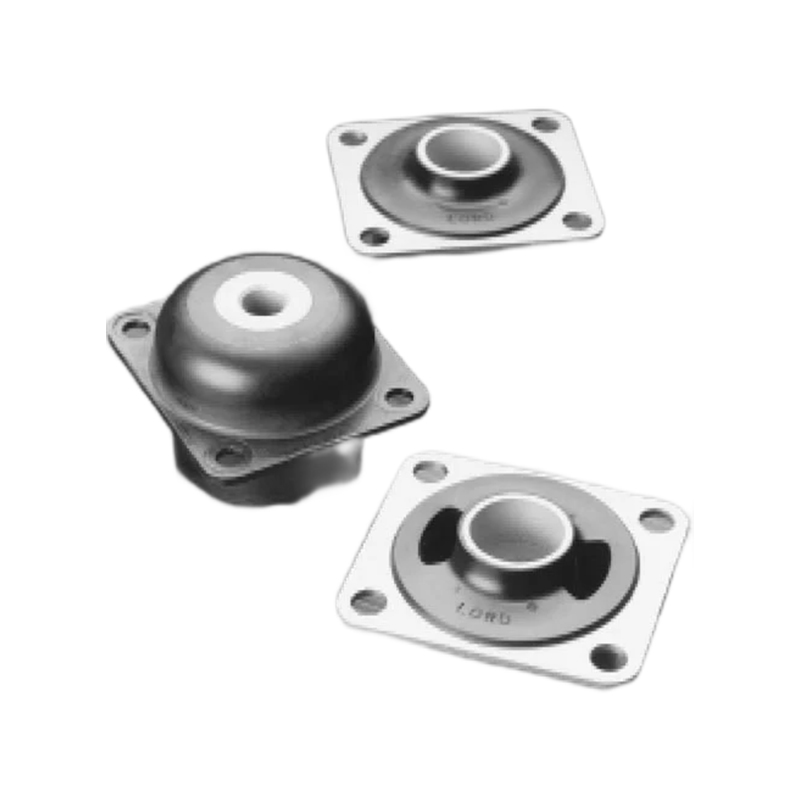
The need to control mechanical vibration is a fundamental challenge across countless industrial and mobile applications. Unchecked oscillatory movement can lead to premature equipment failure, unacceptable noise levels, and structural damage to supporting frameworks. Anti-Vibration Flange Mounts, often manufactured as robust Rubber Flange Mounts, provide a critical interface designed to decouple a machine from its base structure. They function by introducing a relatively soft, elastomeric element—typically natural rubber or a synthetic compound—into the load path. This strategic placement allows the mount to absorb and dissipate the energy generated by the vibrating equipment, effectively preventing its transmission into the surrounding structure. The unique flanged design offers a broad, secure base for bolting, ensuring stability and a secure installation even when subjected to substantial dynamic forces.
The effectiveness of a rubber vibration isolator is intrinsically linked to the way it handles applied loads, specifically through the principles of shear and compression. When a static weight is placed on the mount, it is primarily subjected to a compressive force. However, during machine operation, the dynamic forces—the actual vibrations—are often managed most effectively when the elastomeric material is working in shear. This orientation, where the load is applied parallel to the surface of the rubber, allows for a greater degree of deflection and a lower stiffness rate, which is necessary to achieve optimal isolation of low-frequency vibrations. The flange mount geometry is engineered to leverage both modes; the flange itself provides excellent stability under compression for the static load, while the internal rubber element is shaped to perform optimally in shear under dynamic oscillatory conditions, ensuring superior isolation efficiency.
In marine environments, the power train presents a unique and demanding isolation challenge. Boat engines, particularly those used for propulsion, generate significant thrust that must be safely transmitted to the hull while simultaneously isolating high-amplitude vibrations. Vibration Isolation Flange Mounts specifically tailored for these applications are designed not only to handle the vertical static weight of the engine but also the substantial axial thrust. These mounts often incorporate a highly durable, oil-resistant rubber compound and an integral fail-safe mechanism, ensuring that the engine remains securely fastened even in the event of an extreme shock load or elastomer failure. The ability of these specialized mounts to effectively manage the combined axial and radial forces is vital for reducing noise in the cabin and prolonging the life of the engine’s drive components and the hull structure itself.
Heavy industrial machinery and power generation units like diesel generators operate continuously under high loads, producing vibrations that can degrade the surrounding concrete foundations and sensitive control systems. For these applications, Heavy Duty Vibration Isolation Flange Mounts are indispensable. They are generally characterized by a robust construction and high load capacity, utilizing a stiffer elastomer or a specific metal-to-rubber bonding process to withstand continuous high compressive forces. Their primary advantage lies in their ability to provide consistent, long-term stability and attenuation of forces across a wide frequency spectrum. By meticulously isolating the energy at its source, these mounts protect neighboring precision equipment from sympathetic vibration and maintain a stable operating environment, which is crucial for preventing fatigue and ensuring regulatory compliance for noise limits in industrial settings.
The quiet operation of commercial and residential buildings depends heavily on effective vibration damping in building services equipment, most notably HVAC units. Fans, compressors, and chillers, while necessary, can introduce pervasive structure-borne noise that travels through ducts and walls. Low Profile Rubber Flange Mounts are a common solution here. Their compact design is ideal for installation within constrained spaces, such as beneath rooftop units or suspended air handling equipment. These mounts are chosen for their high-frequency isolation capabilities, utilizing a softer rubber compound to intercept the relatively subtle but acoustically significant vibrations before they can propagate into the building’s structural elements, thereby greatly improving occupant comfort and the overall acoustic quality of the space.
The performance and longevity of an anti-vibration mount are heavily influenced by the choice of elastomeric material. Engineers must meticulously match the material's properties to the application's demands, considering the static load, the disturbing frequency of the machine, and the operational environment. Natural rubber offers excellent mechanical properties for general vibration damping but may degrade when exposed to certain oils or high temperatures. Conversely, synthetic options like Neoprene or Nitrile are favored in automotive and marine contexts where resistance to petroleum products, extreme temperatures, or UV exposure is a necessity. The material’s durometer, or hardness, dictates the mount’s stiffness, which is a critical factor in ensuring the mounted system’s resonant frequency is sufficiently low for effective isolation.
In mobile and mission-critical applications, the risk of a catastrophic equipment detachment due to extreme shock or rubber failure must be eliminated. This is where the concept of a Fail-Safe Rubber Flange Mount becomes paramount. A fail-safe design incorporates a physical interlock, typically a metal-to-metal stop, that limits the maximum deflection of the mount in all directions. If the rubber is compromised or an unusually large shock load is encountered, the metal components engage, maintaining the physical connection between the equipment and its supporting structure. This feature is non-negotiable for highway vehicles, ships, and airborne machinery, providing a vital layer of operational security and preventing potential accidents or severe damage to expensive equipment.
Proper installation is as crucial as the design itself. The mounting angle, the flatness of the supporting surface, and the correct application of torque to the fasteners all directly influence the mount’s performance envelope. Flange mounts are often specified for installation in a specific orientation to ensure that the primary dynamic forces align with the mount’s shear axis for optimal isolation. Incorrect tightening of bolts can either over-compress the rubber, leading to premature hardening and a loss of isolation effectiveness, or lead to under-tightening, which can cause fretting and joint instability. Adherence to prescribed installation guidelines is therefore essential to unlock the mount’s full potential for vibration and shock mitigation.
While the rubber-metal bond in a flange mount is designed for rugged service, these components are subject to wear, particularly in harsh environments. A proactive maintenance regimen is the most effective way to maximize their service life. Routine inspections should focus on visible signs of distress, such as cracking, swelling, or undue permanent deformation, which can indicate chemical attack, heat aging, or excessive overloading. Regular checks of fastener torque are also vital, as loosening can significantly compromise the mount's functionality and lead to fretting damage. By monitoring the condition of the mounts, operators can preemptively replace degraded parts, maintaining the system's isolation efficiency and preventing potential equipment damage that results from failed isolation.
The gradual stiffening and hardening of the rubber over time, known as aging, is an unavoidable phenomenon. As the elastomer ages, its dynamic stiffness increases, causing the isolation system's natural frequency to rise. This shift reduces the mount's ability to isolate low-frequency vibrations, leading to increased noise and vibration transmission. The earliest sign of aging is often a subtle but noticeable increase in operational noise or a change in the machine's perceived vibration level. For safety-critical flange mounts, especially those with an integral metal top cap, the primary concern is the integrity of the rubber-to-metal bond. Any visual separation at this bond line signals an imminent failure and necessitates immediate replacement to restore the crucial mechanical link and the system's full vibration control capabilities.
Contact Us
Copyright ©
Jiaxing Tosun Rubber&Plastic Co., Ltd.
All Rights Reserved.
Custom Rubber And Plastics Products Factory