

 English
 中文简体
 Español
Industry News
Home / News / Industry News / Custom Rubber Extrusion vs. Molding: The Key Differences and How to Decide

2026-10-05
A procurement engineer sends one RFQ for an EPDM sealing profile and receives two very different quotes: one from an extruder, one from a molder. The extruded version costs less per meter, but it cannot form the 90-degree bend at each end. The molded version handles the bend easily, yet it carries a tooling charge several times higher. That is the practical reality of custom rubber extrusion vs. molding: two processes that start from the same compound yet diverge completely in geometry, cost, tolerances, and lead time.
Core definition
Rubber extrusion is a continuous profile-forming process: uncured rubber is forced through a die opening, and the cross-section stays identical along the entire length. Rubber molding is a cavity-based batch process: each part is formed independently inside a closed tool under heat and pressure.
Molding is the right choice whenever the part has a three-dimensional form that cannot be drawn through a die; extrusion is the right choice whenever the part is a long, constant-profile seal, edge trim, or hose.
In compression molding, a pre-formed blank of compound sits in an open cavity, the press closes, heat cures the rubber, and flash forms along the parting line. Transfer and injection molding follow the same cavity principle but differ in how the compound enters the tool. Extrusion, by contrast, uses a screw or ram to push a continuous strip through a shaped orifice; the profile is then cured in a hot-air oven, a salt bath, or an autoclave before being cut to length.
The decision starts with the part drawing, not the material. Both routes accept EPDM, silicone, natural rubber, and most synthetic compounds. What fixes the process is whether the geometry is continuous and prismatic or discrete and three-dimensional.
If a part needs an identical cross-section for two meters, extrusion is the only economical process; if it needs undercuts, stepped diameters, bosses, or molded-in inserts, molding is required.
Extrusion produces an unlimited length of a fixed cross-section. The profile can be solid, hollow, or co-extruded with a second material, but the shape cannot vary along the length. Molding reproduces a closed three-dimensional cavity on every cycle, so features such as internal threads, mounting flanges, and fabric-reinforced diaphragms become possible. The chart below compares the two processes across five engineering attributes.
Process capability comparison, 0-10 scale
Higher is better on every attribute. Scores are directional comparisons for typical custom rubber projects.
A reliable rule of thumb: if the cross-section stays identical for more than 300 mm, extrusion almost always wins on cost. If the shape varies along its length, molding is the only route.
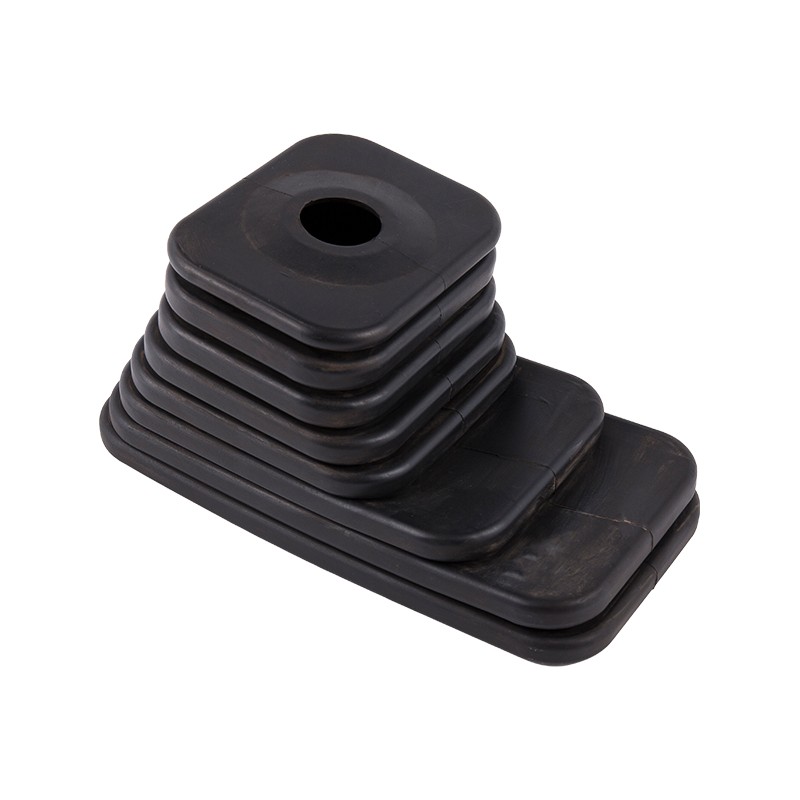
Take a rubber bellows used as a gear-shift dust cover: its convolutions change diameter along the axis, so no straight die could produce it. That part is molded in a two-part cavity, and the same logic applies to cable grommets, caps, and vibration mounts.
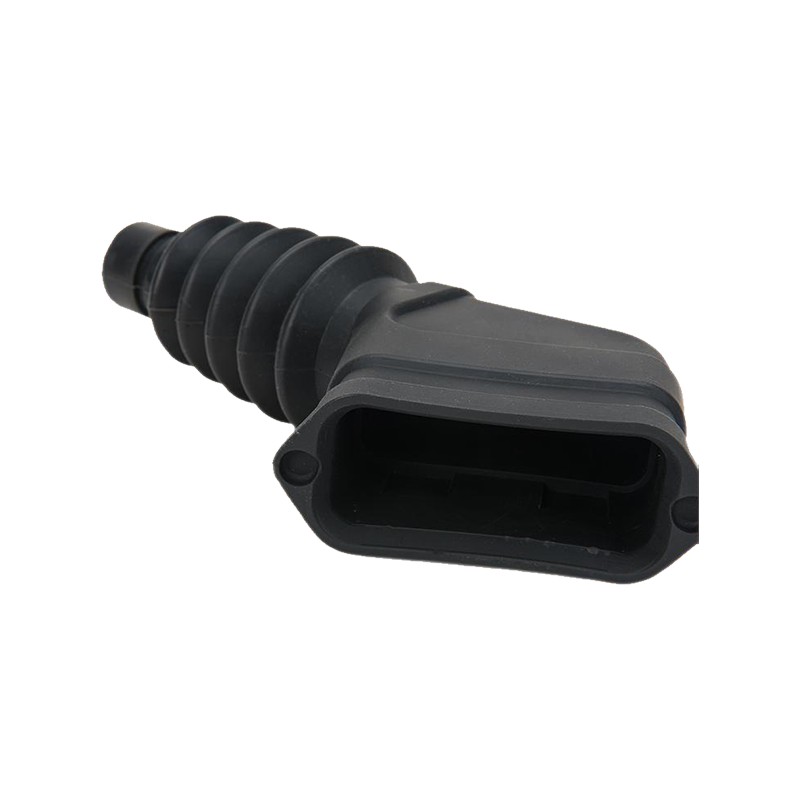 EPDM Rubber Gear Shifter Boot Bellows Dust CoverThis EPDM bellows suits gear-shift dust covers with varying diameters, molded for complex shapes that extrusion cannot produce. It offers proven weather and ozone resistance for automotive use.View Product →
Extrusion dies cost a fraction of a multi-cavity compression mold, but the per-part cost curves cross as volume climbs and the molded tool gets amortized.
A simple extrusion die for a solid or hollow profile typically lands in the hundreds of dollars, while a production compression or transfer mold with cavity inserts usually runs into the thousands. Extrusion also starts production faster because die tryout is shorter than mold sampling. Once a molded tool reaches steady state, however, cycle times of one to five minutes per cure are typical for medium-size parts, and multi-cavity tools multiply output per cycle. Above roughly 50,000 parts per year, molding can therefore deliver a lower unit cost on geometrically complex parts.
The same part can land on either side of the crossover depending on cavity count. A four-cavity mold divides the tooling cost across four parts per cycle, which pulls the break-even point down compared with a single-cavity tool. These ranges come from typical project quotes rather than a fixed price list; exact numbers shift with profile size, cavity count, and compound. What matters is the shape of the cost curve, not the precise point where it crosses.
Molded parts hold tighter control on critical sealing faces because the cavity fixes every surface, while extruded profiles have looser cross-section tolerances and cannot capture inserts during the process.
| Attribute | Extrusion | Molding |
| Cross-section tolerance | +/- 0.3-0.8 mm typical | +/- 0.1-0.3 mm on critical dims |
| Cut length tolerance | +/- 1-2 mm | Part height fixed by cavity |
| Metal or plastic inserts | Not possible in-line | Bonded in during cure |
| Undercuts and side actions | Not possible | Possible with slides or collapsible cores |
| Surface texture | Die-drawn finish | Cavity-controlled, can be textured |
For a commercial-vehicle door seal, the extruded bulb profile provides the low-cost constant cross-section, while the molded corner piece produces the tight radius that a straight die cannot. Most automotive weather-stripping systems use both.
Hardness also shifts the balance. Very soft compounds below 30 Shore A are easier to control in molding because the cavity supports the surface during cure; extruding very soft profiles requires careful handling to avoid distortion before vulcanization.
The tolerance story is not a simple win for molding. Extrusion holds excellent consistency along the draw direction and is often preferred for long straight sealing runs, where splicing molded segments would create leak paths. On Tosun's extrusion production line, profiles are continuously vulcanized and then cut to customer lengths, which keeps the economics attractive for parts measured in meters rather than millimetres.
The correct process is set by four constraints: required geometry, annual volume, dimensional tolerance, and whether inserts or multi-material sections are needed.
Most wrong process choices come from pricing the geometry first and the volume second. Reverse that order, and the decision becomes clearer.
For a small grommet that seals a cable passing through a sheet-metal panel, the geometry is short, the wall is thin, and the part count is often high. That combination points to molding, with a multi-cavity tool amortizing quickly. For a meter-long channel that retains a window glass, extrusion is the only sensible route.
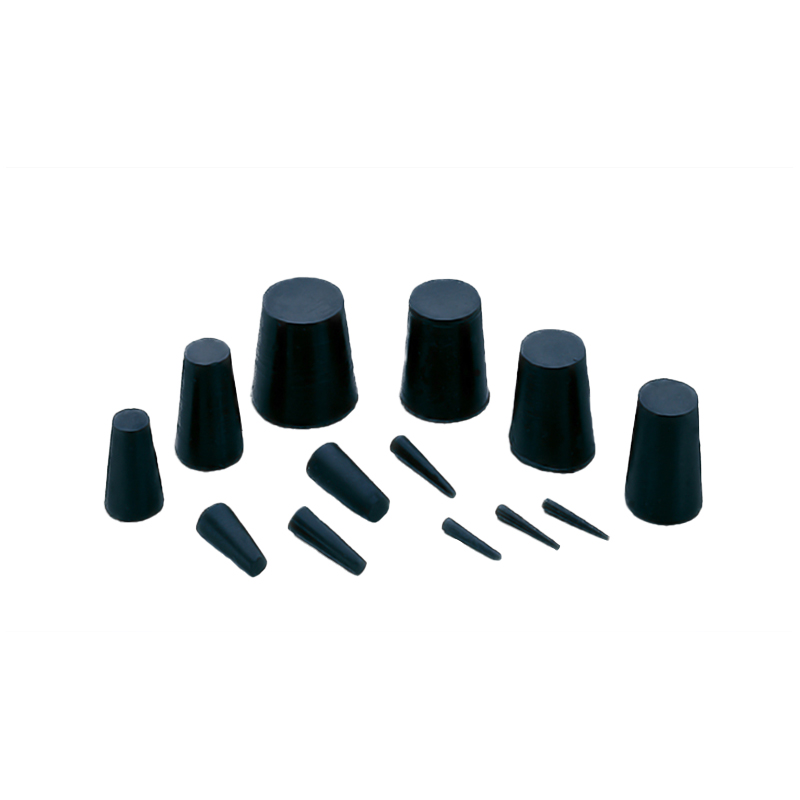
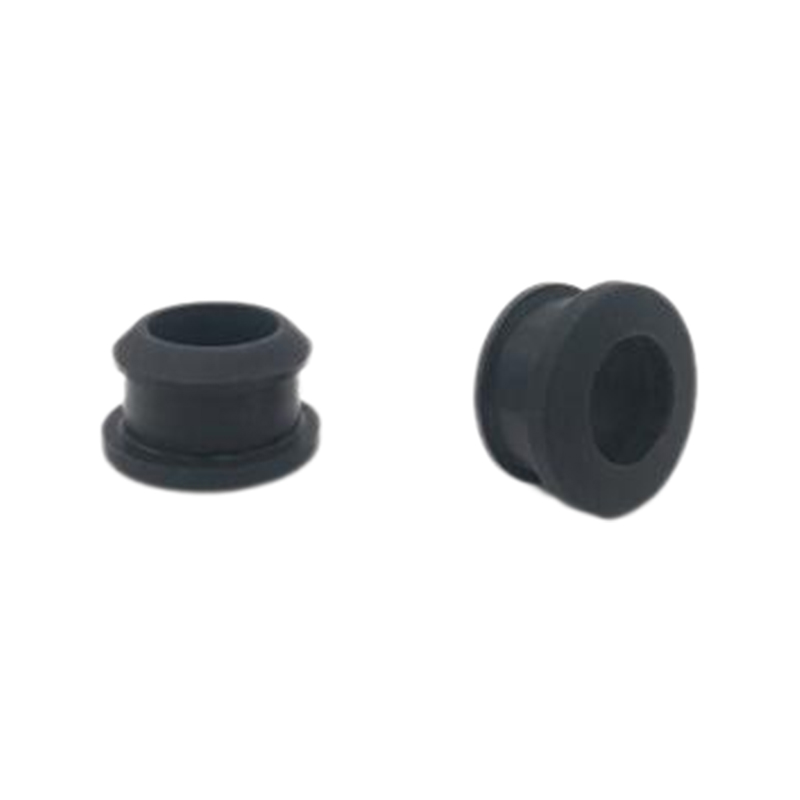 Customizable Rubber Grommet for Cable and Wire ProtectionA molded grommet protects cables passing through panels and is ideal for high-volume production. Available in EPDM, NBR, CR, or NR with adjustable hardness and multiple sizes.View Product →
The most cost-effective custom rubber component often combines an extruded constant section with molded corners, ends, or bonded inserts, which means the manufacturer should run both processes in-house.
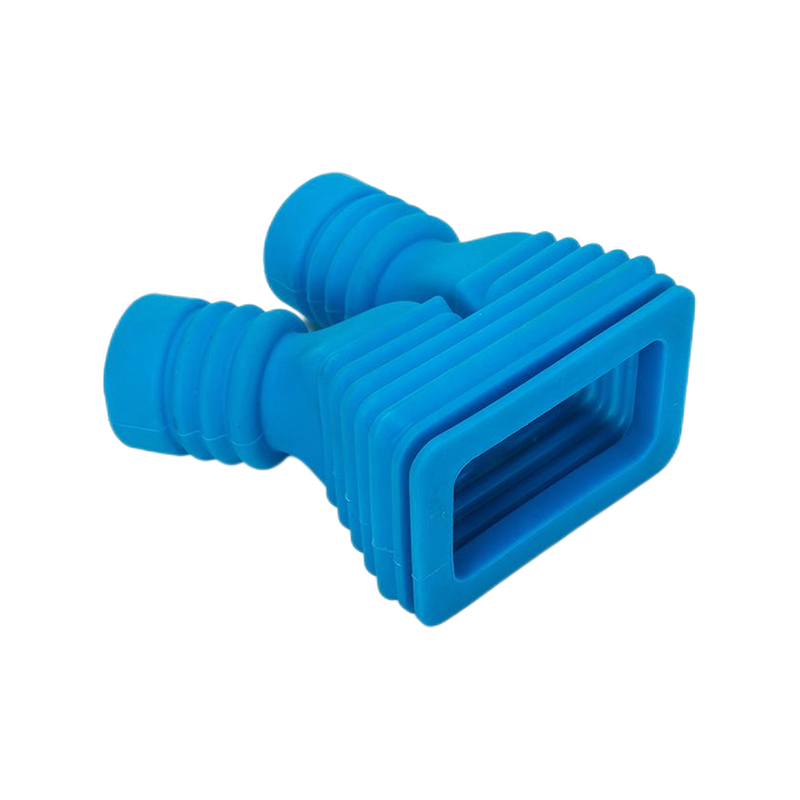
Jiaxing Tosun Rubber & Plastic Co., Ltd. operates material mixing, hose preparation, molding, and extrusion on one site, with 12 mold design and formulation engineers and a 20-person technical inspection team. That combination matters because a hybrid part, such as a coolant hose with molded elbows on an extruded straight run, needs one engineering owner for tolerance and delivery, not two suppliers negotiating a glue joint.
Common hybrid examples include:
When a single supplier controls both the extrusion die and the compression mold, the transition between processes is designed on the drawing board, not patched on the assembly line. Molded-to-extruded splices are tested as complete assemblies before release.
This is also where bonding expertise enters the picture. A molded rubber-to-metal mount that absorbs vibration carries an insert that must stay aligned during cure; an extruded weather seal carries no insert at all. Understanding where the insert goes usually decides which molding variant is used on the company's molding production line.
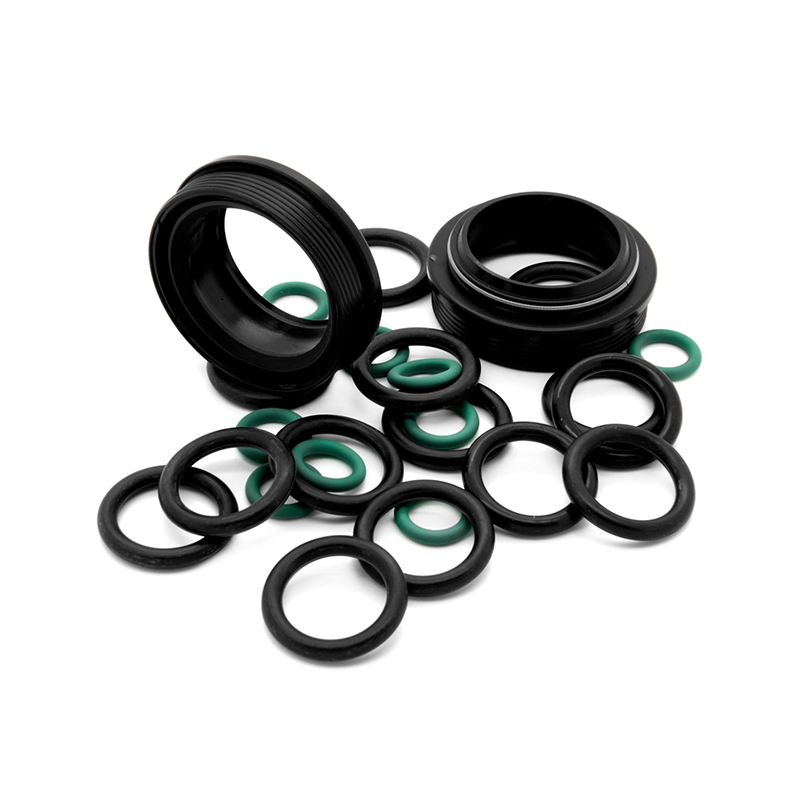
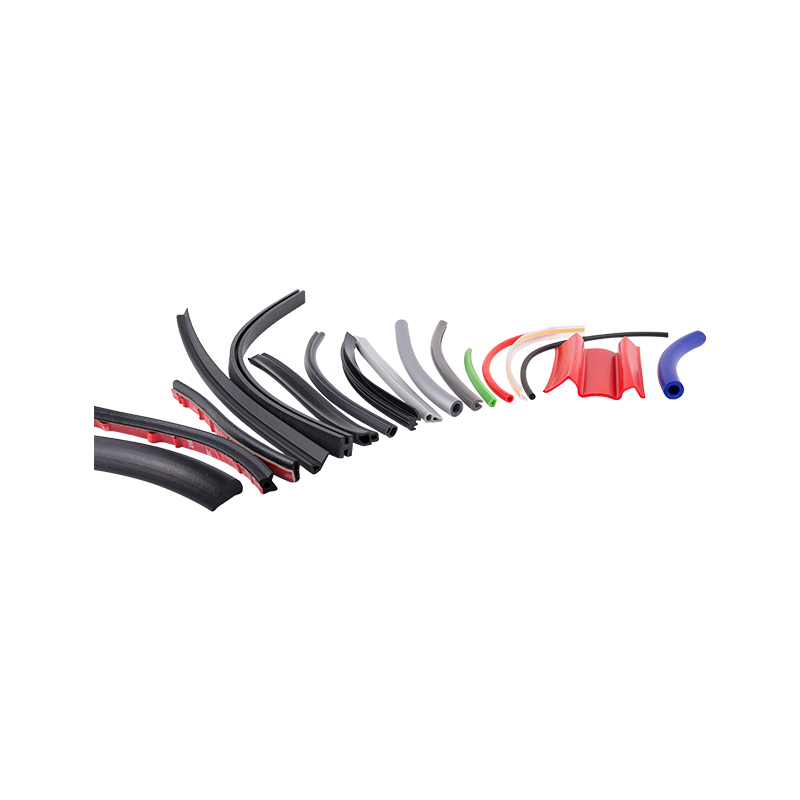 Extruded Window and Door Gasket Seals in Various ElastomersThese extruded seals provide weatherproofing for doors and windows across transportation, construction, and marine sectors. Choose from EPDM, CR, silicone, or FKM with customizable colors.View Product →
No. Extrusion forms a continuous profile and cannot position an insert inside the die. Inserts are either molded in during the curing cycle or bonded afterward in a secondary operation.
Molding typically achieves tighter tolerances on critical three-dimensional features, with +/- 0.1-0.3 mm common on cavity-controlled dimensions. Extrusion holds precise cross-section geometry in the draw direction but has looser profile tolerances, usually +/- 0.3-0.8 mm.
No. Extrusion has a lower tooling entry cost, but molding can become cheaper per part at high volumes because multi-cavity tools cure several parts per cycle and eliminate secondary joining steps on complex geometries.
Yes. Suppliers that run both processes, such as Jiaxing Tosun Rubber & Plastic Co., Ltd., can design hybrid assemblies with extruded sections and molded details under one quality system, which simplifies tolerances, testing, and delivery.
Quick answer: extrusion for long constant profiles, molding for complex 3D parts, and a hybrid approach when both features appear in one assembly.
Contact Us
Copyright ©
Jiaxing Tosun Rubber&Plastic Co., Ltd.
All Rights Reserved.
Custom Rubber And Plastics Products Factory