

 English
  中文简体
中文简体  Español
Industry News
Home / News / Industry News / How Custom Molded Rubber Seals Improve OEM Vehicle Performance and Reliability

2026-09-17
During a durability audit of a midsize SUV platform at a global OEM, engineers traced 31 percent of all fluid leak complaints to one molded gasket at the thermostat housing. The catalog EPDM gasket met every drawing dimension, yet it failed in service because its cross-section did not match the housing's non-uniform clamping load. Replacing it with custom molded rubber seals designed around the actual bore geometry, with a compression set below 20 percent, eliminated the failure across a 12,000-vehicle validation fleet.
Custom molded rubber seals improve OEM vehicle performance and reliability because they are engineered around one specific bore geometry, fastener torque pattern, and thermal duty cycle, whereas catalog seals average across many applications and compromise on all of them.
A standard seal has to fit a universe of housings. A molded seal fits one housing, so the engineering team can tune hardness, section shape, and interference with far more freedom. Molded tooling also allows features that are impossible to cut from extruded stock: variable cross-section thickness, asymmetric sealing lips, integral locating ribs, and fabric reinforcement local to a single zone.
The measurable results appear in warranty data. In the SUV program above, contact-pressure mapping showed the custom part holding above 0.4 MPa across the full flange while the catalog part dropped below 0.2 MPa on one side. That difference directly explains the leak pattern.
Material selection is the largest single factor in molded seal reliability; EPDM resists coolant and weathering, silicone survives continuous 200 C exposure, and natural rubber absorbs abrasion where the seal doubles as a mechanical buffer.
An automotive cooling circuit typically cycles between -40 C and 135 C. In that window, EPDM retains elastic recovery far better than natural rubber or NBR. Silicone raises the ceiling to 230 C for turbocharged and electric-drive thermal management, but its tear strength is lower and it suits static seals better than moving joints. NBR is the pragmatic choice for fuel and oil contact even though its low-temperature performance is weaker.
| Property | EPDM | Silicone | NBR | Natural Rubber |
| Continuous temperature range | -50 to 150 C | -60 to 230 C | -30 to 110 C | -40 to 90 C |
| Compression set | Good | Excellent | Fair | Poor |
| Coolant and water resistance | Excellent | Good | Poor | Fair |
| Abrasion resistance | Good | Poor | Good | Excellent |
| Typical OEM seal application | Gaskets, hoses, dust covers | Static high-heat seals | Fuel and oil seals | Mounts and bumpers |
Compression set is the permanent deformation remaining after a seal has been compressed at elevated temperature; a lower value means the part keeps pressing against the mating surface.
Dimensional tolerance directly controls sealing force; a 0.1 mm reduction in seal cross-section can lower contact pressure by roughly 30 percent and turn a robust interface into a leak path.
Every rubber formulation shrinks differently after demolding. Mold designers compensate for shrinkage based on the compound's measured behavior, and the mold cavity itself must be cut to tighter tolerances than the finished part specification. Flash at the parting line is another variable; when flash is removed manually, the removal process can nick the sealing edge and create a site for tear initiation.
For OEM programs, the practical fix is a measurement plan that combines optical inspection of critical contours, CMM checks on datum features, and hardness sampling from each production lot. Dimensional drift shows up long before leak tests fail, so it acts as an early warning system for process drift.
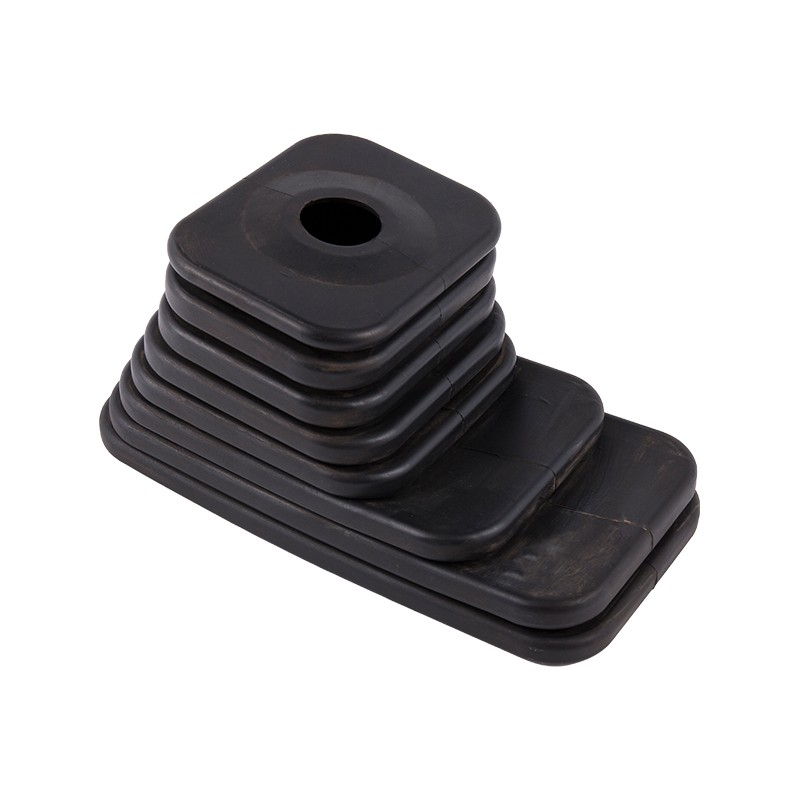
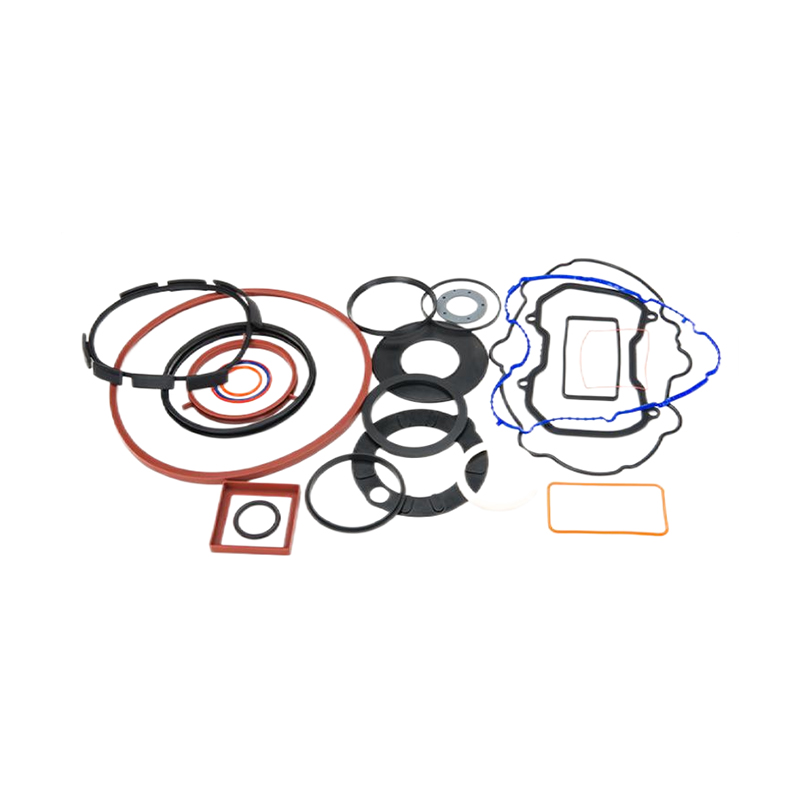 Custom EPDM and Silicone Molded Rubber Seals for OEM ApplicationsThese molded seals combine EPDM or silicone with metal/plastic inserts to isolate vibration and maintain pressurized boundaries, supporting dimensional and hardness validation in production.View Product →
Molded rubber bonded to metal or plastic inserts transforms a static seal into a structural component that isolates vibration and maintains a pressurized boundary in a single installation.
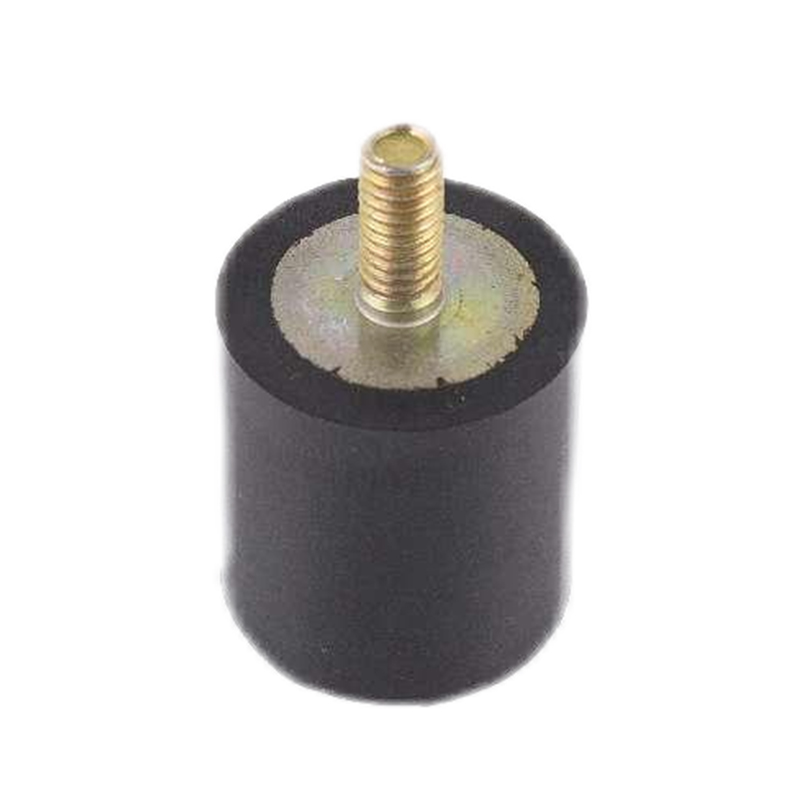
Engine mounts, center bonded bushings, flange mounts in coolant lines, and rubber bumpers on closures all use the same principle: the elastomer absorbs relative motion while the bonded insert carries the load. When a seal also has to damp vibration, bonded construction prevents fretting at the interface and keeps the sealing axis aligned.
Electric-drive platforms multiply this requirement. Inverter cooling loops, e-pump mounts, and battery enclosure seals see high-frequency vibration and rapid thermal cycling, which is why more of them use molded rubber bonded to aluminum inserts rather than loose gaskets.
Seals one interface. If the joint vibrates or shifts, the gasket carries the full relative motion and may fret or extrude.
Combines sealing with a spring-rate-controlled mount. Relative motion is absorbed inside the elastomer layer, protecting the joint.
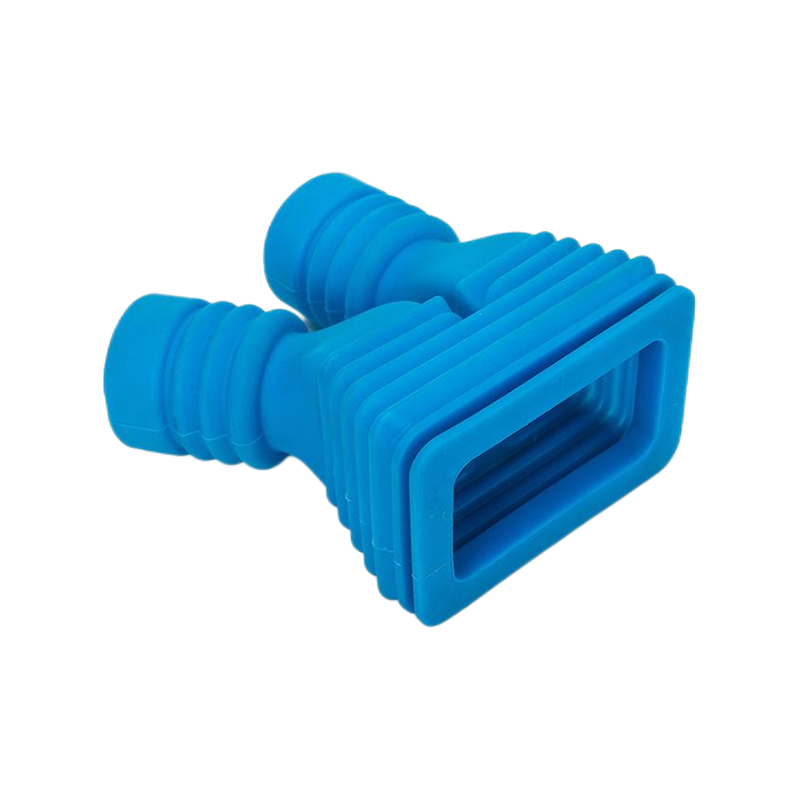
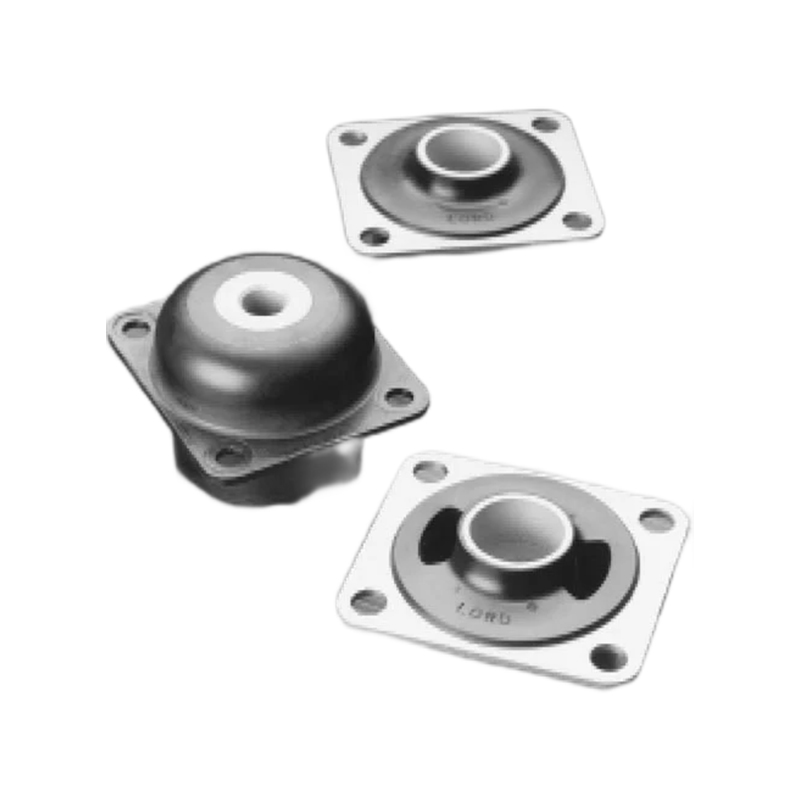 Custom Rubber-to-Insert Bonded Parts for Structural SealingEngineered bonding of rubber to metal or plastic inserts delivers strong adhesion and vibration damping. Validate compression set, thermal cycling, and chemical compatibility for reliable OEM release.View Product →
OEM teams should validate four properties before releasing a custom molded rubber seal for production: compression set, thermal cycling behavior, chemical compatibility, and dimensional conformity.
Each property maps to a specific failure mode. Compression set predicts long-term contact pressure. Thermal cycling exposes bond-line failure and material blooming. Chemical immersion verifies volume swell and hardness drift in the actual service fluid. Dimensional inspection confirms that the production mold reproduces the approved design across the full tolerance band.
Suppliers that combine in-house mold design, material compounding, and dimensional inspection in one facility shorten the iteration loop; Jiaxing Tosun Rubber & Plastic Co., Ltd. is one example, with a dedicated engineering team for mold design and formulation.
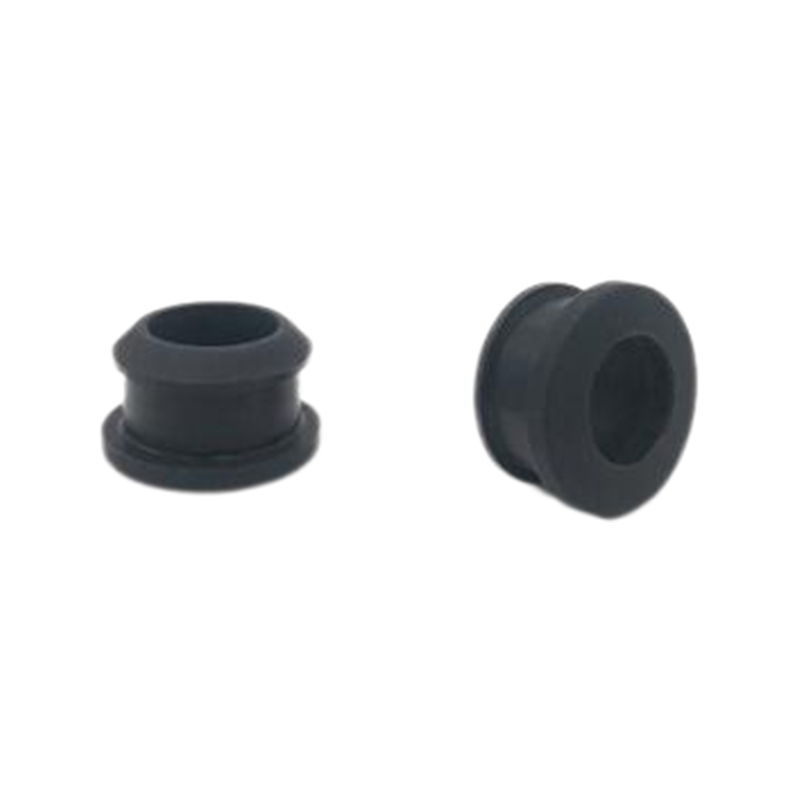 Customizable Rubber Grommets for Cable and Hose ProtectionAvailable in EPDM, NBR, CR, NR with adjustable hardness and sizes, these grommets cushion wires passing through edges, matching joint geometry to prevent leaks and abrasion.View Product →
They match geometry, material hardness, and compression targets to a specific joint, which maintains contact pressure over the service life and eliminates leak paths that generic catalog parts cannot address.
Compression molding produces three-dimensional parts such as grommets, bellows, and bonded components with controlled cross-sections. Extrusion produces continuous profiles such as weatherstrips and channel strips that are cut to length for sealing long openings.
EPDM is the default for coolant gaskets and hoses because it resists glycol-based coolant, steam, and weathering across -50 to 150 C while retaining a compression set below 20 percent in properly formulated compounds.
With a validated compound library and in-house mold design, prototype tooling to production approval typically runs four to eight weeks, depending on part complexity and the number of dimensional checkpoints required.
Contact Us
Copyright ©
Jiaxing Tosun Rubber&Plastic Co., Ltd.
All Rights Reserved.
Custom Rubber And Plastics Products Factory