

 English
 中文简体
 Español
Industry News
Home / News / Industry News / From Drawing to Delivery: How Custom Rubber Manufacturers Support OEM Development Cycles

2026-10-12
An OEM development cycle for a custom rubber component starts when an engineer releases a drawing and asks one question: can this part be molded, in this material, at this tolerance, fast enough to protect a launch date? For bellows, gaskets, hoses, and bonded mounts, the 12 to 18 weeks between drawing and delivery usually hide more risk than cost. At Jiaxing Tosun Rubber & Plastic Co., Ltd., a custom rubber manufacturer operating a 15,000-square-meter plant in Jiaxing, China, that window compresses to 9 to 10 weeks because design-for-manufacturability (DFM) review, material selection, mold design, sampling, and inspection run in parallel rather than in sequence. The difference between a component supplier and a development partner shows up in the first five working days after the drawing arrives.
A custom rubber manufacturer compresses an OEM program by running six workstreams simultaneously: DFM, compound definition, tooling, sampling, validation, and serial production. Each workstream belongs to a different function internally, but the OEM sees them as one timeline. The engineering team manages mold-flow and shrinkage assumptions, the materials team mixes and tests trial compounds, the tool shop cuts steel, and the inspection team prepares measurement plans. When these teams report to one project owner, the OEM avoids the classic failure mode in which a mold arrives before the compound is validated.
| Development phase | OEM decision | Rubber supplier action | Typical duration |
| Drawing release | Lock geometry, tolerances, surface finish | DFM review, moldability check, shrinkage input | 3-5 days |
| Material definition | Set temperature, fluid, ozone, and load requirements | Compound recommendation with test data | 5-7 days |
| Tooling design | Approve mold concept and cavity count | Steel grade, parting line, gate location | 7-14 days |
| Sampling | Test fit, function, and sealing | Sample molding, dimensional report, first article | 10-21 days |
| Validation | Endurance and environmental test sign-off | Batch testing, material certificates, PPAP file | 2-4 weeks |
| Production ramp | Schedule line supply and safety stock | Process control, final inspection, packaging | Continuous |
Notice the overlap. The DFM review completes while the OEM still finalizes the duty cycle, and mold design begins before compound validation finishes when the supplier runs trials in parallel. For a molded cover such as a gear-shift boot or a suspension bellows, the same mold that produces the first article is later used for serial production, so approval samples reflect real process capability.
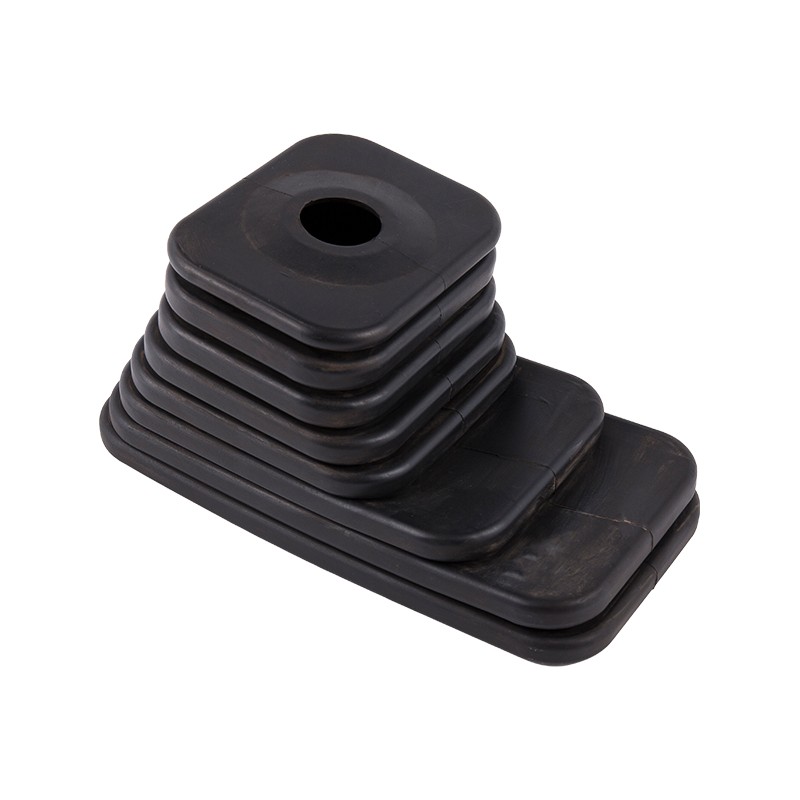
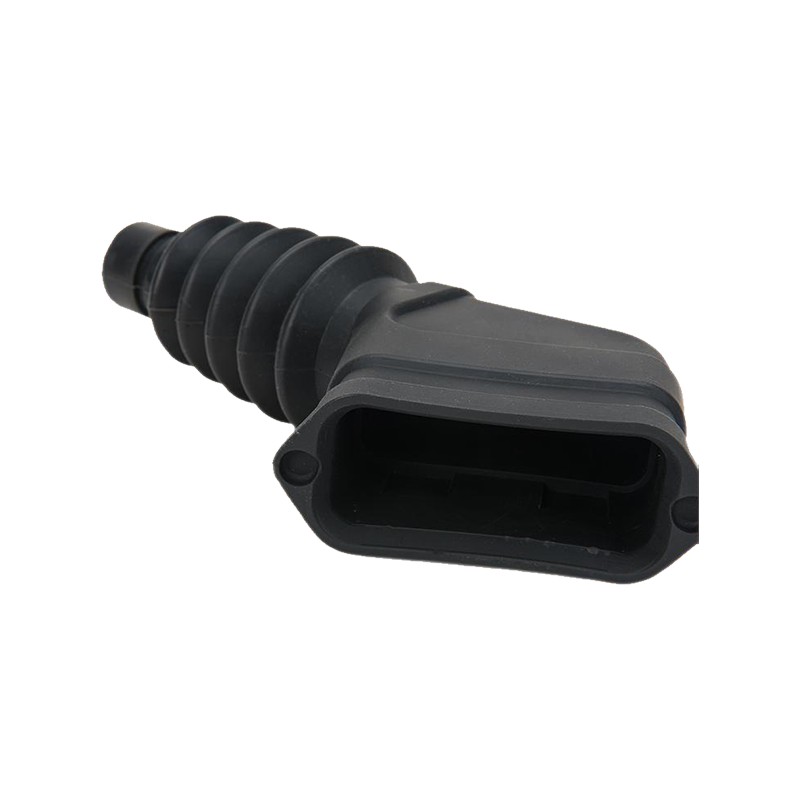 EPDM Gear Shifter Boot Bellows Dust Cover for Automotive ApplicationsThis EPDM bellows protects gear shifting systems with temperature resistance from -40°C to +150°C. Its flexible design suits passenger, commercial, and off-road vehicles, making it relevant while reviewing mold approval for first article samples.View Product →
Once the DFM is signed off, tooling moves to the molding production line the same week the OEM approves the mold concept.
The speed and quality of DFM feedback tell an OEM whether a custom rubber manufacturer will protect the development cycle or consume it. A capable supplier replies in three to five working days with concrete inputs: draft angle, parting line, wall-thickness balance, and mold shrinkage values. EPDM shows linear mold shrinkage of roughly 1.8 percent to 2.5 percent; silicone can reach 3.0 percent to 3.5 percent. If the cavity is cut without shrinkage compensation, a 50-millimeter sealing lip can shift by more than one millimeter, enough to fail a leak test.
Design for manufacturability in rubber means verifying that every geometric feature can be molded, demolded, and measured within the stated tolerance before any steel is cut.
Material selection fixes mold design, cure cycle, and unit price, so a custom rubber manufacturer should propose the compound before quoting the tool. The drawing often names a generic elastomer; the supplier converts that into a specific compound with a Shore A hardness, a service window, and compression-set targets. EPDM resists ozone and weather from -50°C to 150°C and suits radiator hoses, door seals, and bellows. Silicone keeps flexibility from -60°C to 230°C for electrical gaskets and caps. NBR handles oil and fuel. Natural rubber absorbs vibration as mounts and bumpers.
| Elastomer | Service range | Key strength | Typical OEM parts |
| EPDM | -50°C to 150°C | Ozone, weather, and water resistance | Radiator hoses, door seals, bellows |
| Silicone | -60°C to 230°C | Thermal stability, low compression set | Gaskets, caps, electrical sealing |
| NBR | -30°C to 100°C | Oil and fuel resistance | Oil hoses, fuel seals |
| Natural rubber | -50°C to 80°C | Elasticity and tear strength | Vibration mounts, bumpers |
When a flange gasket must hold pressure and heat in the same joint, EPDM with low compression set is the usual baseline, and the test lab should supply compression-set and volume-swell data before mold approval.
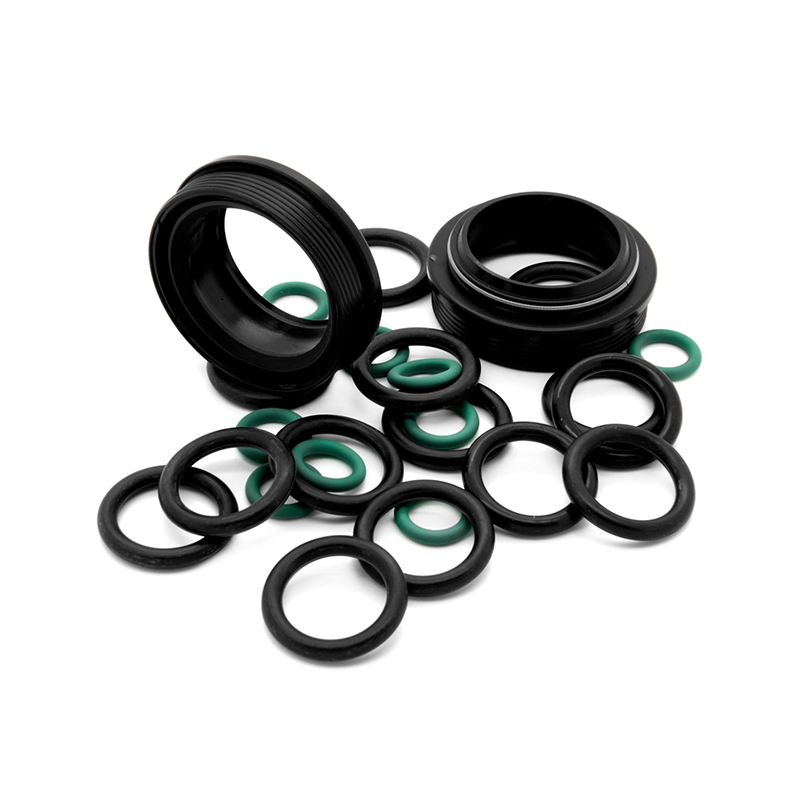
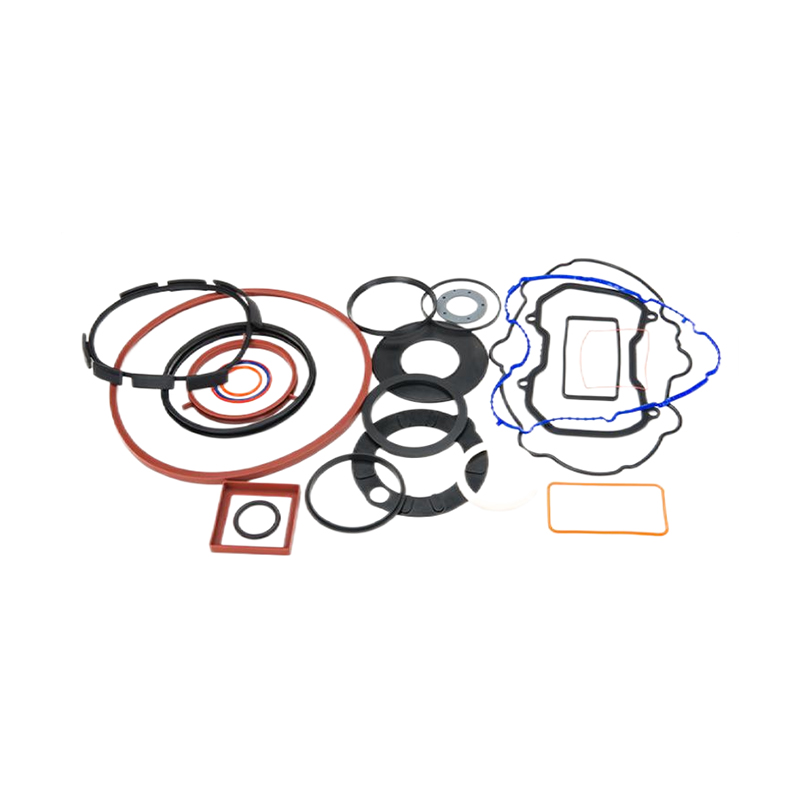 Flanged Rubber Gaskets and Seals in Multiple Elastomer OptionsThis gasket selection covers EPDM, NBR, silicone, FKM, and more, with applications in fluid and pressure sealing. Compression-set data matters for flange joints, so it fits the context of material validation before mold approval.View Product →
Parallel sampling, in which mold construction, material trials, and dimensional inspection overlap, compresses the OEM development cycle from about 18 weeks to roughly 10 weeks. A conventional program moves in sequence: wait for the mold, wait for the material, wait for the test report. In parallel sampling, tool steel is cut while the compound batch is mixed, and the first shots are measured the same week the mold is polished.
The total drops from 18 weeks to 10 weeks because no phase waits for the previous one to finish. For continuous profiles, the same parallel logic shifts to the rubber extrusion production line, where die trials replace mold trials.
A custom rubber manufacturer earns the OEM delivery role only when serial production holds the same tolerances that the approved samples showed. Scale-up is where small suppliers fail: a part that measured perfectly in the sample room drifts when the same mold runs at production pressure. Tosun mitigates this with more than 250 employees, including 12 mold design and formulation engineers and a 20-member technical inspection team, inside an 18,000-square-meter building.
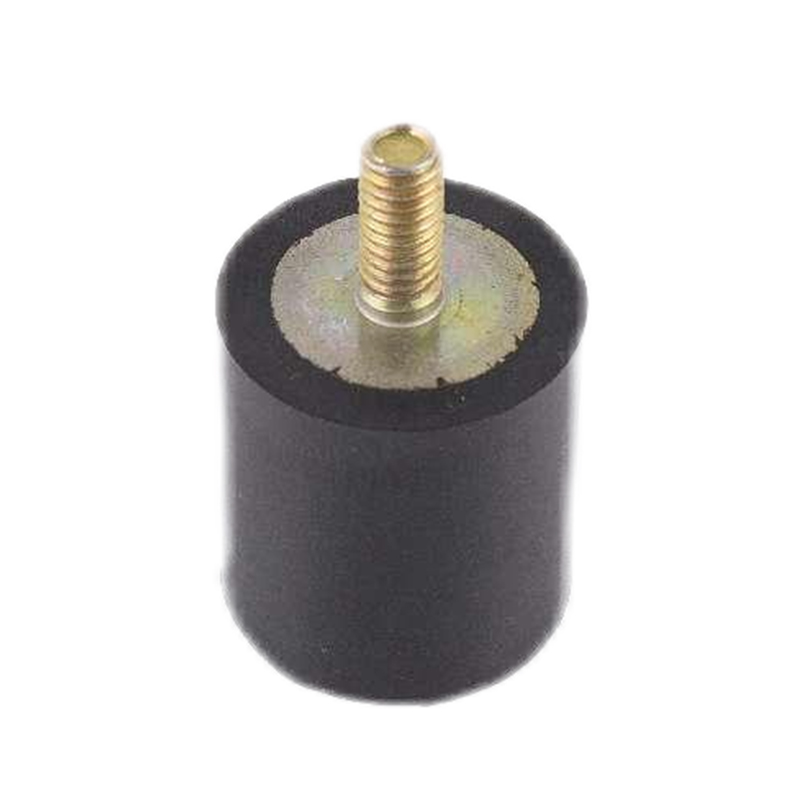
The inspection team gates material, in-process parts, and finished goods, and the on-site laboratory supports the test requests OEM customers typically place inside their PPAP. Vibration mounts are the clearest multi-material case: a steel insert, a rubber element, and a cure-bonded interface become one component that must survive repeated load cycles.
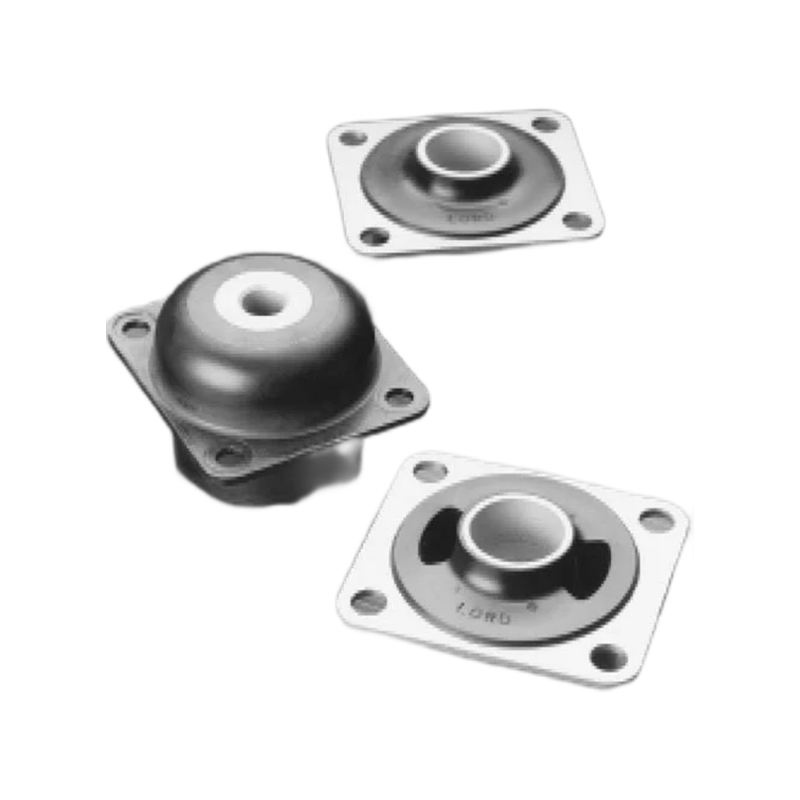 Rubber Vibration Isolation Mounts for Vehicle and Industrial EquipmentThese mounts combine rubber with steel inserts for engine, cab, and transmission applications, offering high load capacity and vibration damping. They illustrate multi-material parts relevant to PPAP documentation and material certification requirements.View Product →
Production Part Approval Process is the documentation package an OEM uses to confirm that a supplier process can produce parts consistently within drawing tolerances. It includes dimensional reports, material certificates, and capability data.
Delivery reliability depends on material planning, not luck. A confirmed schedule with sample reports and batch test results gives the OEM buyer a clear signal that the launch date is protected.
A five-minute checklist before a drawing leaves your desk prevents the most common delays in an OEM rubber development cycle.
For a molded EPDM or silicone part, a typical cycle is 12 to 18 weeks. With parallel sampling and an integrated tool shop, the same part can reach PPAP in 9 to 11 weeks, depending on geometry complexity and the number of iteration rounds.
The drawing should state functional tolerances, service temperature range, fluid or media exposure, hardness in Shore A, required certifications, and annual volume. Adding the operating environment helps the manufacturer recommend the right elastomer before tooling starts.
A capable manufacturer uses a dedicated inspection team, a test laboratory, in-process checks, and PPAP documentation. Tosun, for example, operates 20 technical inspection staff and an on-site lab to issue material certificates and dimensional reports with every batch.
Molded parts use closed cavities and suit bellows, gaskets, plugs, and bonded mounts; extruded parts run through a die to form continuous profiles such as weather strips and channel seals. The choice changes tooling time, sampling logic, and the DFM feedback you receive.
Contact Us
Copyright ©
Jiaxing Tosun Rubber&Plastic Co., Ltd.
All Rights Reserved.
Custom Rubber And Plastics Products Factory