

 English
  中文简体
中文简体  Español
Industry News

2026-01-20
Rubber washers are fundamental yet sophisticated components found in countless applications, from household plumbing to industrial machinery. Their primary function is to create a reliable seal, preventing the leakage of fluids or gases, dampening vibrations, and compensating for minor surface irregularities. The performance of these seemingly simple parts is not constant; it is profoundly influenced by their operating environment, particularly temperature and pressure. Selecting the wrong washer for specific thermal or pressure conditions can lead to catastrophic failure, resulting in leaks, downtime, and safety hazards. This article delves deep into the science behind rubber washer behavior under stress, providing a comprehensive guide to material selection and application understanding. A key aspect often overlooked is the rubber washer compression set at high temperatures, which is a primary failure mode in hot environments.
Temperature acts as a catalyst for molecular change within elastomers. It can accelerate aging, alter physical properties, and fundamentally change a washer's ability to perform its sealing function. The effects are bidirectional, with both high and low temperatures posing unique challenges.
Exposing rubber washers to temperatures beyond their designed range triggers several degradation mechanisms. The polymer chains that give rubber its elasticity begin to break down or re-crosslink in a process known as hardening or embrittlement. Simultaneously, plasticizers and other volatile components can migrate out of the material (a process called outgassing), leaving behind a shrunken, less flexible component. This leads directly to the critical issue of rubber washer compression set at high temperatures. Compression set is the permanent deformation a material retains after being subjected to a constant compressive load at an elevated temperature for a prolonged period. A high compression set means the washer does not spring back to its original shape when the load is released, resulting in a loss of sealing force and ultimately, leakage. Oxidation, accelerated by heat, further contributes to this by creating cracks and reducing tensile strength.
Not all rubber materials respond to heat equally. For instance, while standard Nitrile rubber (NBR) is excellent for oil resistance, its continuous service temperature typically maxes out around 120°C (248°F). In contrast, Silicone and Fluorocarbon (Viton) elastomers can operate continuously at much higher temperatures. The choice becomes crucial when considering factors like high pressure rubber washer failure modes, as heat can exacerbate pressure-induced weaknesses. The following table contrasts common materials:
| Material | Approx. Max Continuous Service Temp. | Primary High-Temperature Weakness | Resistance to Compression Set |
|---|---|---|---|
| EPDM Rubber | 150°C (302°F) | Poor resistance to oils and fuels | Good |
| Silicone Rubber | 230°C (446°F) | Low tear strength, can be fragile | Excellent |
| Fluorocarbon (FKM/Viton) | 240°C (464°F) | High cost, poor performance in steam | Excellent |
| Nitrile Rubber (NBR) | 120°C (248°F) | Hardens and cracks quickly above limit | Fair to Good |
At the opposite end of the spectrum, low temperatures present a different set of challenges. As temperatures drop, elastomers lose their flexibility and enter a glass transition state, becoming hard and brittle. In this state, a washer cannot conform to flange surfaces, leading to leaks. More critically, a brittle washer is highly susceptible to cracking or shattering under minor impact or stress during assembly or operation. This is a paramount consideration for applications like cold weather hydraulic seal compatibility, where systems must operate reliably in sub-zero environments. The material's low-temperature flexibility is a key specification, often measured by its Glass Transition Temperature (Tg) or specific tests like TR10.
Pressure is the static or dynamic force the sealing system must contain. A washer must maintain sufficient contact stress (sealing force) against the flanges to prevent the media from escaping. This balance is delicate and highly sensitive to temperature changes.
Static pressure, such as in a sealed tank or a pipe carrying fluid at a constant rate, applies a steady load on the washer. The main challenge here is long-term creep or stress relaxation, where the material slowly deforms over time, reducing sealing force. Dynamic pressure, involving pulses, surges, or rapid cycles, is far more punishing. It fatigues the material, causing microscopic cracks to initiate and grow. This dynamic fatigue is drastically accelerated by elevated temperatures. Understanding the specific pressure profile is essential to mitigate high pressure rubber washer failure modes, which include extrusion, nibbling, and catastrophic blow-outs.
Extrusion is a primary failure mode in high-pressure applications. It occurs when the pressure of the sealed media forces the rubber to flow (extrude) into the microscopic gap between the mating metal flanges. The risk of extrusion increases dramatically as temperature rises because most rubber compounds soften, reducing their resistance to flow. Therefore, a washer material suitable for a high-pressure, room-temperature application may fail quickly in a high-pressure, high-temperature environment. This interplay is critical for components like EPDM vs silicone for outdoor washer applications, where both sun-induced heat and system pressure act simultaneously.
The key to reliability is matching the washer material and design to the precise operating envelope of temperature, pressure, and media. There is no universal "best" rubber.
A systematic approach to selection involves prioritizing the most aggressive condition. Consider the following key questions, which directly relate to the performance of a rubber gasket in hot water pipes or industrial equipment:
Beyond material, physical design dictates performance. A thicker washer may have a higher volume to resist compression set, but a thinner washer in a confined gland might have better extrusion resistance. The durometer (hardness) is also crucial: a softer washer conforms better to rough surfaces at low pressure but is more prone to extrusion at high pressure. Proper surface finish of the mating flanges, correct bolt torque (which creates the initial sealing stress), and the use of backup rings in extreme high-pressure scenarios are all critical to success. These factors directly influence the longevity of a rubber gasket in hot water pipes, where constant thermal cycling and pressure fluctuations are the norm.
Real-world scenarios best illustrate the consequences of ignoring these factors.
An engine compartment presents a harsh environment: temperatures can exceed 150°C near the cylinder head, with constant exposure to oil and fuel. A nitrile washer on a fuel line might harden and leak, while a specially formulated Fluorocarbon washer would survive. Conversely, in a vehicle's braking system or outdoor hydraulic machinery, cold weather hydraulic seal compatibility is paramount. A standard seal can become glassy in a freezing winter, causing a spongy brake pedal or hydraulic system failure. Materials like low-temperature Nitrile (LT-NBR) or certain polyurethanes are designed to retain flexibility down to -40°C or lower.
Post-failure analysis is an invaluable tool. A washer that is flat, hard, and cracked likely failed from heat aging and ozone attack. A washer that appears flattened and permanently deformed, with no spring-back, is a victim of excessive compression set. If the washer has pieces missing, particularly near the inner diameter (for fluid pressure) or outer diameter (for external pressure), extrusion is the likely culprit, often aided by high temperature and excessive clearance. By understanding these visual clues and correlating them to the operating conditions—such as the symptoms of a failing rubber gasket in hot water pipes—designers and maintenance personnel can make corrective material choices to prevent recurrence.
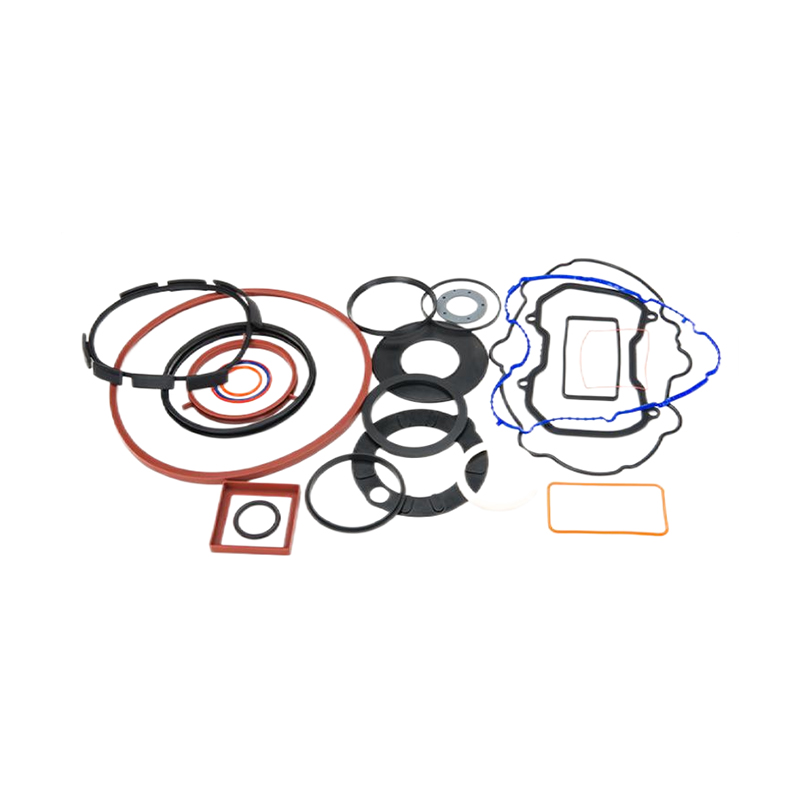
The performance of a rubber washer is a direct function of its complex interaction with the environmental stresses of temperature and pressure. Ignoring this relationship guarantees eventual failure. A deep understanding of material properties like heat resistance, compression set, and low-temperature flexibility is non-negotiable for critical applications. The selection process must be holistic, considering not just the rubber compound but also the gland design, surface finish, and installation procedure. Whether addressing the challenge of rubber washer compression set at high temperatures or ensuring cold weather hydraulic seal compatibility, success lies in respecting the limits of the material and engineering the entire sealing system to work in harmony. By doing so, the humble rubber washer can provide years of reliable, leak-free service across an astonishing range of demanding conditions.
Contact Us
Copyright ©
Jiaxing Tosun Rubber&Plastic Co., Ltd.
All Rights Reserved.
Custom Rubber And Plastics Products Factory