

 English
  中文简体
中文简体  Español
Industry News

2026-04-13
Rubber begins as one of two fundamentally different raw materials: natural rubber harvested from living trees, or synthetic rubber derived from petrochemical feedstocks. Both routes produce an elastomeric polymer — a material capable of large elastic deformation and recovery — but they differ in molecular structure, performance profile, cost, and supply chain dynamics.
Natural rubber originates as latex — a milky colloidal suspension of cis-1,4-polyisoprene polymer particles in water — produced in the bark of the Hevea brasiliensis tree (the rubber tree). Tapping involves cutting a diagonal groove through the outer bark to stimulate latex flow, which is collected in cups attached to the tree. A mature rubber tree yields approximately 2–3 kg of dry rubber per year, and productive trees remain in harvest for 25–30 years. The vast majority of global natural rubber supply — over 90% — comes from smallholder plantations in Thailand, Indonesia, and Vietnam, which together account for roughly 70% of world production.
Collected field latex contains approximately 30–40% rubber solids by weight. It is processed at collection centers by one of two methods: coagulation with formic or acetic acid to produce sheet rubber (RSS — ribbed smoked sheet — or TSR — technically specified rubber block), or concentration by centrifugation to produce 60% latex concentrate for products requiring liquid rubber. Natural rubber's key advantages over synthetic alternatives are its exceptional tensile strength (up to 30 MPa unfilled), outstanding fatigue resistance, and low heat buildup under dynamic loading — properties that make it irreplaceable in large tyres for trucks, aircraft, and off-road equipment.
Synthetic rubbers are produced by polymerizing petrochemical monomers, with each polymer type engineered for a specific performance profile. The principal synthetic rubber families used in industrial and automotive applications are:
Regardless of whether the starting material is natural or synthetic rubber, industrial rubber manufacturing follows a sequence of processing stages that transform raw polymer into a finished compound with precisely engineered properties. Each stage adds or modifies specific performance characteristics in the final product.
Raw rubber — particularly natural rubber — arrives as bales or crumb with very high molecular weight that makes it too stiff and elastic to process or compound effectively. Mastication is a mechanical breakdown process carried out in internal mixers (Banbury mixers) or open mill rolls at controlled temperatures, using shear forces to break molecular chains and reduce viscosity to a processable level. The Mooney viscosity of the rubber is measured to confirm adequate mastication before proceeding. Synthetic rubbers are often supplied pre-masticated to process-ready viscosity grades, reducing or eliminating this step.
Compounding is the most technically complex stage of rubber manufacturing — the point at which a raw polymer is transformed into an engineered material with specific hardness, tensile strength, elongation, compression set, chemical resistance, and processing behavior. Ingredients added during compounding include:
The mixed compound is shaped into its final or near-final geometry using one of three primary forming processes — extrusion, moulding, or calendering. Each is suited to different product geometries and production volumes, and is described in detail in the sections below.
Vulcanization is the chemical crosslinking of rubber polymer chains that gives cured rubber its defining properties — elasticity, strength, and resistance to permanent deformation. Without vulcanization, rubber remains thermoplastic and creeps under load. Vulcanization is carried out by applying heat (typically 150–200°C) for a controlled time period — the cure time — in a press, autoclave, oven, or continuous cure line depending on product type. Over-cure (reversion) softens the rubber by degrading crosslinks; under-cure leaves insufficient crosslink density and produces weak, tacky product. Precise control of cure temperature, time, and pressure is critical to consistent product quality.
Rubber extrusion is a continuous forming process in which a compounded rubber compound is forced through a die under pressure using a rotating screw extruder, producing a profile of constant cross-section at high speed. The extruded profile is then vulcanized — either continuously (in a salt bath, microwave, or hot air cure tunnel immediately downstream of the die) or as cut lengths in a press or autoclave — to produce finished product.
Extrusion is the dominant process for producing long, continuous, or repetitive cross-section rubber products. Its primary advantage is production speed and cost efficiency for high-volume profiles: once a die is made, linear meters of profile are produced at rates of 5–50 meters per minute depending on profile complexity and cure method, compared to the cycle-time-limited economics of moulding.
The automotive industry is the largest consumer of extruded rubber profiles, with a modern passenger vehicle containing 200–400 individual rubber extrusion components across sealing, glazing, weatherstrip, and under-hood systems. Key categories include:
Modern automotive extrusion frequently uses co-extrusion — simultaneously extruding two or more rubber compounds with different hardness, color, or slip properties through a single die — to produce multi-functional profiles in a single pass. Thermoplastic vulcanizate (TPV) extrusions are increasingly replacing traditional thermoset EPDM profiles in selected applications, offering recyclability and injection-mouldability alongside comparable sealing performance.
Rubber moulding is used to produce components with complex three-dimensional geometry, tight dimensional tolerances, or features — such as internal channels, lips, and flanges — that cannot be formed by extrusion. Three moulding processes dominate rubber component manufacture, each with distinct tooling, cycle time, and application characteristics.
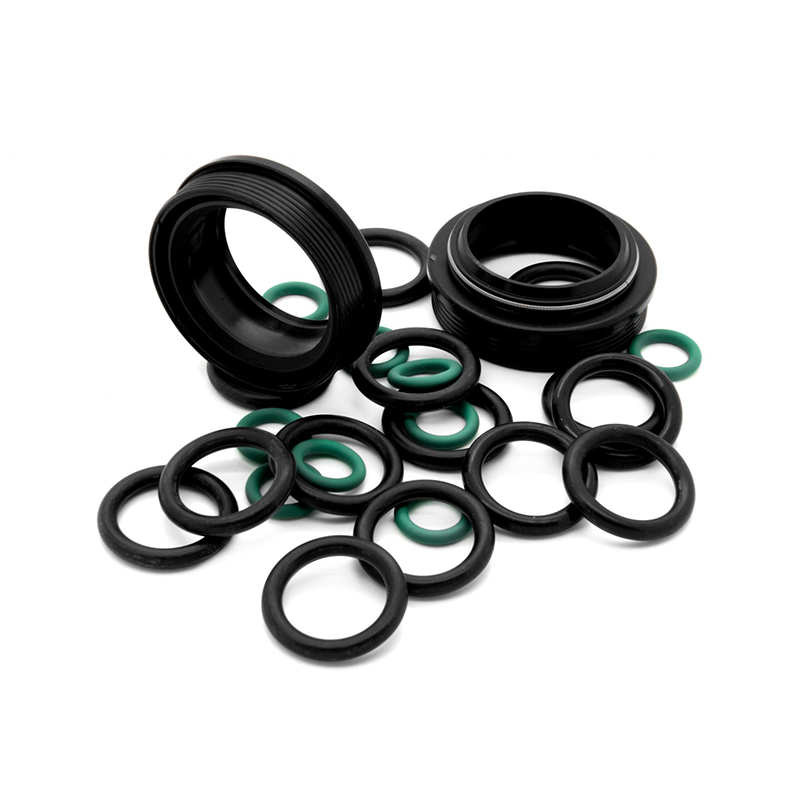
A pre-formed rubber charge (blank or preform) is placed in an open mould cavity; the mould closes under hydraulic pressure, forcing the rubber to fill the cavity; heat cures the compound to the cavity shape. Compression moulding is the simplest and lowest tooling-cost process, suited to medium complexity parts at moderate volumes. Flash (excess rubber squeezed from the parting line) is trimmed after moulding. Typical applications include seals, gaskets, grommets, vibration mounts, and O-rings at diameters too large for efficient injection moulding.
Rubber compound is loaded into a transfer pot above the closed mould. A plunger forces the rubber through sprues and runners into the mould cavities. Transfer moulding produces cleaner parts with less flash than compression moulding, allows better control of fill uniformity in multi-cavity tools, and enables moulding of metal-bonded parts (insert moulding) where rubber is bonded to metal substrates in a single operation. Common for complex O-rings, diaphragms, and bonded anti-vibration components.
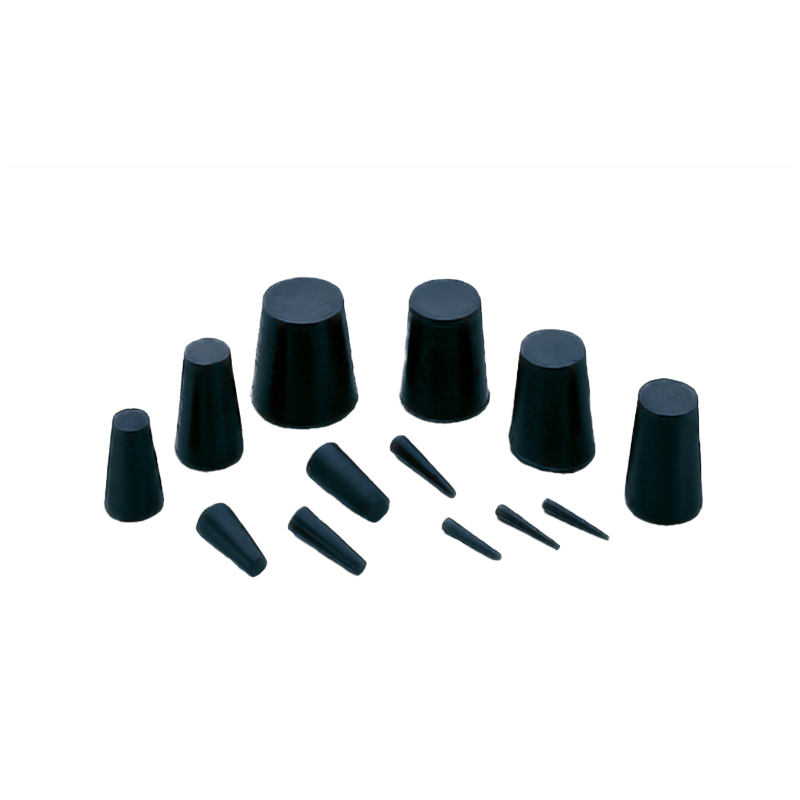
Rubber compound is plasticized in a heated screw barrel and injected under high pressure into a hot, closed mould — essentially the rubber equivalent of thermoplastic injection moulding. Injection moulding delivers the shortest cycle times, highest dimensional consistency, and lowest per-part labour costs at high volumes, but requires the highest tooling investment and is most cost-effective for complex parts in volumes above 50,000–100,000 pieces per year. The dominant process for precision automotive seals, medical stoppers, and complex multi-cavity components.
| Process | Tooling Cost | Cycle Time | Best For |
|---|---|---|---|
| Compression moulding | Low | Longer | Simple–medium parts, low–medium volume |
| Transfer moulding | Medium | Medium | Complex parts, insert moulding, medium volume |
| Injection moulding | High | Shortest | High precision, high volume production |
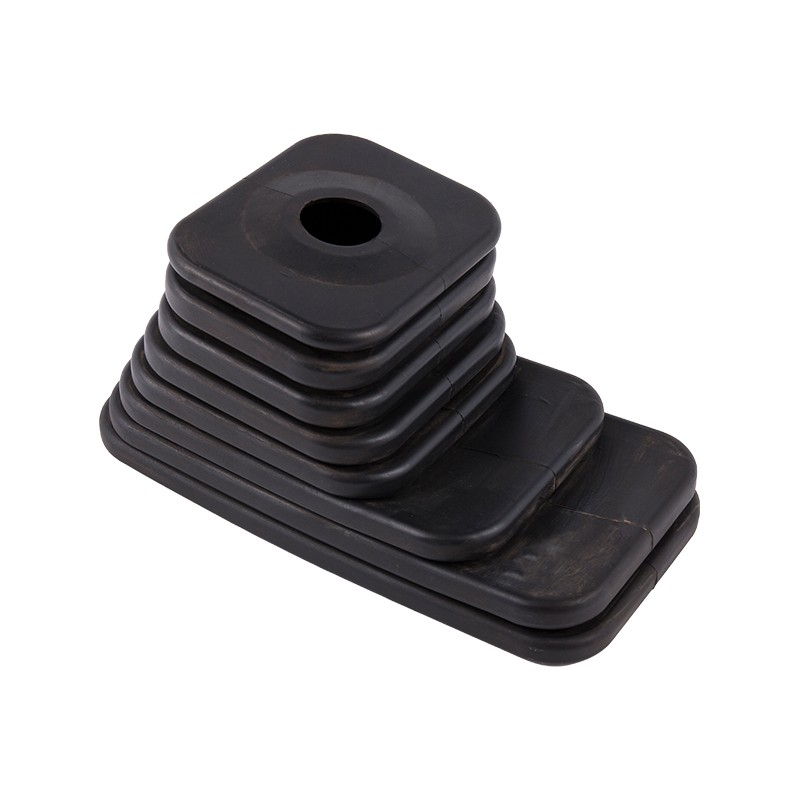
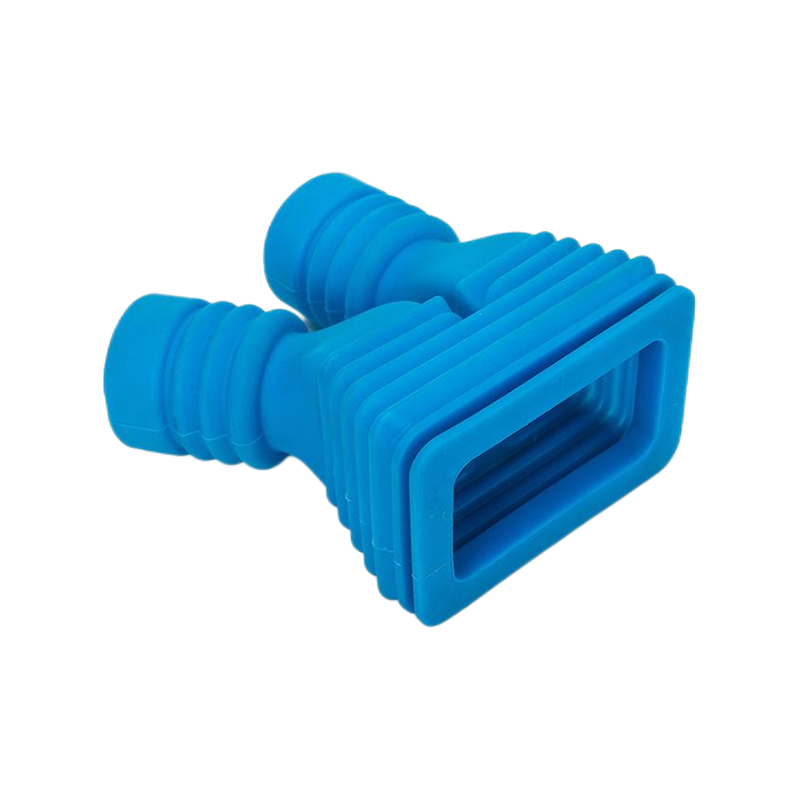
A rubber bellow is a flexible, accordion-pleated or convoluted rubber component designed to accommodate axial movement, angular deflection, lateral offset, or vibration while maintaining a sealed enclosure around the mechanism it protects. The corrugated geometry — a series of convolutions or folds — allows the bellow to compress, extend, and flex repeatedly through millions of cycles without fatigue failure, unlike a plain tube that would buckle or crack under equivalent displacement.
Rubber bellows serve two simultaneous functions in most applications: mechanical accommodation (absorbing relative movement between connected components without transmitting load) and environmental sealing (excluding dirt, water, contaminants, and moisture from the protected interior mechanism). This combination makes bellows indispensable in any assembly where moving parts must be protected from the service environment.
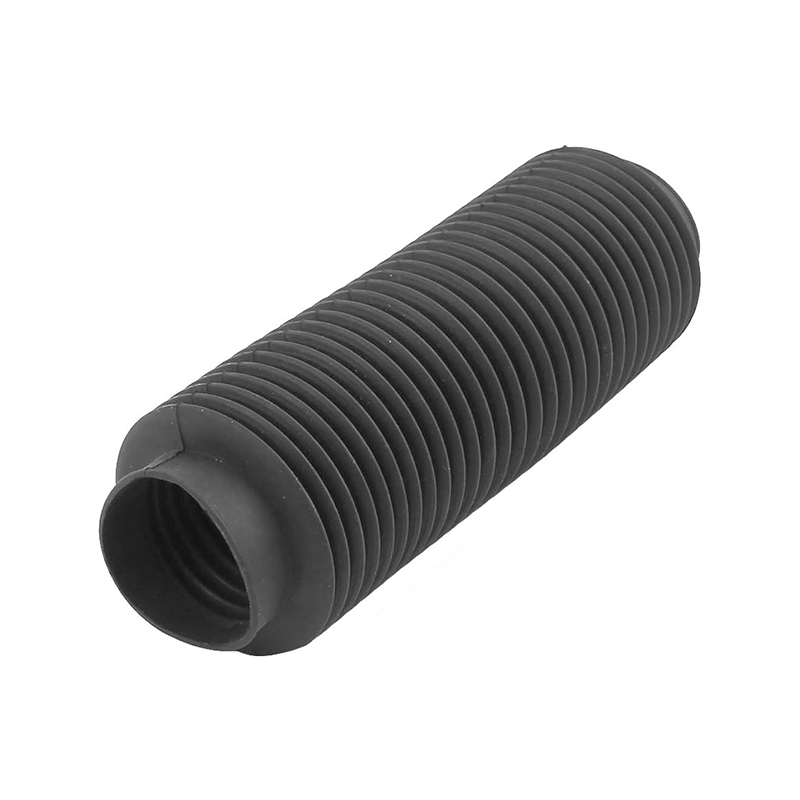
Rubber bellows are typically produced by compression or transfer moulding, with the convolution geometry formed directly in the mould cavity. Material selection is driven by the service environment: EPDM for outdoor and weather-exposed applications, NBR for oil and fuel exposure, silicone for high-temperature service, and neoprene for a balanced general-purpose profile. Wall thickness uniformity across the convolutions is the critical manufacturing quality parameter — thin spots concentrate stress and become fatigue initiation sites that prematurely end bellow service life.
Rubber's unique combination of elasticity, damping, sealing capability, electrical insulation, and chemical resistance makes it functionally irreplaceable across a wider range of industries than almost any other engineering material. No synthetic substitute has replicated the complete property envelope of vulcanized rubber — the result is that global rubber consumption continues to grow in parallel with industrial and automotive output, currently exceeding 30 million metric tons per year of natural and synthetic rubber combined.
Contact Us
Copyright ©
Jiaxing Tosun Rubber&Plastic Co., Ltd.
All Rights Reserved.
Custom Rubber And Plastics Products Factory