

 English
  中文简体
中文简体  Español
Industry News
Home / News / Industry News / Rubber Expansion Joints & Extrusion: How Rubber Works, Process & Manufacturers

2026-04-09
Rubber — both natural and synthetic — functions through a molecular mechanism called entropic elasticity. Polymer chains in vulcanized rubber are cross-linked into a three-dimensional network. When stretched or compressed, these chains are forced into lower-entropy configurations and resist deformation; when the force is released, they return spontaneously to their original disordered state. This recovery behavior is what makes rubber uniquely suited to sealing, damping, and flexible connection applications that rigid materials cannot serve.
The key rubber compounds used in industrial products differ significantly in their working properties:
Vulcanization — cross-linking rubber chains with sulfur or peroxides under heat and pressure — transforms raw elastomer from a thermoplastic-like state into an elastic solid with defined hardness (Shore A), elongation at break, and compression set characteristics. The vulcanization conditions directly determine every downstream performance parameter, making process control during manufacturing critical.
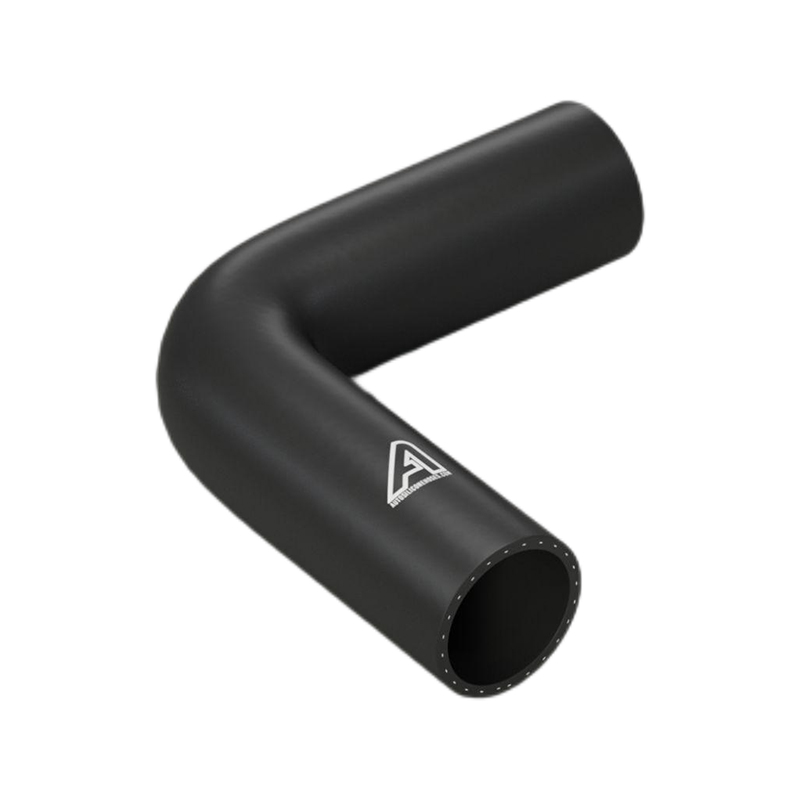
Rubber expansion joints — also called expansion joint rubber connectors or flexible rubber joints — are engineered components inserted into piping, ducting, and structural systems to absorb thermal movement, vibration, misalignment, and pressure surges. Without them, rigid pipe connections would transmit mechanical stress directly to equipment flanges, pumps, and structural anchors, causing accelerated fatigue failures and noise transmission.
A correctly specified joint expansion rubber component can simultaneously accommodate multiple movement types:
Most industrial rubber expansion joints follow a multi-layer construction:
Pressure ratings for standard rubber expansion joints range from 6 bar (87 psi) for light-duty HVAC applications up to 25 bar (360 psi) for heavily reinforced industrial grades. Custom designs with wire braid reinforcement can extend working pressure further.
| Parameter | Typical Specification Range | Why It Matters |
|---|---|---|
| Bore diameter (DN) | DN25 – DN3000 | Determines reinforcement layers and flange drilling |
| Working pressure | 3–25 bar | Drives ply count and arch geometry |
| Medium temperature | −50°C to +230°C | Determines elastomer compound selection |
| Conveyed medium | Water, steam, oil, acids, gases | Determines inner liner compound |
| Movement requirements | Axial / lateral / angular mm values | Determines arch count and height |
| Flange standard | ANSI, DIN, JIS, AS | Ensures bolt circle compatibility |
Rubber processing encompasses several distinct manufacturing routes — calendering, compression molding, injection molding, and extrusion. For continuous profiles, tubes, seals, and the base forms used in expansion joint construction, the rubber extrusion process is the most productive and widely applied method.
Raw elastomer is first masticated — mechanically sheared in an internal mixer (Banbury mixer) or on an open mill — to reduce molecular weight and increase plasticity. Fillers (carbon black, silica), plasticizers, processing aids, antioxidants, and the vulcanization system (sulfur donor, accelerators, activators) are then blended in during successive mixing passes. Compound consistency at this stage determines extrudate dimensional stability; poorly dispersed fillers cause surface roughness and non-uniform hardness after cure.
The compounded rubber is fed — as a strip, pellets, or pre-formed blank — into a cold-feed or warm-feed extruder. A rotating screw conveys and pressurizes the material toward a die. Screw geometry, compression ratio, and barrel temperature profiles are all compound-specific; EPDM compounds, for instance, typically run at lower barrel temperatures (50–80°C) than NBR to prevent premature cross-linking (scorch) before the die.
The die controls the final profile cross-section — tube, solid rod, co-extruded dual-compound seal, or complex custom shape. Die design must account for die swell (the elastic expansion of rubber as it exits confinement), which can increase extrudate dimensions by 10–40% relative to the die orifice depending on compound elasticity and extrusion speed.
Extruded profiles are cured by one of three primary methods:
After vulcanization, extruded profiles are cut to length, inspected for surface defects, dimensional deviations, and hardness (Shore A durometer). For tubing destined for expansion joint reinforcement, pressure testing and adhesion peel tests between compound and fabric ply are conducted. Reputable rubber extrusion manufacturers maintain batch traceability throughout compounding, extrusion, and cure records — a requirement for aerospace, automotive OEM, and medical supply chains.
The global market for rubber extrusion is highly fragmented. Large vertically integrated manufacturers handle compounding, extrusion, and vulcanization in-house; smaller converters purchase compounds and focus solely on profile production. Understanding this distinction is the first step in effective supplier qualification.
China dominates commodity rubber extrusion output, with major production clusters in Guangdong, Hebei, Shandong, and Zhejiang provinces. Manufacturers here offer highly competitive pricing on standard EPDM, NBR, and silicone profiles, with typical lead times of 15–30 days for standard items and 25–45 days for custom tooling. MOQs vary widely — from 50 kg for simple profiles at smaller factories to 500+ kg at larger automated facilities.
Europe leads in precision and specialty extrusion — PTFE-lined rubber hose, co-extruded tri-material seals, low-compression-set silicone for medical devices. Manufacturers such as Trelleborg, Parker Hannifin (Meggitt), and Freudenberg operate high-tolerance extrusion lines with full compound in-house development capability. Prices are significantly higher than Asian alternatives but include engineering support, faster design iterations, and full material certification.
India has emerged as a mid-tier option, offering better pricing than Europe with improving quality levels. Suppliers in the Pune, Mumbai, and Chennai industrial corridors serve automotive OEM programs and infrastructure projects across South Asia and the Middle East.
When requesting quotes from rubber extrusion manufacturers, provide a fully dimensioned cross-section drawing (DXF preferred), compound specification or performance requirements (hardness, temperature range, media resistance), annual volume estimate, and packaging requirements. Suppliers who ask detailed technical questions at the quoting stage — rather than simply returning a price — are consistently more reliable partners for complex or critical applications.
Contact Us
Copyright ©
Jiaxing Tosun Rubber&Plastic Co., Ltd.
All Rights Reserved.
Custom Rubber And Plastics Products Factory