

 English
  中文简体
中文简体  Español
Industry News

2026-05-21
A rubber stopper is a plug made of elastic rubber material designed to create an airtight, leak-resistant seal when inserted into the opening of a container such as a test tube, flask, vial, or drain. The rubber stopper meaning is straightforward: it stops the contents from spilling or the outside environment from entering. A rubber stopper with screw takes this further by integrating a threaded screw mechanism. When the screw is tightened, it pulls a bottom plate or compresses the rubber core, causing the stopper to expand radially and lock tightly inside the opening. This design provides a secure, vibration-proof seal in irregular or tapered openings where a plain push-in stopper would slip. This article explains the definition, types, and practical selection guidance, with a focus on the screw-type stopper's mechanism and applications.
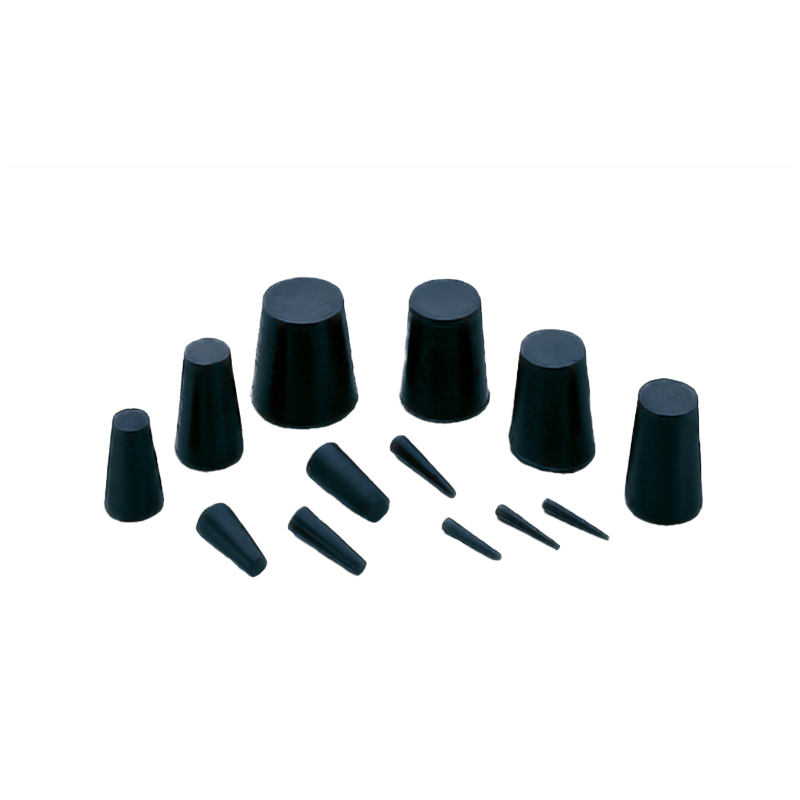
A rubber stopper is a conical or cylindrical closure component, typically made from natural rubber, silicone, neoprene, or EPDM. Its primary function is to seal openings by pressing the rubber body against the container's inner wall, forming a friction fit. The elasticity of the rubber allows it to conform to slight irregularities in the glass or plastic neck, creating an effective barrier against liquids, gases, and contaminants. Standard rubber stoppers are specified by their top diameter, bottom diameter, and length, allowing a single stopper to fit a range of openings.
The working principle relies on compressive force. Inserting a slightly oversized stopper compresses the rubber, generating a restoring force that presses against the container walls. For low-pressure applications such as storing reagents or culturing microorganisms, this simple friction seal is sufficient. Laboratory-grade rubber stoppers can withstand temperatures from -40 up to 200 degrees Fahrenheit depending on the material, and some silicone versions are even autoclavable.
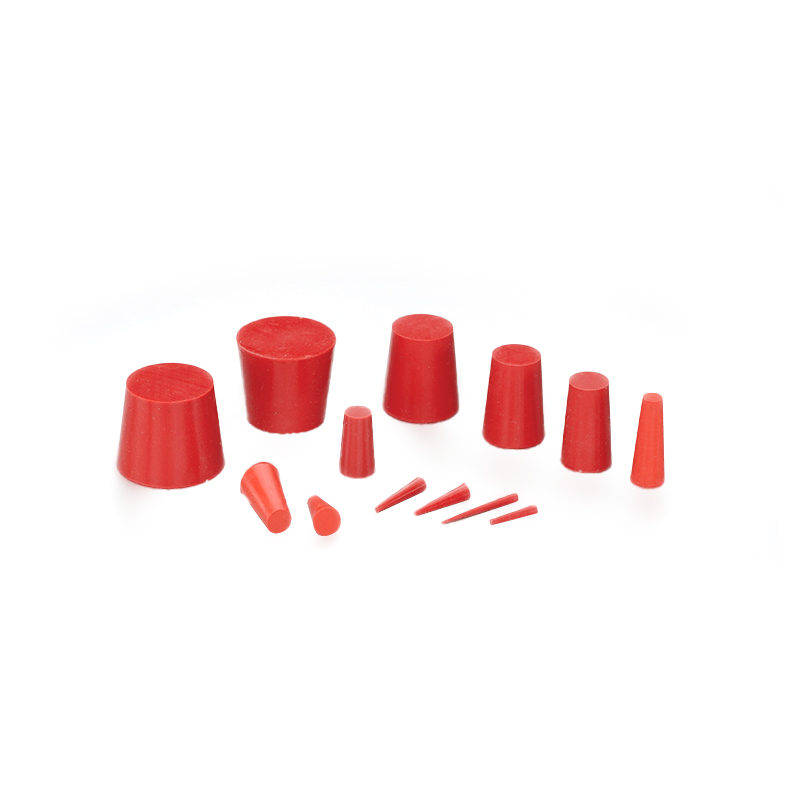
In chemistry and biology labs, the rubber stopper meaning goes beyond a simple plug; it represents a reusable, chemically resistant sealing solution that can be fitted with glass tubing, thermometers, or wires through pre-drilled holes. Unlike cork stoppers, rubber stoppers do not crumble or absorb liquids, making them safer for volatile organic solvents and aqueous solutions. A number designation system—commonly from 000 (smallest) to 15 (largest)—allows standardized sizing. For instance, a No. 6.5 stopper typically fits a 250 mL Erlenmeyer flask with a top diameter of 32 mm and a bottom diameter of 25 mm.
In industrial and home applications, a rubber stopper may serve as a drain plug, a vibration isolator, or a temporary seal during hydrostatic testing. The term "rubber stopper" implies a component that can be repeatedly inserted and removed without losing its sealing integrity, provided the rubber does not degrade from chemical attack or UV exposure.
A rubber stopper with screw operates on an expansion principle. It consists of a rubber body, a central threaded metal or plastic screw, and usually a bottom expansion plate or captive nut. When the screw is turned clockwise, it compresses the rubber cylinder longitudinally. This axial compression forces the rubber to bulge outward, increasing its diameter and pressing firmly against the container walls. The result is a mechanical lock that resists both push-out and pull-out forces. The seal is so robust that these stoppers are used in applications with internal pressures up to 10 to 15 psi in plastic carboys and pressurized plumbing test plugs.
The screw mechanism allows a single stopper size to accommodate a range of opening diameters, typically with a variation of 2 to 5 mm. This adjustability is valuable for fermentation carboys in homebrewing, where glass necks may have inconsistent internal diameters. A typical rubber stopper with screw for a 1-gallon glass jug may fit openings from 28 mm to 35 mm after tightening. The screw head can be a simple slotted or wing-style, enabling tool-free hand tightening.
While both seal containers, the differences in performance and application are significant. The table below highlights these contrasts to guide proper selection.
| Feature | Standard Rubber Stopper | Rubber Stopper with Screw |
|---|---|---|
| Sealing Principle | Friction and compression from insertion | Radial expansion via screw compression |
| Holding Strength | Moderate; can be pushed out under pressure | High; mechanically locked, resists blowout |
| Size Adaptability | Fixed size, requires precise match | Adjustable, fits a range of diameters |
| Ease of Removal | Simple pull-out | Untighten screw to release |
| Common Uses | Flasks, test tubes, low-pressure storage | Fermentation carboys, drain plugs, test ports |
The secure, adjustable seal of a screw-type rubber stopper makes it invaluable in several niche but critical areas. Practical examples include:
Not all rubber materials are equal. The choice between natural rubber, silicone, neoprene, and EPDM determines chemical resistance, temperature range, and longevity. For screw-type stoppers used in homebrewing, food-grade silicone or natural gum rubber is preferred to avoid off-flavors. The following list highlights material characteristics:
When selecting a rubber stopper with screw, ensure that the metal hardware—usually a zinc-plated steel or stainless steel screw and a captive nut—is compatible with the intended environment. For acidic applications, stainless steel 304 or 316 prevents corrosion and seal failure.
Proper installation ensures both an effective seal and the longevity of the rubber. For a standard friction stopper, select a size where the bottom is smaller than the opening and the top is larger, then push and twist firmly. For a rubber stopper with screw, insert the relaxed stopper into the opening until the top flange rests on the rim, then tighten the screw by hand until the stopper grips securely. Over-tightening can crack glass containers or permanently deform the rubber, causing it to lose elasticity after a single use. A good rule is to tighten until resistance is firm, then add no more than a quarter turn.
In fermentation, where the carboy may be filled near the neck, inserting a dry stopper without lubrication can be difficult. A light coating of food-grade glycerin or diluted sanitizer on the rubber surface eases insertion and helps achieve an airtight fit without excessive force. Always inspect rubber stoppers for cracks, hardening, or sticky residue before each use, as degraded rubber can contaminate contents or fail under pressure.
Contact Us
Copyright ©
Jiaxing Tosun Rubber&Plastic Co., Ltd.
All Rights Reserved.
Custom Rubber And Plastics Products Factory