

 English
  中文简体
中文简体  Español
Industry News
Home / News / Industry News / Why Custom Rubber Molding Is Critical for EV Battery Sealing & Thermal Management

2026-09-14
Every modern EV battery pack carries hundreds of sealed interfaces: coolant fittings, pressure-relief vents, high-voltage connector glands, module covers, and cell-holder cushions. A typical passenger pack holds 400 to 800 cylindrical or pouch cells, and the difference between a ten-year service life and a costly recall often comes down to a molded rubber part weighing less than 50 grams. Custom rubber molding is critical for EV battery sealing and thermal management because the geometry, material, and tolerance of each seal determine whether the coolant circuit holds, the vent releases at the right pressure, and the enclosure keeps its ingress rating for the vehicle's lifetime.
A battery-pack seal must contain liquid coolant, absorb constant vibration, and hold its sealing force across a temperature window from -40°C to +80°C, a combination that exceeds any single sealing job in an internal-combustion vehicle.
In an engine, coolant moves through a few dozen joints, most of them rigid metal-to-metal connections with conventional gaskets. A lithium-ion pack is a sealed enclosure with four distinct sealing jobs:
The coolant loop operates at 1.5 to 3 bar with ethylene-glycol mixtures that soften many elastomers, while the pack must meet IP67 or IP6K9K ingress protection and pass safety standards such as UN ECE R100 and GB 38031. Cell swelling adds another variable: as cells age they expand and shift stack pressure, so module and manifold seals must keep working as the housing moves fractions of a millimeter.
Molded rubber gaskets are the physical boundary between the cooling circuit and the electrical compartment, and their long-term compression performance sets the reliability of the entire thermal management system.
A liquid-cooled pack routes coolant through cold plates beneath each module. Molded gaskets seal the joints between plates, manifolds, and fittings, often in non-circular shapes that only compression molding can produce economically. Transfer and injection molding add locating ribs, retention lips, and asymmetric cross-sections that simplify assembly. A molded gasket at a coolant-manifold junction must resist glycol and keep its sealing force through ten-plus years of thermal cycling. When the seal relaxes, coolant migrates toward the cells and triggers internal shorts.
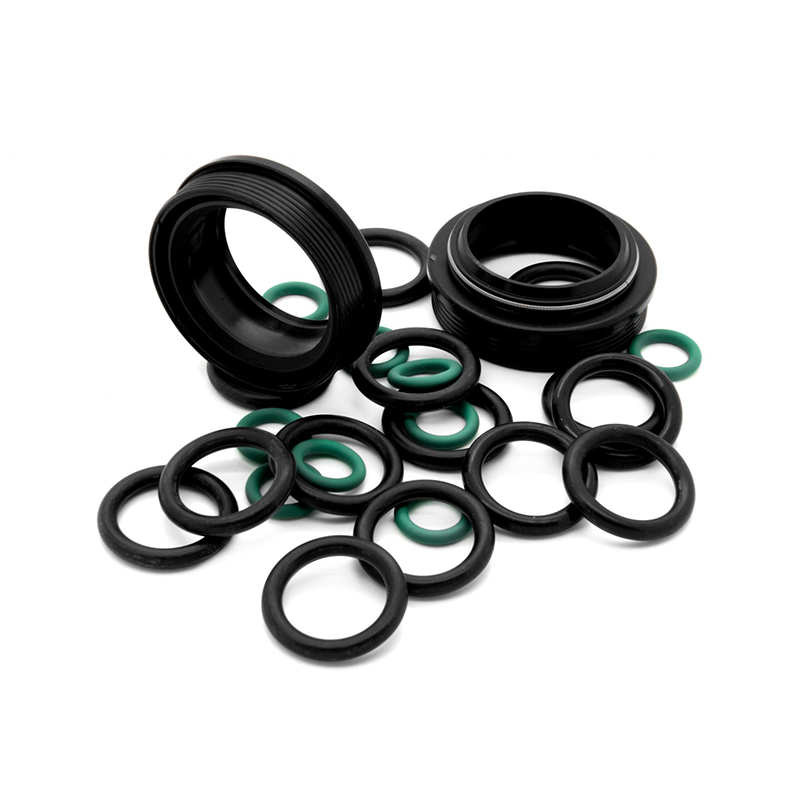
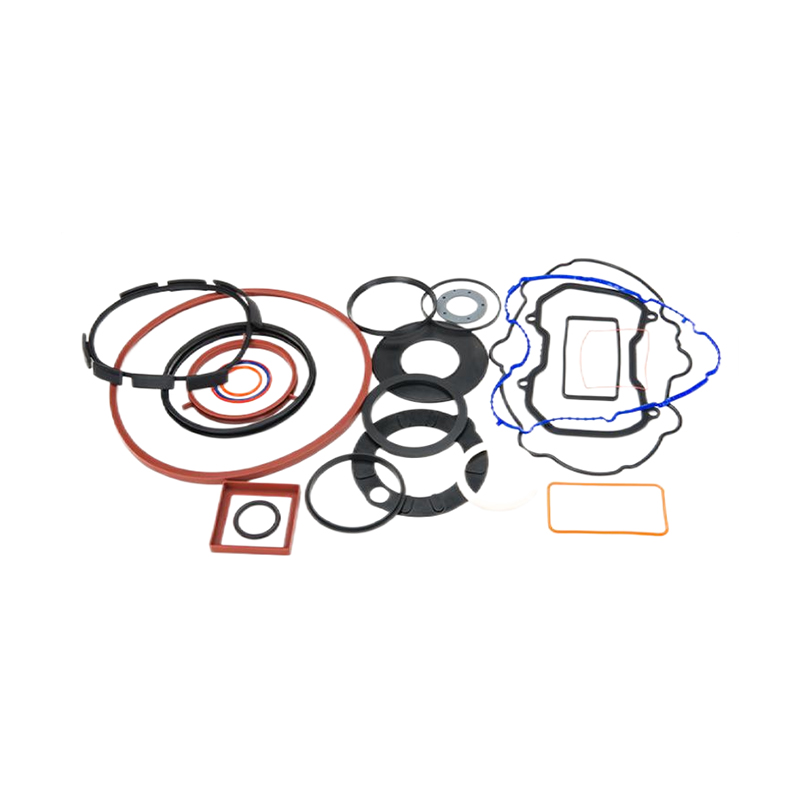 Custom Molded EPDM and Silicone Rubber Seals for Coolant SystemsThis provider supplies compression-molded gaskets for coolant-manifold junctions, with material options covering EPDM, silicone, and FKM to match thermal, flexibility, and chemical resistance needs in battery packs.View Product →
EPDM is the default for coolant-facing battery seals, silicone wins where extreme temperatures or flexibility matter, and FKM is reserved for chemically aggressive environments where its higher cost is justified.
Ethylene-propylene-diene monomer (EPDM) resists ethylene-glycol coolant better than most elastomers, holds a low compression set, and runs continuously at up to 150°C. Silicone extends the ceiling to 230°C and stays flexible down to -60°C, but its tear strength is lower and some coolant additives can degrade it. Fluorocarbon rubber (FKM) handles a wider chemical range and survives up to 250°C, at several times the material cost of EPDM. A growing number of battery programs use bi-material overmolding: a silicone sealing bead on an EPDM carrier, combining flexibility and chemical resistance in one part. Before finalizing a specification, read our guide on custom rubber molding from design to production.
| Property | EPDM | Silicone | FKM |
| Max continuous temperature | 150°C | 230°C | 250°C |
| Low-temperature limit | -40°C | -60°C | -20°C |
| Glycol coolant resistance | Excellent | Good | Excellent |
| Compression set | Low | Medium | Low |
| Relative cost | $ | $$ | $$$ |
Compression-molded rubber seals hold functional tolerances of ±0.1 to ±0.3 mm, but mold design, shrinkage compensation, and flash control decide whether those tolerances translate into a consistent sealing force.
Rubber shrinks after demolding, and the rate varies by polymer and durometer, so the mold cavity must be cut with the correct shrinkage allowance. The compression molding process also depends on material mixing consistency and cure control, which affect dimensional stability from batch to batch. Three features matter most:
A custom molder with in-house mold design and a testing lab shortens the development loop. Jiaxing Tosun Rubber & Plastic Co., Ltd. employs 12 mold-design and compounding engineers who can convert a customer's drawing or sample into a finished mold on a compressed schedule, and a 20-person inspection team verifies dimensional and physical properties before parts ship.
For battery programs, custom molded parts justify their tooling investment because standard off-the-shelf gaskets cannot reproduce the geometry, material, or tolerance required for coolant, vent, and connector sealing.
Purchasing teams comparing per-piece prices will see standard gaskets win. The comparison changes once tooling amortization, material certification, dimensional capability, and design support are included:
For low volumes or prototypes, standard gaskets can bridge the gap while the custom mold is built. Once the pack enters production, the custom part is the one validated against the safety case.
Beyond the main tray gasket, molded plugs, caps, boots, and vibration mounts perform sealing and protection duties that carry the same safety weight as the primary seal.
High-voltage connectors are protected by molded silicone boots, and unused service ports are closed with silicone caps that keep moisture and debris out during assembly and transport.
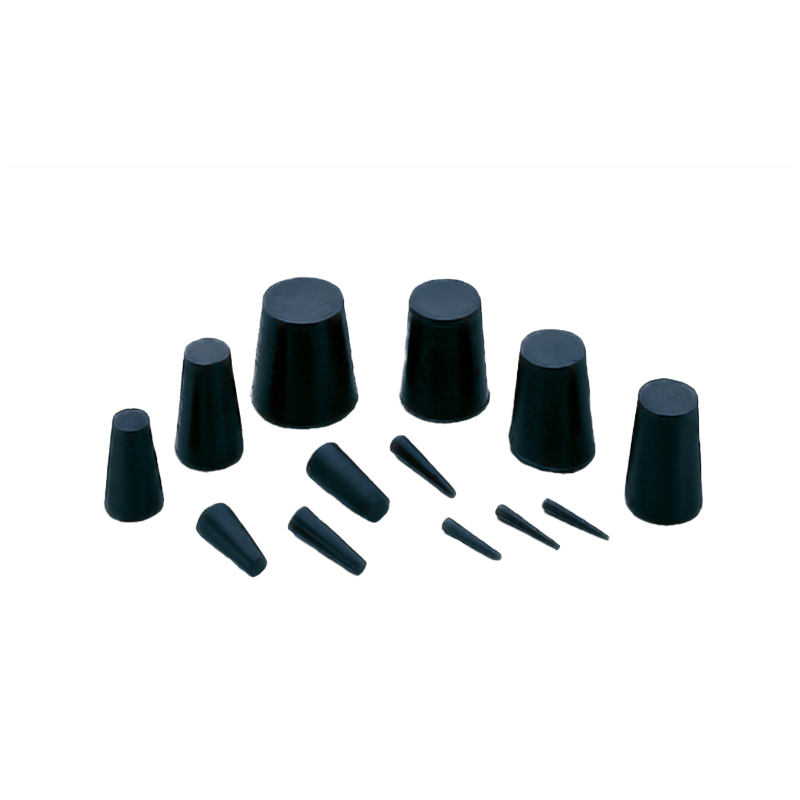
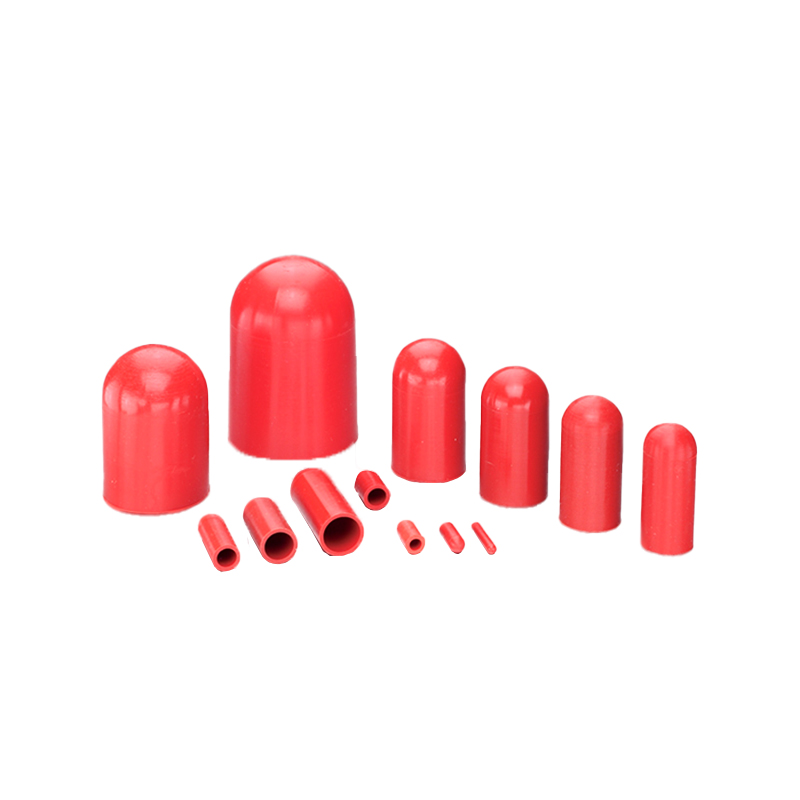 High-Temperature Silicone Caps for Masking and Port ProtectionThese silicone caps withstand repeated coating cycles up to 316°C and stretch-fit over threaded or plain holes, useful for sealing unused service ports and protecting connectors during assembly and painting.View Product →
Rubber-to-metal bonded mounts isolate the pack from chassis vibration and absorb impact loads, keeping the enclosure and its seals from being stressed by road inputs. Because these parts combine an elastomer with a rigid insert in one bonded component, they reduce fasteners and assembly steps while improving load distribution.
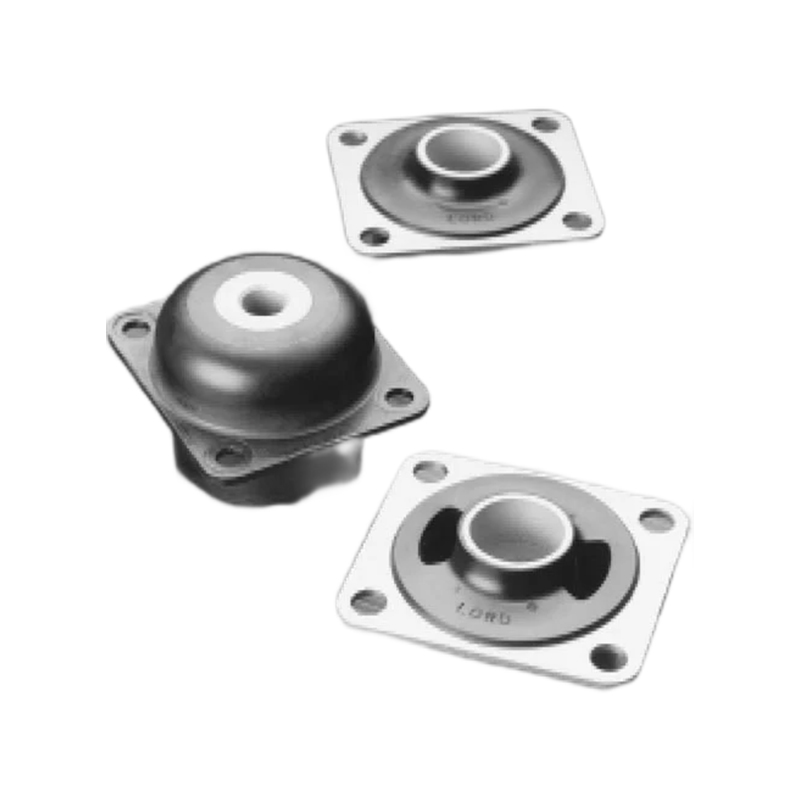 Rubber-to-Metal Bonded Vibration Mounts for Battery PacksBonded rubber mounts isolate the pack from chassis vibration and impact loads, using optimized stiffness for heavy loads and available in EPDM, NBR, CR, or NR to suit automotive and industrial applications.View Product →
These are the most common procurement questions engineers ask when specifying molded rubber parts for battery packs.
EPDM is the most widely specified material for ethylene-glycol coolant seals because of its chemical resistance, low compression set, and 150°C continuous service ceiling. Silicone is preferred when the part must stay flexible at extreme low temperatures or near high-voltage busbars, and FKM is specified when aggressive coolant additives or higher temperatures are present.
Custom molded gaskets create a reliable boundary between the liquid cooling circuit and the electrical compartment. By controlling geometry, hardness, and compression set, a molded part maintains the sealing pressure that keeps coolant inside the cold plates and manifolds, preserving thermal performance for the life of the pack.
Functional tolerances of ±0.1 to ±0.3 mm are achievable with well-designed compression and transfer molds, depending on the material, thickness, and part geometry. The molder must compensate for shrinkage, control flash, and inspect critical dimensions to hold those tolerances in production.
Yes. Jiaxing Tosun Rubber & Plastic Co., Ltd. operates material mixing, compression and extrusion molding lines, in-house mold design, and a testing lab backed by a 20-person inspection team, allowing a custom battery seal to move from drawing to validated production within a single supplier.
Contact Us
Copyright ©
Jiaxing Tosun Rubber&Plastic Co., Ltd.
All Rights Reserved.
Custom Rubber And Plastics Products Factory