2026-09-28
EPDM rubber (ethylene-propylene diene monomer) enhances durability in outdoor and under-the-hood applications because its polymer backbone contains no double bonds, removing the weak points where ozone, oxygen, and engine heat break down most other elastomers.
Consider two real parts from production vehicles and buildings. A coolant hose clamped beside a turbocharger flange survives 150,000 km of stop-and-go heat cycling, and a glazing gasket holds its seal through 25 years of direct sun, rain, and freeze-thaw cycles. Both are EPDM rubber. For OEM engineers and procurement teams, the practical consequence is longer service life, lower warranty exposure, and fewer field failures in sealing and fluid-transfer systems.
The trade-off matters just as much: EPDM resists heat, water, and weather, but it swells and softens in petroleum oil. Knowing where EPDM belongs, and how to specify it, is the difference between a 10-year seal and a 6-month failure.
EPDM's saturated ethylene-propylene main chain contains no carbon-carbon double bonds, so ozone and oxygen cannot initiate the chain-scission cracking that destroys general-purpose rubbers.
EPDM is a terpolymer of ethylene, propylene, and a small amount of diene monomer, usually ENB or DCPD. The diene sits in side chains rather than in the backbone. That placement gives sulfur or peroxide curing systems a point where they can create crosslinks while the main chain stays fully saturated.
Natural rubber and SBR keep double bonds in the main chain, and those bonds react with ozone at concentrations as low as 25 parts per hundred million. The reaction produces brittle surface cracks that grow under repeated flexing. EPDM passes standard ozone tests at 50 pphm with no visible cracking. That is why outdoor gaskets and under-hood hoses made from EPDM outlast non-EPDM parts by a factor of three to five in equivalent service.
Crosslink density also dictates performance. Too few crosslinks and the part creeps under load; too many and it turns stiff and brittle. Compounders balance the diene content and the curative package against hardness and elongation targets, which is why EPDM parts from different suppliers can perform very differently.
Under the hood, EPDM rubber delivers continuous heat resistance to 150°C, intermittent peaks to 170°C, and dependable contact with glycol-based coolants.
Engine compartments concentrate heat, vibration, and chemical exposure in a small volume. Radiator hoses carry coolant at 100-120°C, while air-intake and heater hoses run beside exhaust manifolds where radiant heat exceeds 150°C. EPDM is one of the few cost-effective elastomers that retains sealing force in both positions. In accelerated heat-aging tests per ASTM D573, peroxide-cured EPDM keeps more than 60 percent of its original elongation after 168 hours at 150°C, and compression set typically stays below 30 percent.
| Property | EPDM | Silicone | NBR | Neoprene | Natural rubber |
| Continuous service temperature | 150°C | 230°C | 125°C | 120°C | 90°C |
| Ozone resistance | Excellent | Excellent | Fair | Good | Poor |
| Glycol coolant resistance | Excellent | Good | Fair | Good | Fair |
| Oil and fuel resistance | Poor | Fair | Excellent | Good | Poor |
| Compression set at 150°C | Good | Fair | Good | Fair | Poor |
| Relative material cost | Medium | High | Medium | Medium | Low |
Continuous service temperature of common elastomers
Only silicone outranks EPDM on continuous heat, and at a noticeably higher material cost.
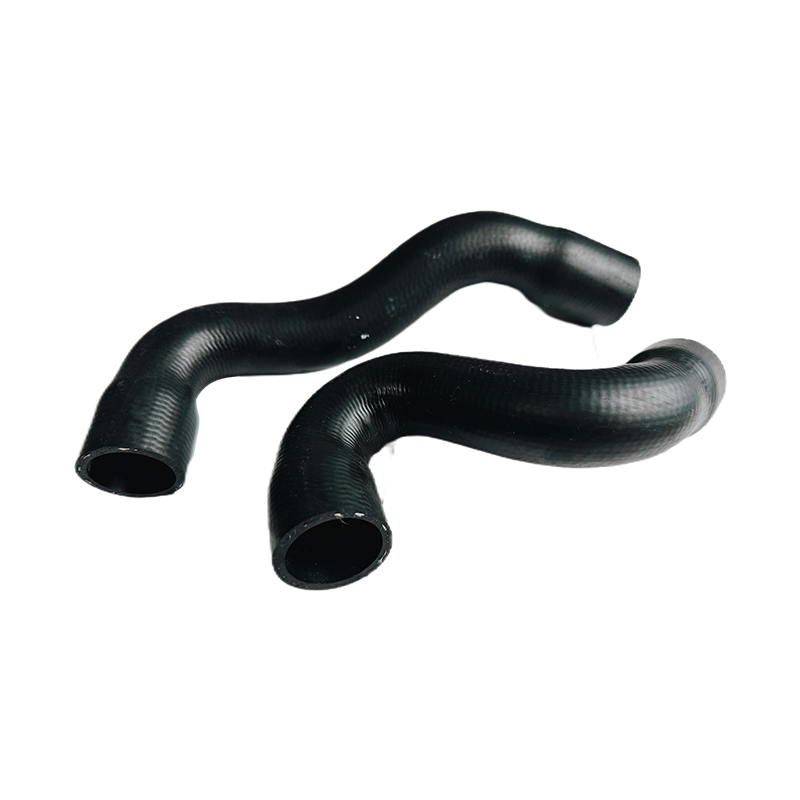 EPDM Radiator Coolant Hose for Engine CoolingThis EPDM radiator hose combines aramid and polyester reinforcement to handle pressurized coolant at up to 150°C. Its low water absorption and resistance to ethylene glycol prevent softening and wall swelling, offering a cost-effective alternative to silicone for engine cooling.View Product →
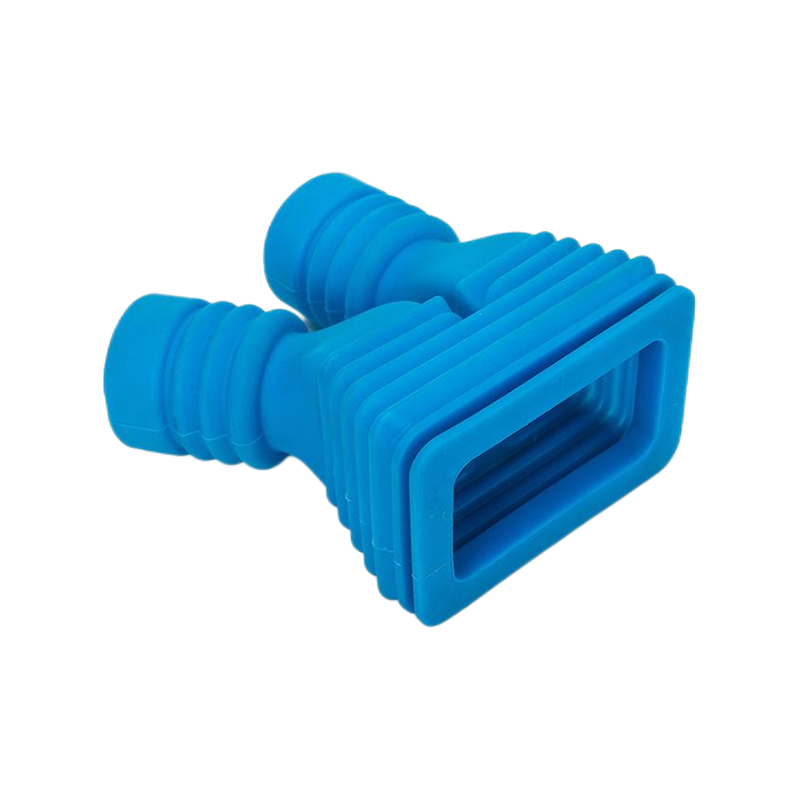
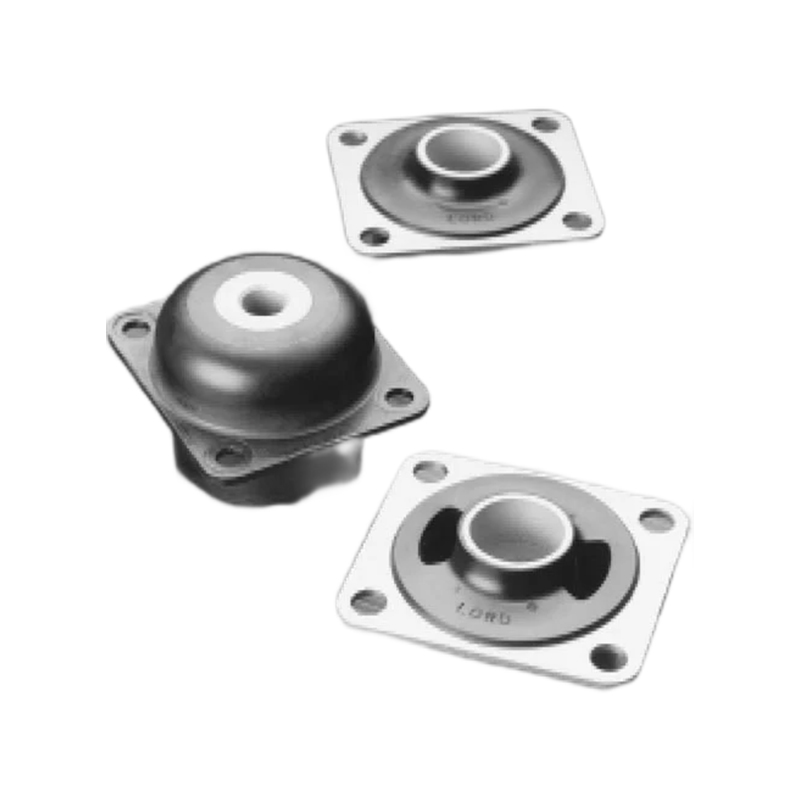
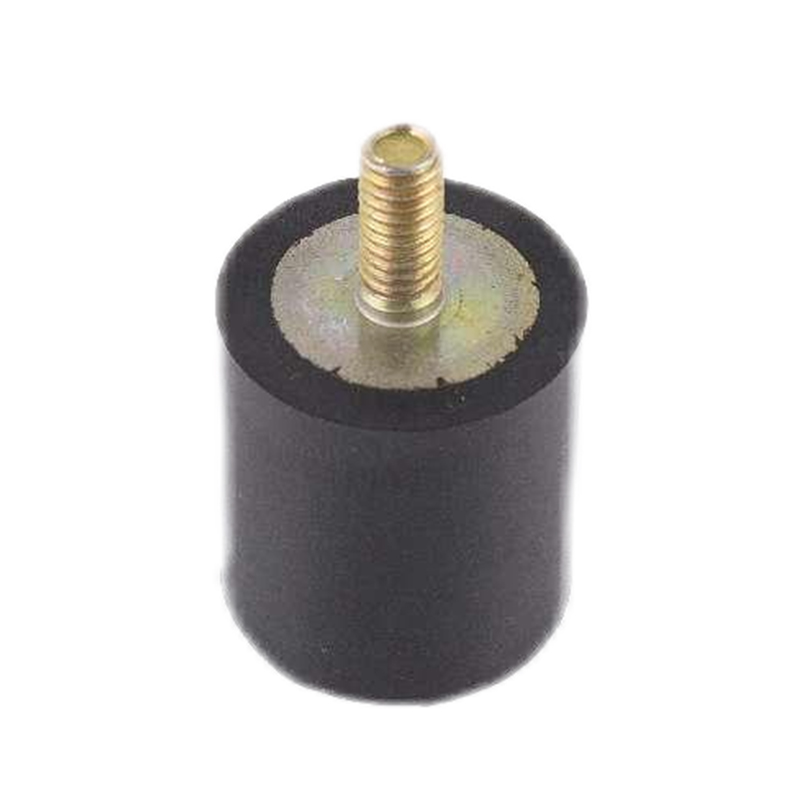
Cooling-system parts are the most demanding application. Radiator hoses and heater hoses flex with engine movement while carrying pressurized coolant at 100-120°C. EPDM's water absorption stays below 1 percent, which stops the inner tube from softening or delaminating, and its resistance to ethylene glycol prevents wall swelling and electrochemical degradation. The same chemistry appears in air-duct connectors, vibration-isolating mounts, and gear-shift dust covers, all of which must keep elastic recovery after years of heat and vibration.
In outdoor exposure, EPDM rubber resists ozone cracking, UV degradation, and moisture uptake so effectively that glazing seals and roof membranes routinely function for 20 to 25 years.
Outdoor failure modes differ from under-hood ones but are equally aggressive. Ozone attacks stressed surfaces and grows cracks with every thermal cycle; UV radiation degrades the surface layer; rain and humidity drive hydrolysis. EPDM's saturated backbone neutralizes the first two mechanisms almost completely. In accelerated weathering per ASTM G154, EPDM test seals show no surface cracking after 2,000 hours of UV cycling, and equilibrium water absorption stays below 1 percent.
Common outdoor parts include window and door gaskets, structural glazing seals, rubber channel strips for facades and solar frames, and dust covers for exposed linkages. EPDM window and door gaskets are extruded in continuous lengths, then molded or spliced into frames that hold their dimensions across a -40°C to +120°C installation range.
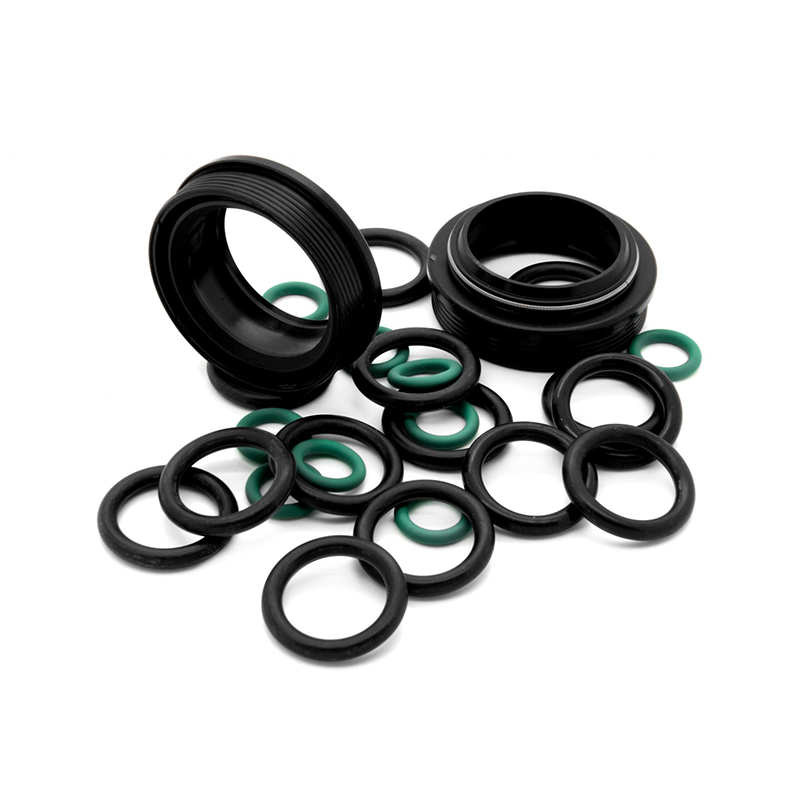
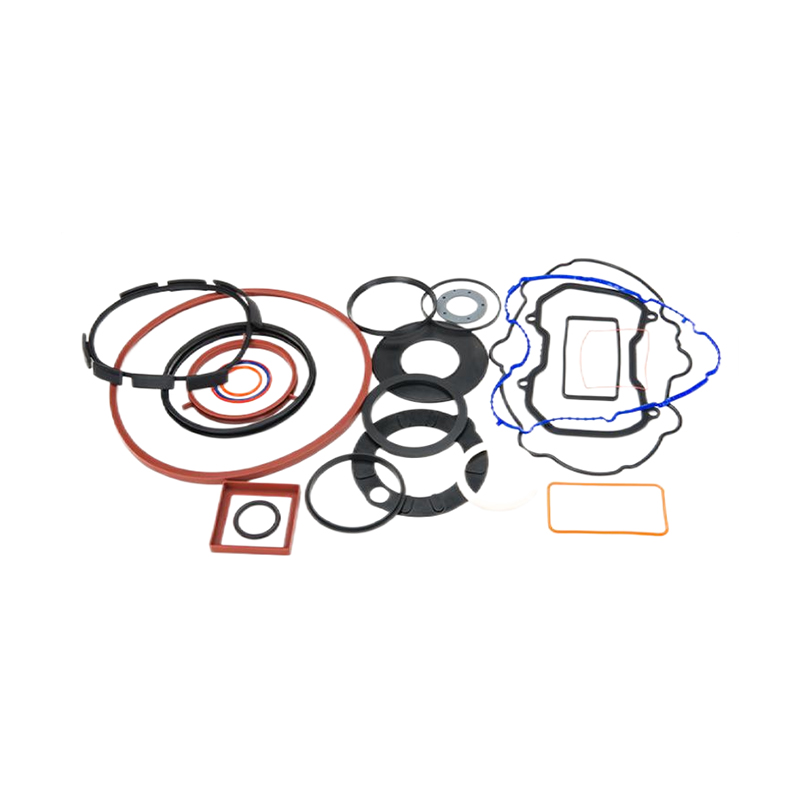 Rubber Gaskets, Seals, and Flanged WashersThese gaskets and seals include EPDM options for window and door frames, staying stable from -40°C to +120°C. They handle anti-vibration and pressure sealing, with NBR or FKM available for different durability requirements.View Product →
Durability is not a raw material property; it is a compound property, and the three variables that decide it are the curing system, hardness, and filler package.
Two EPDM parts that look identical can have very different lives. Sulfur-cured EPDM is adequate for 100-120°C service and bonds more easily to metal inserts. Peroxide-cured EPDM adds heat resistance and lower compression set, which is why it dominates above 130°C. Hardness, in Shore A, controls sealing force: a 60-70 Shore A gasket compresses easily and recovers, while an 80-90 Shore A mount resists deflection under load. Carbon black loading increases tensile strength and UV performance but raises hardness and cost.
The following five-point checklist is the basis of Tosun's engineering review when a customer asks for a durable EPDM part.
Manufacturing consistency is the second half of the durability equation. A well-designed compound fails if mixing, molding, and curing drift between batches. That is why OEM programs rely on suppliers that combine formulation engineering with in-house production. Jiaxing Tosun Rubber & Plastic Co., Ltd. runs a 15,000 square meter facility where 12 mold-design and formulation engineers develop the compound while a 250-person team operates the compression molding production line, extrusion line, and bonding cells. A separate 20-person inspection group verifies every batch against the aging and ozone requirements before shipment.
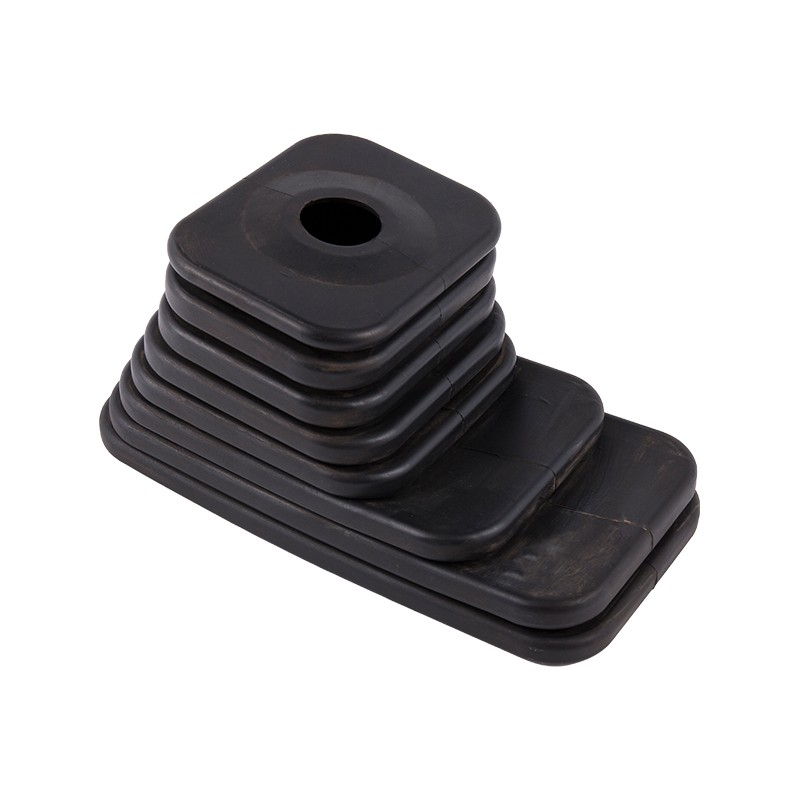
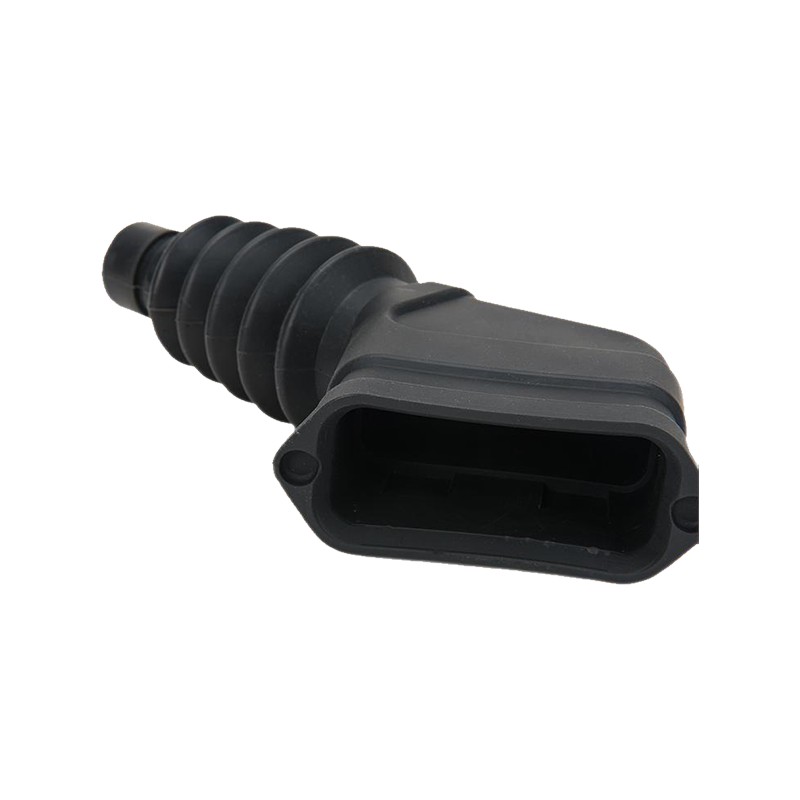 EPDM Gear Shifter Boot BellowsThis EPDM gear shifter boot bellows operates from -40°C to +150°C and resists ozone, UV, and weathering, ensuring durable sealing for shift mechanisms. Strict in-house batch inspection maintains consistent compound quality, supporting long service life in automotive applications.View Product →
EPDM seals and membranes in non-oil outdoor service typically last 20 to 25 years. Roofing membranes carry 20-year warranties, and automotive glazing and door seals routinely survive the full 10-to-15-year life of the vehicle.
The standard industry rating is 150°C continuous, with intermittent peaks up to 170°C. Peroxide-cured EPDM grades reach 150-175°C; sulfur-cured grades should be derated to about 130°C for long service.
No. EPDM has poor resistance to petroleum oils, fuels, and most solvents. It is excellent with water, glycol, steam, dilute acids, and DOT 3/4 brake fluid, but any oil-contact application requires NBR, chloroprene, or a fluoroelastomer instead.
Peroxide-cured EPDM provides lower compression set and better heat aging above 130°C, making it the preferred system for under-hood seals and hoses. Sulfur-cured EPDM is easier to bond and sufficient for lower-temperature outdoor parts.
Contact Us
Copyright ©
Jiaxing Tosun Rubber&Plastic Co., Ltd.
All Rights Reserved.
Custom Rubber And Plastics Products Factory




 English
  中文简体
中文简体  Español